
TL;DR:
- Milehighcook offers all-inclusive private-chef and catering services in Paradise Valley, featuring CIA-trained chefs and comprehensive pricing. The private-chef format is ideal for estate events under 40 guests, providing personalized menus and chef interaction. Most luxury events require early booking, clear contracts, and verified permits to ensure safety and reliability.
For private and luxury events in Paradise Valley, the clearest recommendation is Milehighcook's all-inclusive private-chef and catering model. CIA-trained chefs, all-inclusive pricing that covers groceries, staff, and cleanup, and a Paradise Valley private-chef landing page built specifically for this market make it the most straightforward option for upscale estate dinners, weddings, and corporate functions. The 4.9-star rating across 65+ verified reviews backs that up.
Why does this model fit Paradise Valley specifically? Estates here often have professional-grade kitchens but no in-house culinary staff. An on-site private chef fills that gap without the coordination overhead of managing multiple vendors.
Quick ways to get started:
- Request a custom quote via the catering services page
- Browse chef credentials at the chef team page
- Call or email directly to discuss your event date, guest count, and menu preferences
Table of Contents
- Which catering service formats are available in Paradise Valley?
- What do sample menus and dietary accommodations look like?
- Which event types do local caterers routinely handle?
- What does catering actually cost in Paradise Valley?
- When should you book, and what happens on event day?
- What should a professional catering contract include?
- How do you vet a caterer before signing anything?
- Milehighcook brings CIA-trained chefs directly to your Paradise Valley event
- Key Takeaways
- Why experience-led catering is the only real option here
- FAQ
Which catering service formats are available in Paradise Valley?
Understanding the format before you call a caterer saves everyone time. Each model has a different staffing footprint, cleanup expectation, and price point.
- Drop-off/delivery — Food is prepared off-site and delivered in transport containers. No on-site staff, no setup beyond dropping the order. Works for casual office lunches; rarely appropriate for a luxury estate dinner.
- Buffet or family-style — Staff sets up stations or shared platters, then typically clears. Guests serve themselves or pass dishes. Lower labor cost than plated service, but the flow feels less formal.
- Plated/full-service — A full front-of-house team courses the meal, clears between courses, and manages the dining room. The gold standard for seated weddings and corporate galas.
- Food stations — Interactive stations (carving, pasta, raw bar) staffed by a cook or attendant. Great for cocktail receptions where guests mingle rather than sit.
- Private chef/on-site cooking — The chef arrives with ingredients, cooks in your kitchen, and manages the entire meal from prep through cleanup. Private chef services are most cost-competitive at 4–40 guests; at 50–75+ guests, traditional catering often becomes more practical.
Choosing the right format for a Paradise Valley estate
Upscale home estates here typically have the kitchen infrastructure to support on-site cooking, which makes the private-chef format genuinely viable rather than a logistical stretch. Rented venues, golf clubs, and resort spaces usually require a caterer with its own transport and hot-holding equipment, especially given Arizona's summer heat.
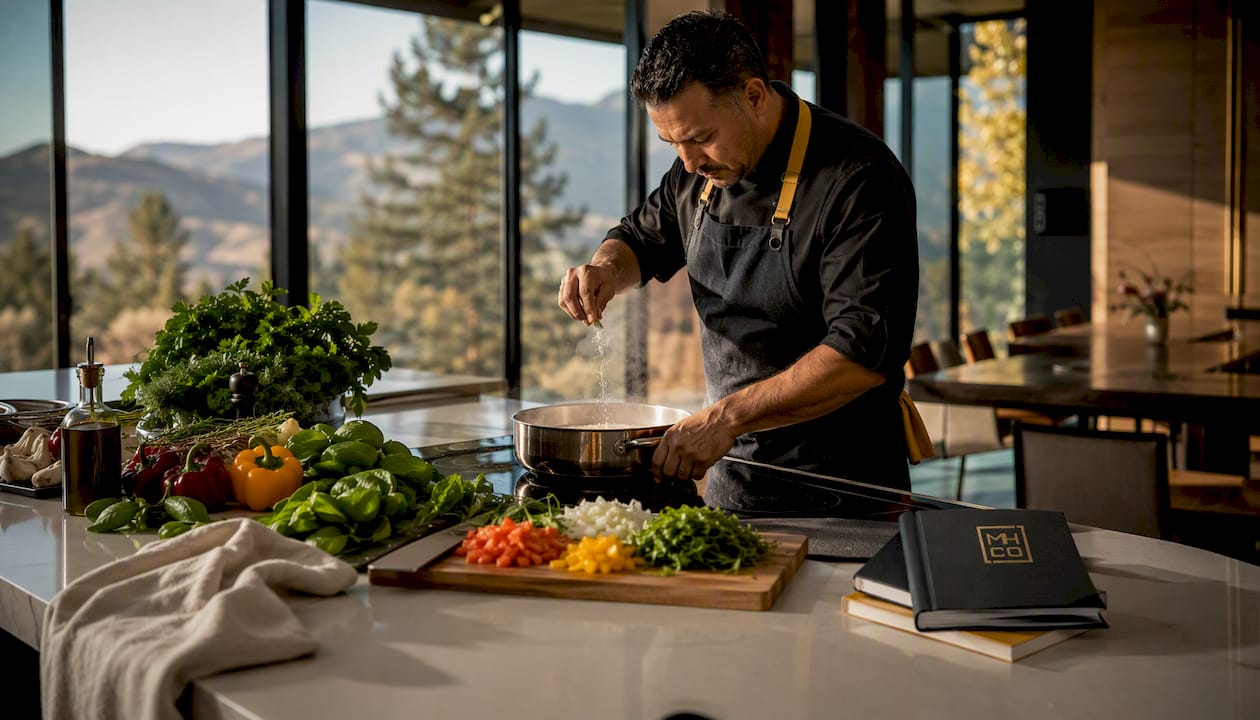
Pro Tip: For estate events under 40 guests, ask specifically about the private-chef format. You get a bespoke menu, one point of accountability, and a chef who interacts with your guests — none of which a drop-off model can replicate.
What do sample menus and dietary accommodations look like?
A caterer's menu flexibility tells you more about their operation than their website photos do. Here's what to look for and what to ask.
Sample menu approaches by event type:
- Cocktail reception: Passed canapés (tuna tartare on wonton crisps, fig and brie crostini, wagyu sliders), plus one or two stationed bites. Typically 6–8 pieces per guest per hour.
- Plated dinner: Three to five courses — amuse-bouche, salad, intermezzo, protein with composed sides, dessert. Luxury providers often offer a chef's tasting menu format with wine pairings.
- Multi-course tasting menu: Seven or more courses, each plated individually. Requires a skilled brigade and a kitchen with adequate burner and plating space. Best suited to intimate groups of 8–20.
Tastings are standard practice for weddings and large corporate events. Most providers schedule them 6–12 weeks before the event date, once the menu direction is confirmed. For a private-chef booking, the menu consultation often replaces a formal tasting, though Milehighcook can accommodate tasting requests on larger events.
Dietary protocol checklist:
- Confirm vegetarian and vegan options are built into the base menu, not afterthoughts
- Request written confirmation of gluten-free preparation protocols (dedicated cookware, no shared fryers)
- Ask specifically about nut-allergy cross-contact controls, not just ingredient substitution
- Get allergen information at the ingredient level, not just the dish level
- Confirm who on the day-of team is responsible for tracking dietary flags per guest
Pro Tip: Request a sample-menu PDF before signing any contract. If a provider can't produce one, that's a signal their menu program isn't as developed as their pitch suggests. Also ask for their allergen policy in writing — verbal assurances don't protect anyone.
For corporate events with complex dietary rosters, Milehighcook's dietary restrictions best practices guide is worth reviewing before your first call.
Which event types do local caterers routinely handle?
Paradise Valley's event mix skews toward high-end private functions, which shapes what local providers specialize in. Here's the breakdown:
- Private estate dinners: The most common booking in this market. Intimate groups, custom menus, on-site cooking. Milehighcook's private-chef model was built for exactly this.
- Weddings and rehearsal dinners: Wedding catering in Paradise Valley typically involves plated or family-style service for 50–200 guests. Arizona buffet and family-style service typically costs $35–$75 per person, while plated full-service catering ranges from $85–$175 per person.
- Corporate dinners and retreats: Boardroom dinners, executive retreats, and team-building events. Corporate catering in Paradise Valley often pairs a plated format with a chef interaction element.
- Holiday parties: Typically buffet or station-based for flexibility with guest flow. Seasonal menus and festive meal offerings for event planners can help with concept direction.
- Golf club and estate events: Load-in logistics are the main variable. Confirm parking access for the catering vehicle, kitchen proximity to the service area, and whether the venue has a commissary kitchen or requires full off-site production.
Venue logistics that change scope and cost:
- No on-site kitchen means the caterer needs a production vehicle and hot-holding equipment — factor in a logistics surcharge
- Outdoor Arizona venues in summer require commercial ice plans and hydration stations; heat affects both food safety and guest comfort
- Gated communities and private estates may restrict delivery windows, which affects staffing arrival time
- Long load-in distances from the parking area to the service space add labor time
What does catering actually cost in Paradise Valley?
Per-person pricing varies more than most planners expect, depending primarily on service format, guest count, menu complexity, and regional logistics. Drop-off or delivery generally costs less but is less formal, while plated and private chef services are more costly due to staff and experience elements.
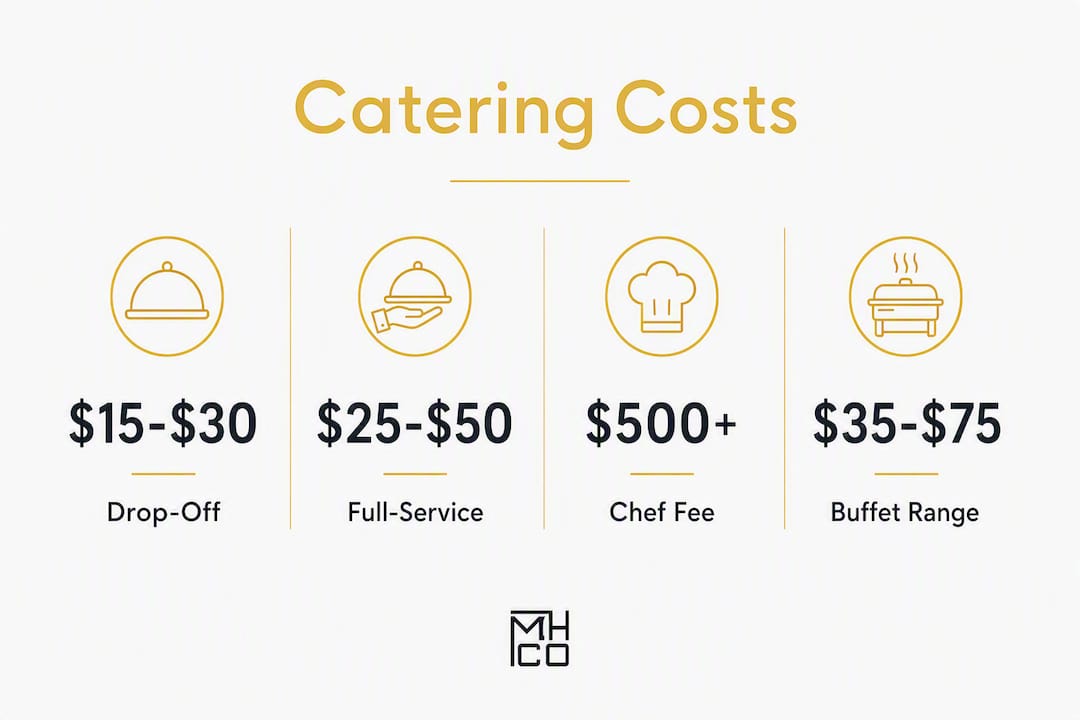
For a 50-person event, buffet and plated dinner costs can vary widely based on menu choices and staffing. Larger groups increase costs accordingly, with plated dinners typically costing more than buffet options.
What's typically included vs. extra:
- Included in most full-service quotes: food, chef labor, service staff, basic setup
- Often extra: rentals (linens, china, glassware), travel fees beyond a set radius, service charges (18–22% is common), gratuity, bar service and liquor liability
- Milehighcook's all-inclusive model bundles groceries, chef fees, service staff, and cleanup — which removes the most common sources of invoice surprises
For private-chef bookings, the chef's fee is largely fixed; the main lever for controlling per-guest spend is menu ingredient choice. Swapping a beef tenderloin for chicken can drop the per-person cost meaningfully without touching the quality of the experience.
Pro Tip: Off-peak dates (Sunday through Thursday, January through March in Arizona) often come with lower minimums and more chef availability. If your event is flexible on date, that's the fastest way to get more for your budget without changing the menu.
When should you book, and what happens on event day?
Lead times in Paradise Valley's luxury market are tighter than most planners assume, especially for weekend dates between October and May.
- Large plated weddings (100+ guests): Book 6–12 months out. Menu finalization at 3 months; final guest count 2–3 weeks before.
- Mid-size events (30–75 guests): 2–4 months is a comfortable window. Tasting or menu consultation at 6–8 weeks.
- Private chef dinners (under 30 guests): 3–6 weeks is often sufficient, though popular dates fill faster in peak season.
Booking timeline checklist:
- Initial inquiry and date hold — confirm availability before discussing menu
- Deposit (typically 25–50% of the event total) to secure the date
- Menu consultation or tasting — 6–12 weeks before the event
- Final guest count and dietary flags — 2 weeks out
- Staffing confirmation and site logistics walkthrough — 1 week out
- Day-of: chef and staff arrive 1–2 hours before service; setup, cooking, service, and cleanup follow
Site logistics to confirm in advance:
- Kitchen access: burner count, oven capacity, counter space for plating
- Power availability for induction equipment or warming units
- Refrigeration and cold-storage capacity for pre-event ingredient holding
- Hot-holding plan for outdoor or remote service areas (critical in Arizona summers)
- Parking and load-in access for the catering vehicle and staff
What should a professional catering contract include?
A contract protects both sides, and the specifics matter more than the length. Vague language around fees, cleanup, and dietary protocols is where disputes originate.
Contract checklist:
- Scope of services: exact event date, location, guest count, service style, and menu
- Payment schedule: deposit amount, balance due date, accepted payment methods
- Cancellation policy: refund terms at 30, 60, and 90 days out
- Liability and insurance: general liability coverage, proof of food establishment permits
- Allergy and dietary protocols: written confirmation of cross-contact controls and who manages dietary flags on the day
- Cleanup scope: confirm in writing whether "cleanup" means washing cookware or full surface restoration of the kitchen
- Force majeure and contingency plans: what happens if the chef is ill or a key ingredient is unavailable
Professional contract language should allow culinary creativity while keeping fees, liability, and dietary protocols explicit. That balance prevents hidden-fee surprises and enforces safety standards without micromanaging the chef's craft.
On cleanup scope: "Cleanup" can legally mean anything from rinsing cookware to full surface restoration. Experienced hosts always confirm in writing whether the kitchen will be left merely usable or returned to its pre-event condition. This single clarification prevents the most common day-after disagreements.
Insurance and safety signals to verify:
- Proof of food establishment permit (Arizona Department of Health Services)
- General liability insurance certificate
- Liquor liability coverage if alcohol service is included
- ServSafe or equivalent food-handler certification for all kitchen staff
The private-chef model has a structural advantage here: one chef, one contract, one point of accountability. With a multi-vendor catering setup, liability questions get complicated fast when something goes wrong.
Luxury event planners in 2026 are increasingly choosing experience-led dining over drop-off formats — on-site cooking, chef interaction, and immersive service flows that a transactional delivery model simply can't replicate. For Paradise Valley's market, that shift aligns with what residents and their guests actually expect.
How do you vet a caterer before signing anything?
The questions you ask in the first conversation reveal more than any review page.
- Can you show me a sample menu for an event similar to mine in size and style?
- How do you handle last-minute dietary requests or guest count changes?
- What is your staffing ratio for a plated dinner at my guest count?
- What equipment do you bring, and what do you need from the venue?
- What's your backup plan if the lead chef is unavailable on the event day?
- Can you provide references from two events in Paradise Valley or Scottsdale in the past 12 months?
- What permits and insurance certificates can you provide before we sign?
Red flags that should give you pause:
- A written estimate with vague line items ("food and service" with no breakdown)
- Inability or reluctance to provide proof of insurance and food permits
- No written allergen or dietary protocol — verbal assurances only
- Unclear or absent cleanup scope in the contract
- Evasive answers about previous events of similar size or type
- No sample menu available, or a menu that hasn't changed in years
Request a formal written quote and a sample-menu PDF before committing to any deposit. Any provider worth hiring will have both ready within 48 hours.
Milehighcook brings CIA-trained chefs directly to your Paradise Valley event
Milehighcook is the all-inclusive private-chef and catering option built for exactly the kind of event Paradise Valley hosts regularly: estate dinners, luxury weddings, executive retreats, and private celebrations where the food needs to match the setting.
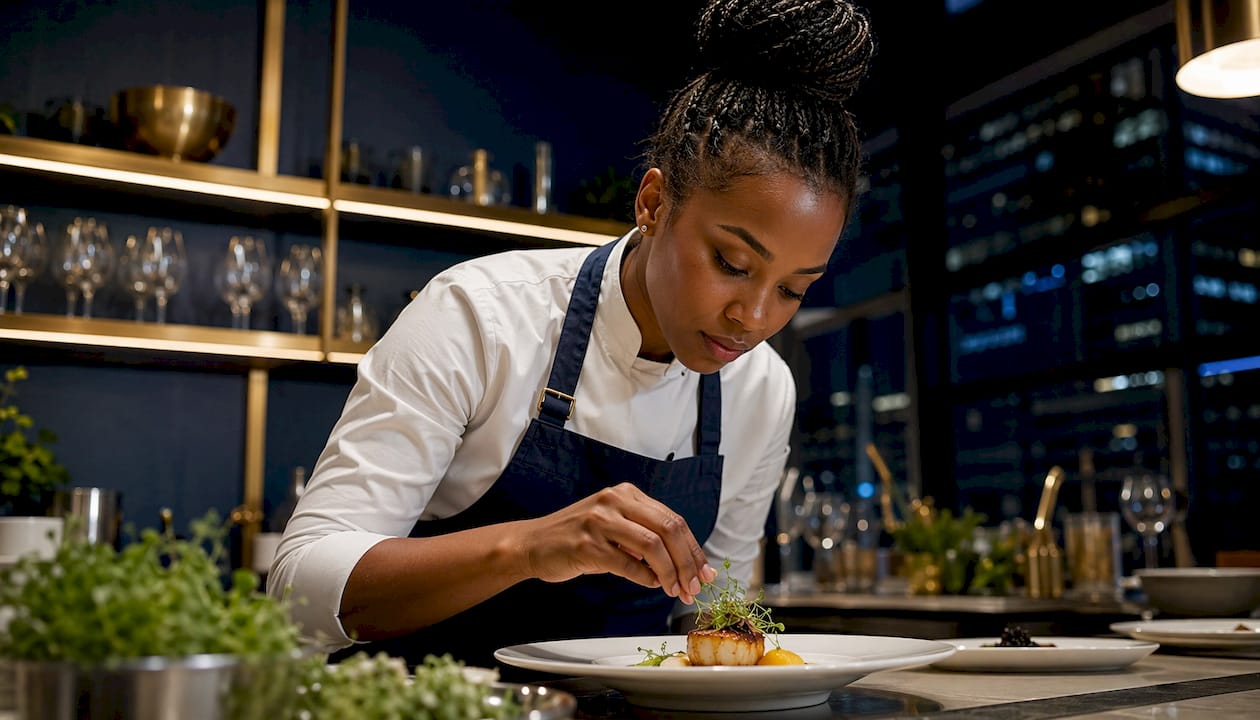
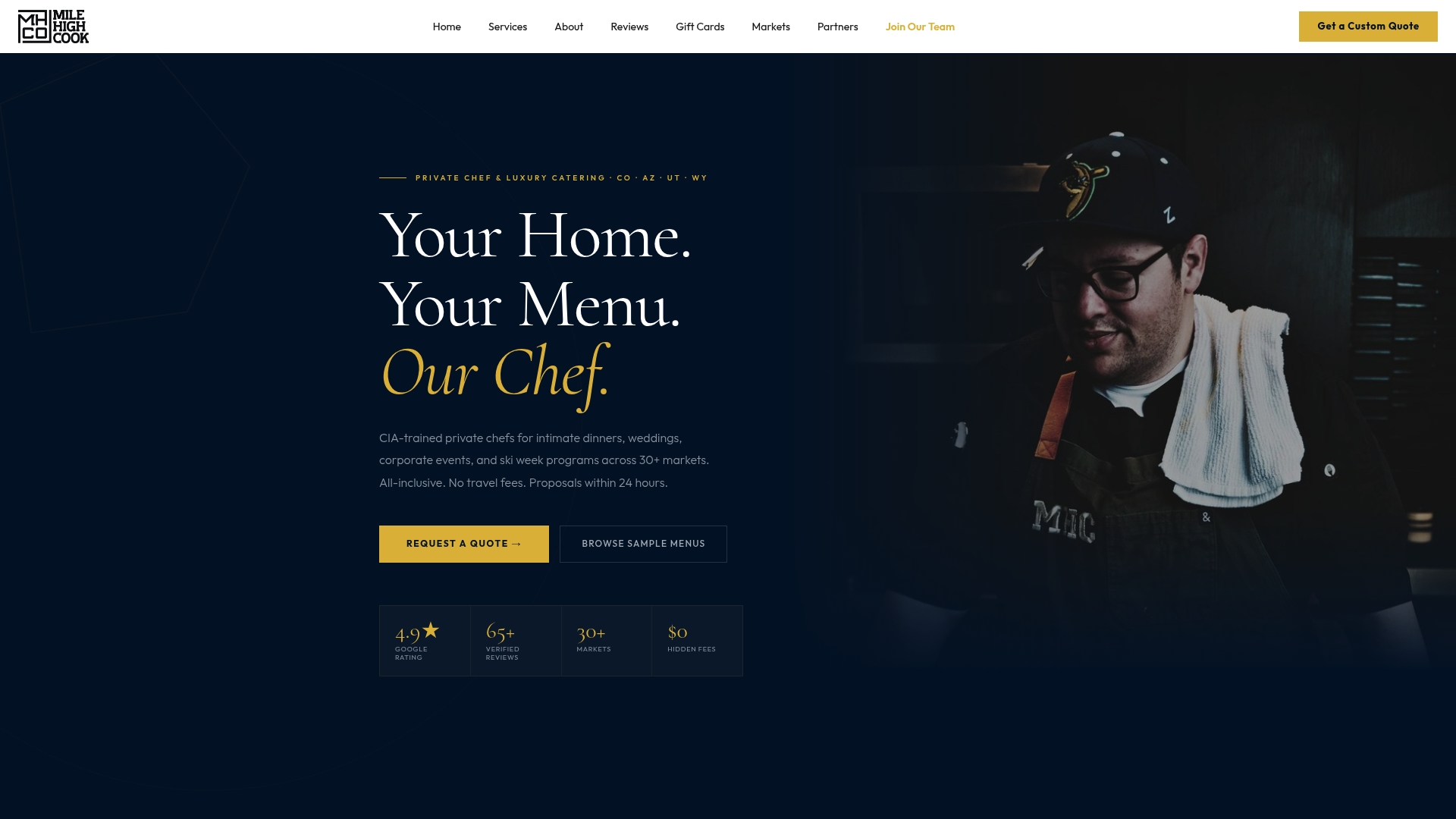
Every booking includes CIA-trained chefs, all groceries, service staff, and complete kitchen cleanup. No surprise line items on the final invoice. The all-inclusive catering model covers everything from the first menu consultation through the last wipe-down of your countertops. Milehighcook serves Arizona as part of a 30+ market footprint that includes Colorado, Utah, and Wyoming, so the operational infrastructure is already in place.
To request a custom quote for your Paradise Valley event, visit the private chef services page, provide your event date, guest count, and any dietary requirements, and a chef will follow up to discuss menu options and availability. Sample menus are available on request, and tasting consultations can be arranged for larger events.
Key Takeaways
Milehighcook's all-inclusive private-chef model is the clearest fit for Paradise Valley's luxury event market: CIA-trained chefs, bundled groceries, staff, and cleanup, with no hidden fees.
| Point | Details |
|---|---|
| Service format drives cost | Per-person pricing ranges from $15–$30 for drop-off, $25–$55 for buffet, $35–$70 for family-style, $50–$120 for plated, and $90–$150+ for premium or wedding/private-chef/luxury service. |
| Book early for peak season | Large weddings need 6–12 months; private chef dinners under 30 guests can book 3–6 weeks out. |
| Get cleanup scope in writing | Confirm whether "cleanup" means cookware only or full kitchen restoration before signing. |
| Check insurance and permits | Require a general liability certificate and Arizona food establishment permit from any provider. |
| Milehighcook for Paradise Valley | All-inclusive pricing covers groceries, CIA-trained chefs, staff, and cleanup — request a quote to confirm availability. |
Why experience-led catering is the only real option here
Most catering guides treat drop-off and full-service as equally valid choices on a sliding budget scale. For Paradise Valley, that framing misses the point. The residents and planners booking events here aren't choosing between options on a cost spectrum — they're choosing between an experience and a transaction.
Drop-off catering delivers food. A private chef delivers a meal. The distinction sounds obvious, but it gets lost in price comparisons. When your guests are sitting in a $3 million estate, the quality of the food isn't the only thing they're evaluating. They notice whether someone is cooking for them or whether containers arrived from a commissary kitchen 40 minutes away.
The contract and safety emphasis in this guide isn't bureaucratic caution. It's the practical consequence of hiring someone to work inside your home. A written allergen protocol, a cleanup scope, and a liability certificate aren't nice-to-haves — they're the minimum standard for any provider operating at this level. A caterer who pushes back on providing those documents is telling you something important about how they operate.
The 2026 shift toward experience-led dining isn't a trend for its own sake. It reflects what guests in high-end markets have always preferred when given the choice. The market is finally catching up to the preference.
FAQ
What is the cheapest food to cater for a party?
Buffet and family-style formats using seasonal proteins like chicken, pasta, or vegetarian dishes are the most cost-effective options, typically running $35–$75 per person in Arizona with staff included.
How much does catering for 50 people cost?
Buffet and plated dinner costs for a 50-person event can vary widely based on menu choices and staffing, with plated dinners typically costing more than buffet options.
How do you cater for 50 people on a tight budget?
Choose a buffet or family-style format, limit protein to one or two options (chicken is significantly cheaper than beef), use seasonal ingredients, and book an off-peak date. Skipping a full open bar in favor of beer, wine, and one signature cocktail also cuts costs without affecting the guest experience.
What is the cheapest way to feed 100 people at a wedding?
A buffet with a focused menu — two proteins, two sides, salad, and bread — typically runs $35–$75 per person in Arizona, including basic staff. Limiting beverage service and choosing a venue with an on-site kitchen reduces logistics costs further.
Does Milehighcook serve Paradise Valley for private events?
Yes. Milehighcook's Paradise Valley catering service covers private estate dinners, weddings, corporate events, and special occasions with CIA-trained chefs and all-inclusive pricing.