

Yes, you can hire an all-inclusive private-chef service for corporate event venues in Denver, and for most dinners, retreats, and client meals under 60 guests, it beats a traditional venue-plus-caterer setup on cost, control, and simplicity. You pick the room. A chef handles the rest.
Planners who go this route get three things a banquet hall rarely offers: a menu built around your group instead of a standard catering package, one flat quote instead of a stack of add-on invoices, and a team that shows up, cooks, serves, and disappears with the kitchen spotless. Milehighcook builds its Denver corporate program around exactly that model.
- CIA-trained chefs design and execute every menu, not a rotating banquet kitchen staff
- All-inclusive pricing bundles groceries, labor, service, and cleanup into one number
- A 4.9-star rating from more than 65 verified reviews backs the consistency claim across every booking
Key Takeaways
Private-chef corporate catering in Denver works best when planners lock in guest count, venue kitchen access, and staffing ratio before requesting a final quote.
| Point | Details |
|---|---|
| Budget per person | Expect $85 to $150 per guest for standard dinners, up to $125 to $250 for retreat-level service. |
| Confirm inclusions in writing | All-inclusive quotes should name groceries, chef labor, service staff, and cleanup as covered line items. |
| Book early for mountain venues | Reserve at least 72 hours out for Denver metro events and a week or more for mountain-area bookings. |
| Match service style to event goal | Plated dinners suit formal client meetings; family-style and buffet fit retreats and larger mixed groups. |
| Milehighcook covers the full package | CIA-trained chefs, all-inclusive pricing, and a 4.9-star rating from 65+ reviews back every Denver corporate booking. |
Table of Contents
- What Does Corporate Event Catering Cost in Denver?
- How Do You Choose the Right Private-Chef Vendor?
- Which Menu Format Fits Your Event Goal?
- What Logistics Should You Confirm With the Venue?
- Why Milehighcook's Model Reduces Planning Risk
- What Size Events Does This Model Handle Well?
- What Kinds of Spaces Host These Events in Denver?
- How Should You Match a Venue to Your Event Goals?
- Where Are the Best Corporate Dinner Venues Located?
- What AV and Technical Equipment Should You Confirm?
- How Do Attendees Get to the Venue?
- How Much Capacity Do You Actually Need?
- Ready to Book Corporate Catering in Denver?
- Sources
- FAQ
What Does Corporate Event Catering Cost in Denver?
Per-person pricing for private-chef corporate events in Denver commonly runs $85 to $150 per guest for standard dinners, and often climbs to $125 to $250 per person for retreat-style experiences with premium ingredients or a higher staff-to-guest ratio. That range covers everything from a plated executive dinner for a dozen leadership team members to a family-style spread for a fifty-person offsite.
The all-inclusive model is the detail planners underestimate the most. A properly quoted package covers menu consultation, grocery sourcing, the chef's labor, plating and service, and full kitchen cleanup, so there's no separate grocery run to reconcile after the event and no service-staff invoice showing up two weeks later.
Pro Tip: Ask for the per-person rate broken into a line-item estimate before you sign anything. A vendor who can't separate groceries from labor and service fees is probably estimating, not pricing.
For total budget planning, sample event costs for Denver bookings typically land between $1,200 and $5,000 or more, depending on headcount and service tier:
- Small team dinner (8 to 12 guests): roughly $1,200 to $2,000 all-in
- Client dinner or leadership offsite (20 to 30 guests): roughly $2,500 to $4,000
- Larger retreat or all-hands meal (40+ guests): $4,000 to $5,000 and up
A few variables move those numbers. Premium proteins (dry-aged beef, fresh seafood) push the per-person rate up. Adding bartenders or extra service staff for a formal multi-course dinner adds a flat fee on top of the base quote. And mountain-area venues, think a retreat cabin near Breckenridge or a lodge outside Estes Park, carry travel costs and tighter scheduling that Denver metro venues don't.
Lead time matters more than most planners expect. Book at least 72 hours ahead for a Denver metro event, and give yourself a week or more for anything in the mountains, where chef availability and ingredient sourcing both get tighter the further you are from the city.
How Do You Choose the Right Private-Chef Vendor?
A quote is only as good as what's actually in it. Before you commit budget, run every proposal through the same checklist:
- Menu customization — Can the chef build around your team's dietary needs (vegan, gluten-free, kosher, allergies) without a surcharge buried in fine print?
- Staffing ratio — Ask directly how many servers are assigned per guest count. A 40-person dinner with one server is a bottleneck waiting to happen.
- Insurance and licensing — Request proof of liability coverage and, if the venue requires it, confirmation the chef holds current food-handling certification.
- References or reviews — A vendor with a verifiable review history (star rating, review count, and platform) is easier to vet than one with none.
- Cancellation and refund terms — Corporate events shift dates. Know exactly what you lose if you have to move the booking.
Send this exact ask to every vendor you're comparing: "Send me a sample menu for [your event type], your staffing plan for [guest count], written confirmation that groceries are included in the quoted price, and your insurance certificate." Vendors who answer all four cleanly, fast, are the ones worth booking.
Pro Tip: Treat a vague answer to the staffing question as a red flag. "We'll figure it out on the day" means you're the one figuring it out on the day.
If a vendor hedges on insurance or won't commit to a written staffing ratio, that's a clarify, not a reject, but it should delay your deposit until you get a straight answer.
Which Menu Format Fits Your Event Goal?
The service style you choose should match what you actually need the meal to do. A networking dinner and a heads-down retreat lunch call for completely different formats.
- Plated multi-course works best for formal client dinners where the meal itself is the centerpiece and conversation stays seated
- Family-style suits leadership retreats and team dinners, since it encourages passing dishes and breaks the stiffness of individual plating
- Buffet or stations handle larger, mixed-dietary groups efficiently, especially when guests are moving between sessions on a tight schedule
- Passed hors d'oeuvres fit cocktail-hour networking events where mingling matters more than sitting down
- Tasting or pairing menus elevate a smaller executive dinner into something memorable, ideal for client entertainment or a milestone celebration
Dietary variety gets easier at scale when the chef builds one flexible base menu with swappable proteins and sides rather than three entirely separate menus. Beverage coordination, wine pairings, a signature cocktail, non-alcoholic options, should get locked in during the same conversation as the food menu, not treated as an afterthought. For seasonal inspiration across formats, menu ideas built for downtown events offer a useful starting point.
What Logistics Should You Confirm With the Venue?
A great chef can still get derailed by a venue that hasn't been properly briefed. Work through this list with both the chef and the venue contact before the event date.
- Kitchen access — Confirm whether the space has a working kitchen or if the chef needs to bring portable equipment and set up a staging area instead.
- Power and equipment — Verify outlet locations, refrigeration space, and whether the venue allows outside cooking equipment (induction burners, warming units).
- Timing windows — Lock in exact prep-start time, service window, and cleanup deadline, especially if the venue has a hard end time for room rental.
- Parking and loading — Confirm where the chef's team can load in groceries and equipment without blocking guest arrivals.
- Permits and insurance — Most private venues don't require a separate food-service permit for a private chef, but liquor service at a rented space often needs its own license; ask the venue directly.
Pro Tip: Confirm kitchen access seven days before the event, not the morning of. A locked commercial kitchen or a "no outside cooking equipment" rule discovered at 4 p.m. on event day has no good fix.
Mountain-area events need the extra lead time mentioned earlier for a real reason: travel time cuts into prep windows, and ingredient sourcing in smaller mountain towns is genuinely more limited than in Denver proper.
Why Milehighcook's Model Reduces Planning Risk
Every planner comparing catering vendors is really managing one risk: inconsistency. A caterer that nails one event and disappoints the next isn't a caterer you can build a repeat corporate relationship on.
- Every chef is CIA-trained, meaning the technical standard doesn't vary from one booking to the next
- The all-inclusive pricing model means groceries, chef fees, service staff, and cleanup are quoted once, with nothing added later
- A 4.9-star average from more than 65 verified reviews gives planners a track record to check before booking, not just marketing copy
- Coverage spans 30-plus markets including Colorado, so the same standard applies whether you're booking in Denver or a satellite office elsewhere in the region
The value of an all-inclusive quote isn't just the price. It's knowing the number you signed off on in the budget meeting is the number that shows up on the invoice, with no grocery reconciliation or last-minute staffing surcharge attached.
For a planner managing a recurring event calendar, quarterly dinners, monthly retreats, that consistency is what turns a one-off catering booking into a standing vendor relationship. It also cuts internal approval time: a single line-item quote is far easier to get signed off than five separate ones.
What Size Events Does This Model Handle Well?
Private-chef corporate catering scales further than most planners assume, but it has a sweet spot. Intimate leadership dinners for 6 to 15 people are where the model shines brightest: a chef working one menu for a small group can plate individually, time courses precisely, and adjust on the fly if someone's running late.
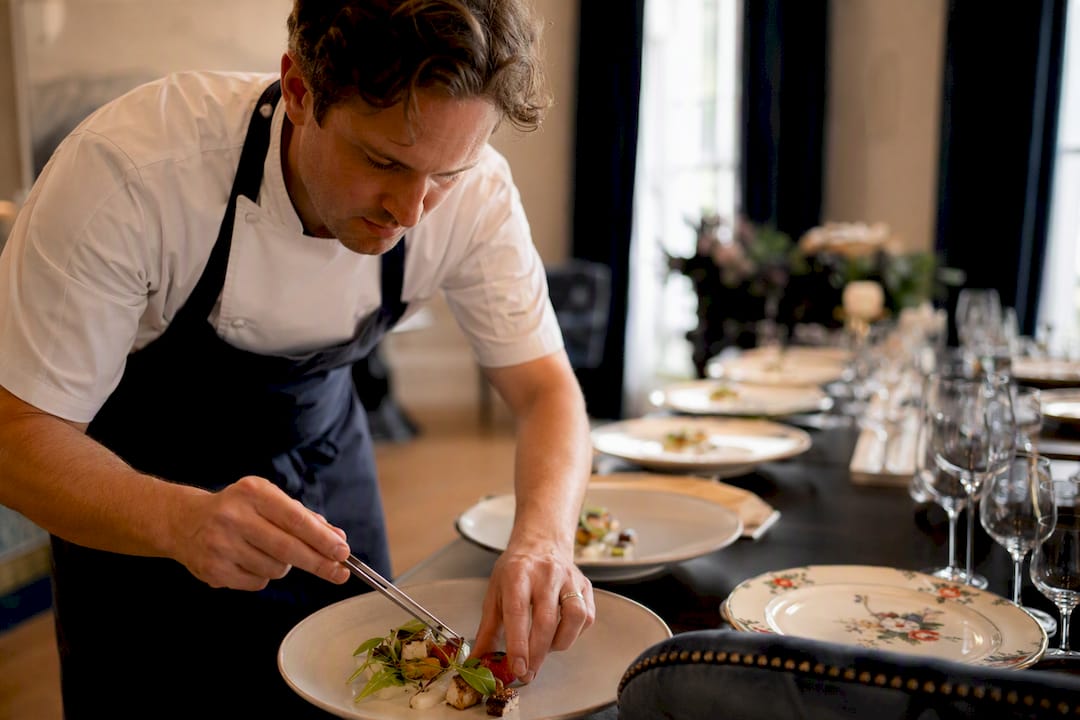
Mid-size events, 20 to 50 guests, are the most common corporate booking. This is client-dinner and retreat territory, where family-style or buffet service lets one chef and a small service team handle the volume without sacrificing the personalized-menu advantage over a standard catering package.
Beyond 50 guests, staffing ratio becomes the deciding factor. A well-run event at 60 to 80 people still works with private-chef service, but it requires a larger kitchen team, additional servers, and more precise timing coordination than a 15-person dinner ever would. Above that range, most private-chef providers, Milehighcook included, will scope the event individually rather than quoting off a standard tier, since venue kitchen capacity and staffing logistics start to vary widely case by case.
The practical takeaway: if your event sits under 50 guests, private-chef catering is close to a plug-and-play solution. Above that, ask your vendor directly whether they've executed events at your target size before, and how many staff they'd assign.
What Kinds of Spaces Host These Events in Denver?
Private-chef catering isn't tied to one type of venue, which is part of why it works so well for corporate planners juggling different event formats. Downtown hotel meeting rooms and conference centers offer built-in AV and predictable layouts but often restrict outside catering or charge steep kitchen-access fees.
Unique spaces, art galleries, rooftop lounges, historic warehouses converted for events, give a company dinner a distinct sense of place, but most lack a working kitchen, which is exactly where a chef who can stage a full service from a portable setup earns their fee. Private homes and executive residences remain a strong option for smaller leadership dinners, since the chef essentially turns the host's kitchen into a working restaurant for the evening.
Office spaces themselves are an underused option. A company that already has a break room or open floor plan can host a full chef-led dinner after hours without renting anything, cutting the largest line item out of the budget entirely. Mountain lodges and retreat cabins outside the city round out the list for multi-day offsites, where the chef becomes part of the retreat experience rather than a one-night vendor.
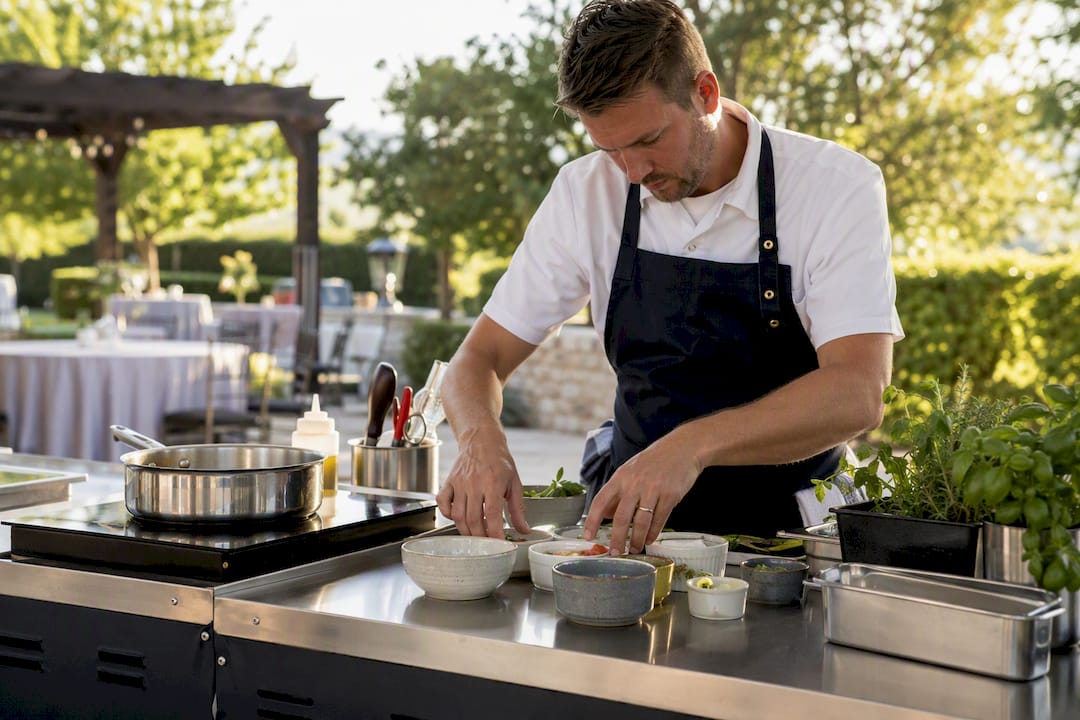
Whatever the space, the deciding factor for a private-chef event isn't square footage. It's whether the room supports a service flow, enough space to plate, serve, and clear without disrupting the meeting or conversation happening around it.
How Should You Match a Venue to Your Event Goals?
Start with what the meal is supposed to accomplish, not what venue looks impressive in photos. A client-facing dinner meant to close a deal calls for a different room than an internal retreat meant to build team cohesion.
Brand alignment matters more than planners often admit. A company built on precision and craft, a design firm, a financial advisory, benefits from a refined, quieter setting where a plated dinner reinforces that identity. A creative agency or startup might get more value from a looser, family-style dinner in an unconventional space that mirrors the brand's actual personality.
Practical constraints narrow the list fast: guest count against room capacity, kitchen or staging access for the chef, and whether the group needs AV support for a presentation before or after the meal. A 15-person leadership dinner doesn't need a ballroom. A 60-person all-hands does need enough clear floor space for both seating and a service path that doesn't cut through the middle of the room.
The single best filter: ask whether the venue was chosen because it's convenient, or because it actually serves the event's purpose. A downtown office building near everyone's commute is convenient. A retreat cabin an hour outside the city forces the kind of focused, phone-down conversation a leadership offsite actually needs.
Where Are the Best Corporate Dinner Venues Located?
Denver's geography splits corporate catering into two distinct planning tracks: city and mountain. Within city limits, neighborhoods like Cherry Creek, LoHi, and Wash Park host a steady stream of private-chef corporate dinners, ranging from executive residences to boutique event spaces, all within a short drive of downtown offices.
Accessibility inside Denver proper is straightforward. Most metro venues sit within 15 to 25 minutes of downtown, LoDo, or the Denver Tech Center, meaning a lunch or evening event doesn't eat into the workday with excessive commute time. That matters for retreat-adjacent dinners scheduled after a full day of meetings, when nobody wants a 45-minute drive standing between them and dinner.
Mountain venues change the math entirely. A retreat cabin near Evergreen or a lodge outside Estes Park adds real travel time, often 45 minutes to over an hour each way, which planners need to build into the day's schedule. It also affects the chef logistics side: ingredient delivery and staff travel both take longer, which is exactly why mountain bookings need that extended lead time mentioned earlier.
The right location decision usually comes down to one question: is the goal efficiency (stay close, protect the workday) or immersion (get away, make the retreat feel like a retreat)? Both are valid. They just call for opposite location strategies.
What AV and Technical Equipment Should You Confirm?
Corporate dinners increasingly involve some kind of technical component, a welcome presentation, a slide deck recapping quarterly results, background music during a networking hour, and the venue's AV capability needs to be confirmed well before the event, not assumed.
Hotel conference spaces and dedicated event venues typically come with built-in screens, projectors, and microphones as part of the rental fee, but always confirm whether that includes setup and a technician on-site, or just the hardware sitting in a closet. Unique spaces and private residences almost never have this equipment built in, which means renting a portable projector and screen, or a simple Bluetooth speaker system for music, becomes part of the event budget.
For a private-chef dinner specifically, AV needs are usually lighter than a full conference: a microphone for a toast or short remarks, background music during the meal, and maybe a screen for a five-minute recap before dessert. Confirm ahead of time whether the venue's WiFi can handle a video call if remote team members need to join part of the evening.
The practical rule: if the event includes any formal remarks, a toast, an award, a project recap, test the microphone and screen setup the same day, not the week before. Equipment that worked during a walkthrough doesn't always work with a room full of people and different acoustics.
How Do Attendees Get to the Venue?
Parking is the detail that quietly determines whether guests arrive relaxed or frazzled. Downtown Denver venues often rely on paid garage parking or street parking, both of which get tighter during weekday evening rush hour, exactly when most corporate dinners start.
Venues with dedicated on-site parking, common in the Denver Tech Center and suburban office parks, remove that friction entirely and are worth prioritizing for larger groups where coordinating twenty separate parking situations becomes its own logistical headache. For downtown venues without dedicated lots, sending guests a specific garage recommendation and a validated-parking arrangement, if the venue offers one, saves a surprising amount of pre-event stress.
Ride-share pickup and drop-off also deserves a line in the event details you send guests, especially for evening events where valet or garage exits get congested right at the end. For events with out-of-town attendees or a mixed group flying in for the retreat, confirming rideshare access or arranging a shuttle from a downtown hotel block solves the accessibility question before it becomes a day-of scramble.
Mountain venues need their own transportation plan entirely: carpooling, a rented shuttle, or clear driving directions distributed well ahead of time, since rideshare coverage thins out fast outside city limits.
How Much Capacity Do You Actually Need?
Overestimating capacity wastes budget on empty square footage. Underestimating it cramps service and kills the atmosphere you're paying for. The right approach starts with your actual confirmed guest count, not the invite list.
A seated plated dinner needs roughly 12 to 15 square feet per guest once you account for chairs, table spacing, and a clear service path for staff to move without brushing shoulders with seated guests. Buffet and family-style layouts need more open floor space near the serving area itself, since guests cluster there in waves rather than moving through a single line.
Layout flexibility matters as much as raw capacity. A room that seats 40 for a plated dinner might comfortably hold 60 for a cocktail-style networking event with passed hors d'oeuvres, since standing guests need less individual space than seated ones. If your event includes both a seated dinner and a mingling portion, confirm the venue or space can physically reconfigure between the two without a lengthy furniture reset eating into your evening.
Ask your chef and venue contact for a straight capacity number based on your actual service style, not a generic "seats 100" figure pulled from a rental listing.
An Editorial Note on Planning Corporate Dinners
The biggest mistake planners make with corporate catering isn't choosing the wrong menu. It's treating the venue and the food as two separate decisions made by two separate people on two separate timelines. That's how you end up with a beautiful room and a mediocre meal, or a spectacular dinner served in a space that fights the event's purpose the whole night.
Confirm kitchen access, or the lack of it, seven days out, not the morning of. That single habit prevents more event-day disasters than any other item on this checklist.
The all-inclusive private-chef model earns its place in corporate planning because it collapses two decisions into one conversation: pick a room, then let the chef handle everything that happens inside it.
— Stephen
Ready to Book Corporate Catering in Denver?
Once you've settled on a venue, booking the chef side is the easy part. Milehighcook's process starts with a quote request covering your date, guest count, and location, the same three details that determine everything else about pricing and staffing.
From there, you'll get matched with a CIA-trained chef and a sample menu tailored to your event type, whether that's a plated client dinner, a family-style retreat meal, or a passed-hors-d'oeuvres networking hour. Every quote is all-inclusive: groceries, chef fees, service staff, and complete cleanup rolled into one number, so your budget approval doesn't come with surprise line items three weeks later. Before you confirm, request the specific staffing plan for your headcount and flag any dietary needs across the group.
The fastest path to a firm number is the private dining page for Denver, where pricing starts at $150 per person and quote requests move quickly. For a broader look at service options, including private chef services in Denver, the same all-inclusive model applies whether you're planning a ten-person leadership dinner or a fifty-person retreat.
Sources
This guide draws its pricing ranges and booking timelines from three Denver-focused private-chef resources: a complete guide to hiring a private chef in Denver, a breakdown of private chef costs in Denver, and a step-by-step booking roadmap covering lead times and the matching process. For menu presentation ideas beyond Denver, the festive meal offerings list for event planners is a useful supplementary reference. Always confirm current sample pricing directly with any provider before finalizing a budget.
FAQ
How Much Does a Private Chef Cost for a Corporate Event in Denver?
Expect $85 to $150 per person for standard corporate dinners and $125 to $250 per person for retreat-level events with premium ingredients or added service staff.
What Does an All-Inclusive Private-Chef Package Include?
A properly quoted package covers menu consultation, grocery sourcing, the chef's labor, plating and service, and complete kitchen cleanup, with no separate invoices for any of those items.
How Far in Advance Should I Book a Corporate Chef in Denver?
Book at least 72 hours ahead for Denver metro events and a week or more for mountain-area retreats or cabins.
Can Private-Chef Catering Handle Large Corporate Events?
Yes, up to roughly 50 guests it works close to plug-and-play; beyond that, staffing ratio and kitchen capacity need individual scoping with the vendor.
Does Milehighcook Serve Corporate Events Outside Denver?
Yes, Milehighcook covers more than 30 markets including Colorado, Arizona, Utah, and Wyoming, with the same all-inclusive pricing and CIA-trained chef standard applied in every market.