
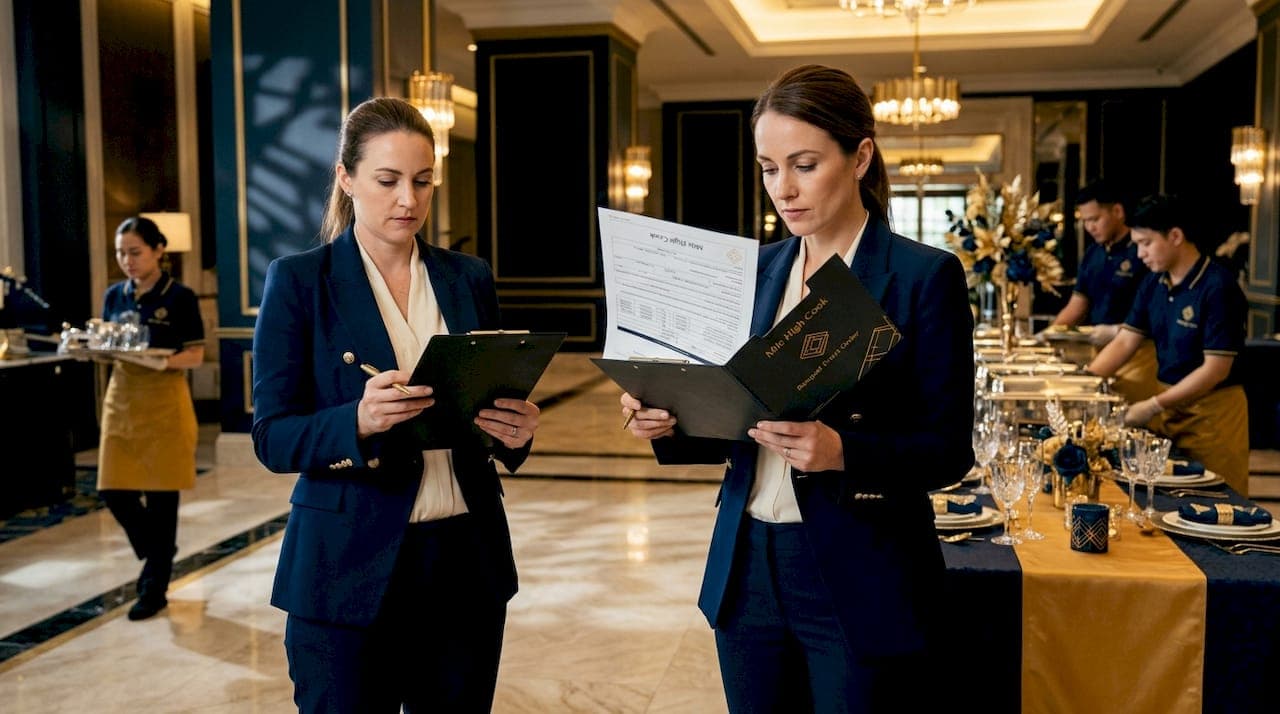
Corporate event catering is a structured, multi-departmental operation built on detailed documentation, staffing compliance, and minute-by-minute timeline management. Understanding how corporate event catering unfolds means recognizing that success depends not on the menu alone, but on the coordination between chefs, service staff, vendors, and event managers working from a shared operational blueprint. The Banquet Event Order (BEO) sits at the center of this process, functioning as the single source of truth for every team member on site. Get this structure right, and a 300-person corporate dinner runs as smoothly as an intimate boardroom lunch.
How corporate event catering unfolds: the BEO as your operational blueprint
The Banquet Event Order is a detailed, minute-by-minute document that governs every aspect of a catered corporate event, from the first appetizer to the final load-out. According to CaterCamp's BEO template, a complete BEO includes the event header, full menu with dietary notes, beverage details, staffing assignments, timeline, equipment list, and a client signature line. That last element matters more than most planners realize. A signed BEO is a legal and operational contract, not just a planning worksheet.
Every team member on site, including chefs, servers, bartenders, drivers, and the floor captain, must access the same BEO to reduce operational ambiguity and prevent errors. When the pastry team is working from a different version than the front-of-house staff, small discrepancies compound fast. Centralizing access, whether through a shared digital platform or printed copies distributed at the pre-event briefing, eliminates that risk.
Last-minute changes happen at nearly every corporate event. The professional response is to document every amendment as a BEO addendum with client approval, not to handle it verbally and hope everyone remembers. Version control with signatures keeps operations transparent and protects both the catering company and the client if disputes arise.
| BEO Component | Purpose |
|---|---|
| Event header | Confirms date, venue, contact names, and guest count |
| Menu and dietary notes | Guides kitchen prep and service sequencing |
| Staffing assignments | Defines roles, zones, and reporting structure |
| Minute-by-minute timeline | Aligns all departments to the same schedule |
| Equipment and supply list | Prevents shortages and staging errors on event day |
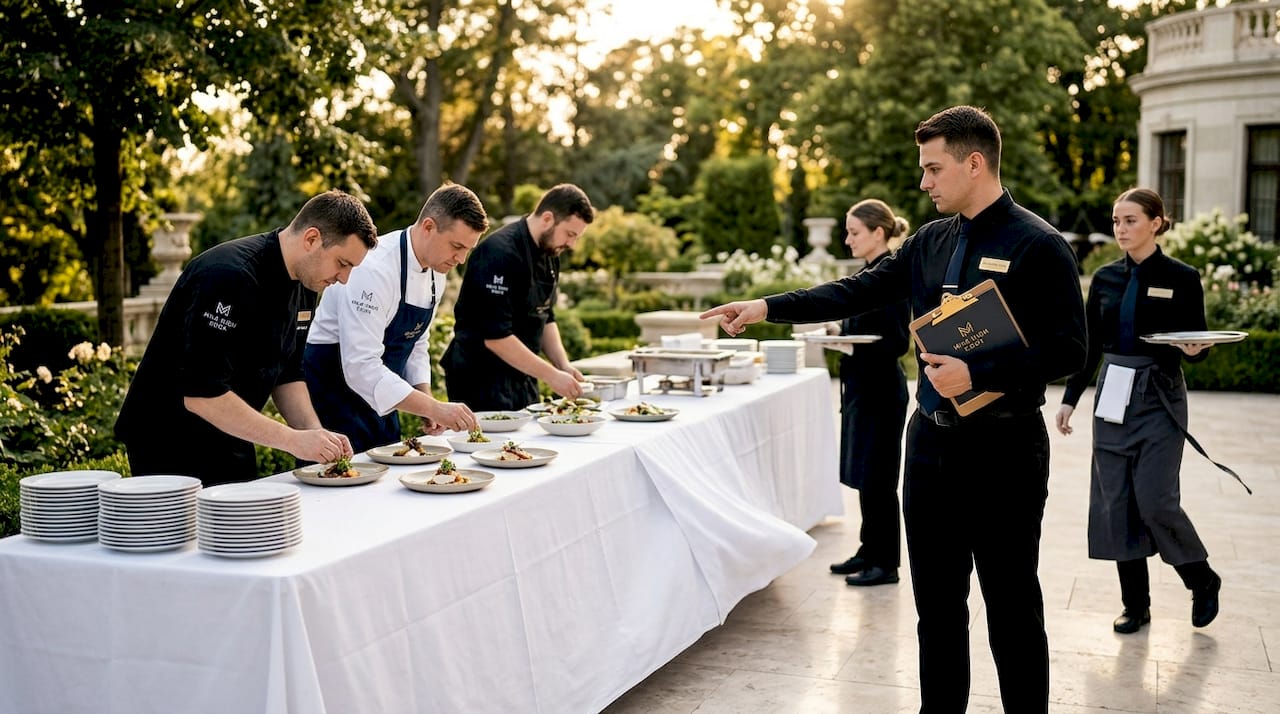
For buffet and plated hybrid formats, the BEO requires real-time interpretation by a floor captain or event manager who can translate the document into live decisions as service pacing shifts. A BEO is a plan, not a script. The floor captain's job is to honor the intent of the document while adapting to what is actually happening in the room.
How do staffing standards and compliance shape corporate event catering operations?
Staffing a corporate catering event is not just a scheduling exercise. It is a compliance obligation. Event staffing must comply with predictive scheduling laws, overtime rules, meal and rest break requirements, and employment verification within three days of hire, with specific requirements varying by jurisdiction. Ignoring these rules does not just create legal exposure. It creates operational chaos when staff walk off a shift mid-event because break schedules were not honored.
The corporate event staffing standards checklist your team uses before every event should cover the following:
- Scheduling compliance: Confirm shift lengths, overtime thresholds, and advance notice requirements for your specific city or state
- Break scheduling: Map out meal and rest breaks into the event timeline so they do not collide with critical service windows
- Employment verification: Complete I-9 documentation and background checks before the event, not after
- Contracts and NDAs: Require signed agreements from all temporary staff, especially for high-profile corporate clients
- Onboarding documentation: Distribute the BEO, dress code, and escalation protocol to every staff member before arrival
Labor law compliance is a moving target. Predictive scheduling ordinances in cities like San Francisco, Chicago, and Seattle have expanded in recent years, and event staffing companies that fail to update their policies face both fines and reputational damage. Build a compliance review into your quarterly operations calendar, not just your pre-event checklist.
Pro Tip: Assign one person on your team the sole responsibility of tracking staffing compliance updates for the jurisdictions where you operate. This role prevents the "I thought someone else handled it" failure that shows up most often in post-event legal reviews.
How does real-time event coordination keep corporate catering on schedule?
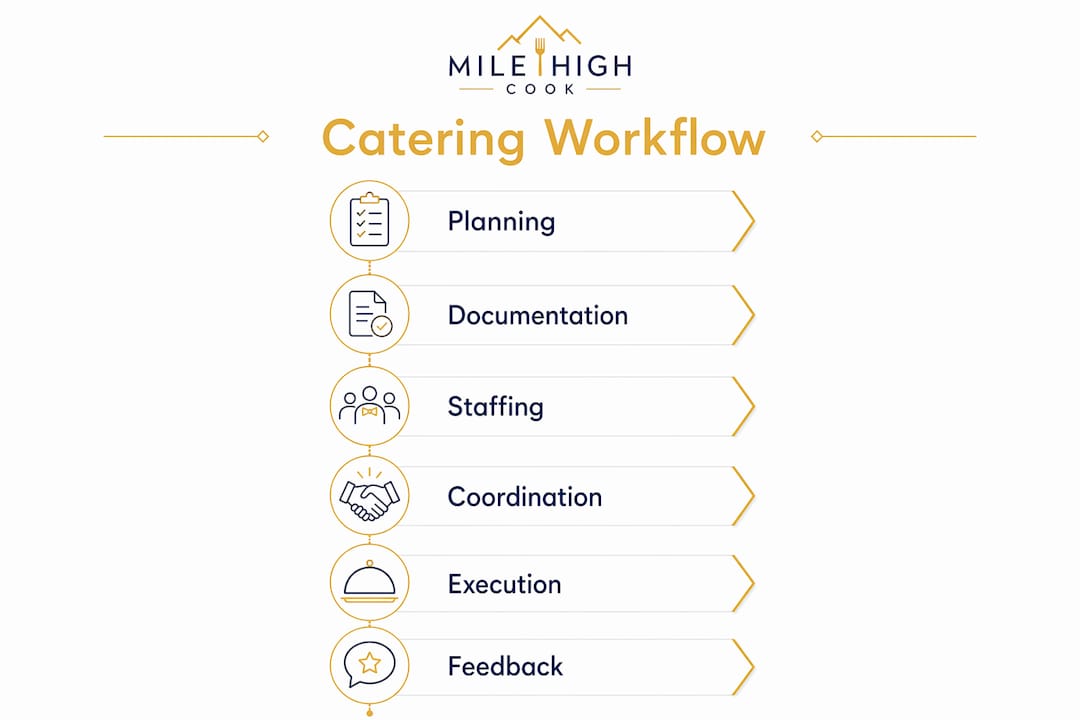
Day-of coordination is where the corporate catering process either holds together or falls apart. The most effective framework is deceptively simple: work the timeline, not the room. Maintaining a 15-minute lead on the event schedule means your team is always anticipating the next transition rather than reacting to the current one. This single discipline prevents the cascading delays that turn a minor kitchen hiccup into a 45-minute service gap.
Effective day-of coordination follows a clear sequence:
- Pre-event briefing (10 minutes): Gather all staff and volunteers for a structured briefing covering the timeline, individual roles, communication protocol, and escalation procedures. Abastio recommends starting day-of coordination planning 4 to 6 weeks before the event, with this briefing as the final alignment checkpoint.
- Communication channel assignment: Designate one primary channel, whether that is a group text, radio, or an app like Slack or GroupMe, and make it mandatory. Fragmented communication across multiple channels is the leading cause of missed cues.
- Vendor handoff confirmation: Confirm arrival windows and delivery sequences with every vendor before the event begins. Execution failures most commonly occur at handoffs between vendors and pace control points.
- Escalation protocol: Define in advance who has authority to make real-time decisions. If the keynote speaker runs 20 minutes long, who decides whether to delay dinner service or compress the cocktail hour?
- Post-service debrief: Spend 15 minutes with your core team immediately after the event to capture what worked and what did not while details are fresh.
Pro Tip: Print a laminated one-page timeline card for each department lead. When a server's phone dies or the Wi-Fi goes down, that card becomes the most valuable document in the room.
What logistics and equipment considerations are essential to corporate event catering success?
Logistics failures at corporate events are almost always traceable to one root cause: assumptions made without verification. A thorough venue walkthrough conducted before event day is non-negotiable. Abastio's coordination checklist specifies walking through all operational spaces to flag issues early, including staging areas, power access points, vendor entry routes, guest flow paths, and emergency exits.
Your pre-event logistics checklist should address:
- Power and utilities: Confirm amperage availability for warming equipment, coffee stations, and lighting. Many historic venues and hotel ballrooms have outdated electrical panels that cannot support modern catering setups.
- Equipment staging: Map the placement of every piece of equipment before load-in begins. A catering equipment checklist that accounts for chafing dishes, serving utensils, linen, and backup supplies prevents mid-event scrambles.
- Load-in and load-out windows: Coordinate these with venue management and other vendors in writing. Verbal agreements about elevator access or loading dock availability routinely fail on event day.
- Contingency supplies: Pack backup equipment for the three most likely failure points: heating elements, serving vessels, and portable refrigeration.
| Scenario | Contingency plan |
|---|---|
| Vendor no-show | Pre-identified backup supplier with 2-hour response window |
| Equipment failure | Backup heating units staged in secondary prep area |
| Weather disruption (outdoor events) | Covered staging area and indoor overflow capacity confirmed |
| Guest count increase | 10% buffer built into food quantities and place settings |
The difference between a good catering operation and a great one is not what happens when everything goes right. It is the speed and composure of the response when something goes wrong.
How do corporate event catering professionals optimize guest experience and service flow?
Guest experience in corporate catering is the product of staffing structure, menu design, and pacing control working in concert. Staffing ratios and zone assignments tailored to event size and format directly improve both pacing and guest satisfaction. A networking reception requires a different staff configuration than a formal plated dinner, and treating them the same way is a common and costly mistake.
Key principles for optimizing service flow include:
- Zone-based staffing: Divide the event space into defined service zones and assign staff to specific areas rather than the full room. This reduces overlap, prevents service gaps, and makes accountability clear.
- Menu alignment with event objectives: A working lunch for 50 executives demands a different menu format than a gala dinner for 300. Luxury event caterers tailor menus and staffing to event format, balancing culinary complexity with operational realities.
- Dietary and cultural fluency: Build dietary accommodations into the BEO from the start, not as an afterthought. Label allergen information clearly for staff, and train servers to answer dietary questions without consulting the kitchen.
- Pacing control by a floor captain: The floor captain reads the room and adjusts service speed based on guest behavior, speaker timing, and program flow. This role is the operational link between the BEO and live execution.
Reviewing Denver catering trends for 2026 shows that corporate clients increasingly expect dietary inclusivity and culturally aware menus as baseline standards, not premium add-ons. Planners who treat these as optional risk both guest dissatisfaction and reputational damage with clients.
Key takeaways
Corporate event catering succeeds when the BEO, staffing compliance, real-time coordination, and logistics planning operate as one integrated system rather than separate checklists.
| Point | Details |
|---|---|
| BEO as operational foundation | Every team member must work from the same signed, version-controlled document. |
| Staffing compliance is non-negotiable | Predictive scheduling, break laws, and employment verification must be built into every event plan. |
| Work the timeline, not the room | Maintaining a 15-minute schedule lead prevents small delays from becoming service failures. |
| Logistics require verified walkthroughs | Assumptions about power, staging, and vendor access cause most day-of failures. |
| Service flow depends on zone structure | Defined staff zones and a floor captain translate the BEO into a consistent guest experience. |
What I've learned from watching corporate catering break down at the handoffs
The most expensive mistakes in corporate event catering do not happen in the kitchen. They happen in the gaps between departments, between vendors, and between the plan and the person executing it. I have seen events with flawless menus and beautifully printed BEOs fall apart because no one owned the transition from cocktail hour to dinner service. The floor captain was managing a guest complaint, the kitchen was holding plates, and the AV team was waiting for a cue that never came.
The professionals who consistently deliver strong corporate events share one habit: they treat the BEO as a living document and the pre-event briefing as a non-negotiable ritual. Not a formality. Not a five-minute huddle. A structured alignment session where every person in the room leaves knowing exactly what they own and who to call when something breaks.
Contingency planning also separates competent operators from exceptional ones. Most catering teams plan for the event they expect. The best teams plan for the event that goes sideways at the worst possible moment, and they have already decided how to respond. Post-event debriefs, done honestly and without blame, are where that institutional knowledge gets built. Skip them, and you repeat the same mistakes at the next event.
— Stephen
How Milehighcook delivers corporate catering that holds up under pressure
Milehighcook brings CIA-trained chefs and a fully staffed, all-inclusive catering model to corporate events across Colorado, Arizona, Utah, and Wyoming. Every engagement is built on the same operational principles covered in this article: a clear scope of service, defined staffing, and no surprise costs. The all-inclusive pricing covers groceries, chef fees, service staff, and complete cleanup, so your team focuses on the event rather than managing vendor invoices.
With a 4.9-star rating from over 65 verified reviews and coverage across 30+ markets, Milehighcook is the choice for corporate planners who need reliability, not guesswork. Explore corporate event catering services or review the full range of private chef and catering options to find the right fit for your next event.
FAQ
What is a Banquet Event Order (BEO)?
A BEO is a detailed operational document that outlines the menu, staffing assignments, timeline, equipment list, and client approvals for a catered event. It functions as the single source of truth for all departments involved in executing the event.
How does corporate catering pricing work?
Corporate catering pricing typically covers food costs, chef fees, service staff, equipment rental, and cleanup, either itemized or bundled into an all-inclusive rate. All-inclusive models eliminate surprise invoices and make budget management more predictable for event planners.
What staffing compliance issues apply to corporate event catering?
Event staffing must meet predictive scheduling laws, overtime thresholds, meal and rest break requirements, and employment verification deadlines that vary by jurisdiction. Failing to address these before the event creates both legal exposure and operational risk on event day.
How far in advance should day-of coordination begin?
Day-of coordination planning should begin 4 to 6 weeks before the event, with a structured 10-minute staff briefing held on event day to align all team members on timeline, roles, and escalation procedures.
What is the most common cause of corporate catering failures?
Execution failures most often occur at vendor handoffs and pace control transitions, not during food preparation. Clear escalation protocols, a designated floor captain, and a verified minute-by-minute timeline prevent these breakdowns.