

If you've ever looked into hiring a private chef and walked away more confused than when you started, you're not alone. Understanding how private chef pricing works is genuinely complicated because there is no single standard. Costs shift based on service format, grocery billing, event size, location, and the chef's experience level. This guide breaks down every pricing model, explains what drives the numbers, and gives you the tools to budget realistically for a personalized dining experience, whether it's a romantic dinner for two or a full event.
Table of Contents
- Key takeaways
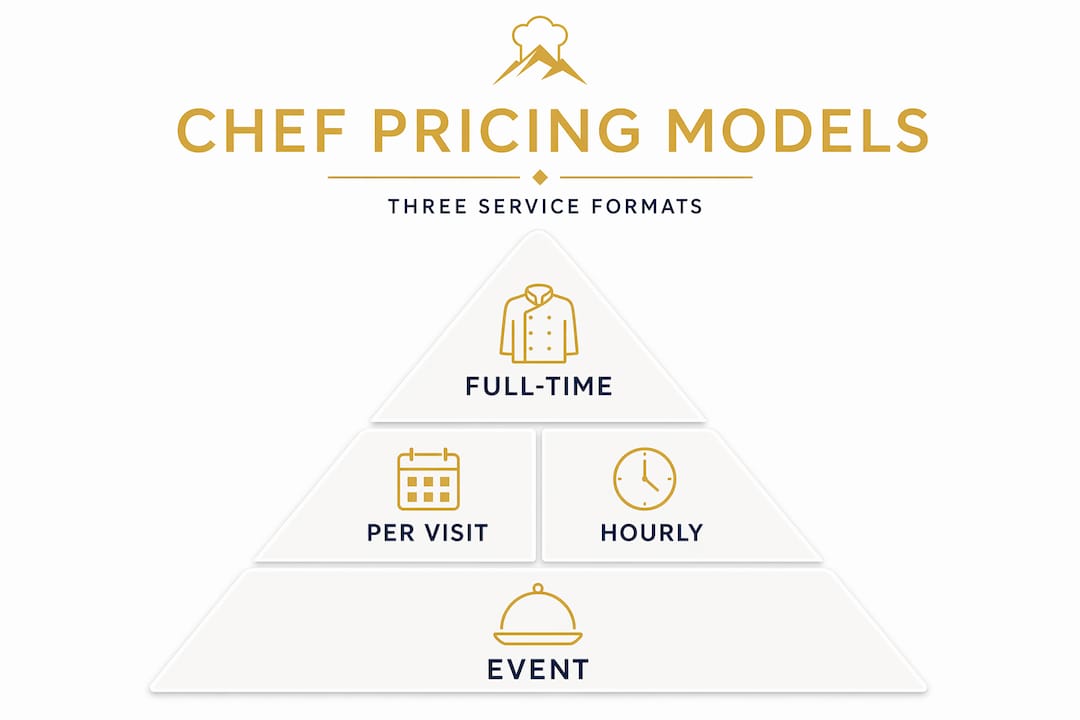
- How private chef pricing works: the three main models
- The hidden costs that change your total
- Choosing the right pricing model for your situation
- Practical budgeting for individuals and couples
- My take on the pricing confusion
- Experience the difference with Milehighcook
- FAQ
Key takeaways
| Point | Details |
|---|---|
| Three core pricing models | Private chef costs follow full-time salary, per-visit/hourly, or per-person event formats. |
| Groceries are often separate | Many chefs bill groceries on top of their service fee, which affects your real total cost. |
| True cost exceeds base fee | Employer costs for full-time chefs can run 25–60% above salary once taxes and benefits are added. |
| All-in pricing simplifies events | Event and luxury clients often prefer one bundled fee covering groceries, labor, and cleanup. |
| Ask the right questions upfront | Confirming grocery billing method and gratuity policy before booking prevents budget surprises. |
How private chef pricing works: the three main models
Most people assume hiring a private chef works like booking a restaurant. You pay a set price, someone cooks, and that's it. The reality is that private chef pricing broadly falls into three distinct formats, and each one has a completely different cost structure.
Full-time private chef
A full-time private chef is essentially a household employee. You pay an annual salary, and that chef handles daily meals, menu planning, grocery shopping, and sometimes dietary coaching. Published salary ranges run from $65,000 on the low end to well over $300,000 for elite chefs working for high-net-worth households.
What most people don't realize is that the salary is just the starting point. You also cover payroll taxes, health insurance, paid time off, and sometimes a housing allowance. Accounting for these extras can push your actual annual spend to 1.25 to 1.6 times the base salary. A chef earning $150,000 may actually cost you closer to $230,000 when everything is factored in.
Per-visit or hourly service
This is the most common format for individuals and couples who want regular home-cooked meals without the commitment of a full-time hire. A chef comes to your home on a scheduled basis, cooks several meals at once, and leaves your kitchen stocked for the week. Hourly rates vary widely, and this is where pricing gets tricky.
Rates as low as $25 per hour often don't reflect professional certification or full-service scope. Experienced chefs with real credentials typically command rates that translate to $100,000 or more annually for full-time work. For per-visit services, expect to budget separately for groceries on top of the service fee unless your chef explicitly includes them.
Per-person event pricing
This model applies when you hire a chef for a dinner party, anniversary celebration, or special occasion. The chef prices the experience per guest, and the total reflects menu complexity, guest count, and service level.
Here's a useful breakdown:
| Menu type | Estimated cost per person |
|---|---|
| Simple home-style meals | $30–$50 |
| Gourmet multi-course dinner | $100–$200 |
| Tasting menu experience | $150–$300+ |
| Full event (4–12 guests) total | $500–$2,400+ |
Event pricing typically includes labor, ingredients, and sometimes additional staff or rentals, making it the most all-in model of the three.
The hidden costs that change your total
Understanding private chef fees means looking past the headline number. Several cost components stack on top of the base fee, and missing even one of them can throw off your budget significantly.

Groceries. This is the biggest variable. Some chefs bill groceries separately with itemized receipts. Others roll everything into one price. For recurring services, separate billing is standard because it protects the chef's margin and gives you visibility into what you're actually spending on food. For events, all-in pricing is more common because it simplifies your planning.
Agency placement fees. If you hire a full-time chef through a placement agency, expect to pay a one-time fee. Agency fees typically run 20 to 30 percent of the chef's first-year salary. On a $150,000 salary, that's a $30,000 to $45,000 upfront cost before the chef cooks a single meal.
Payroll taxes and benefits. For full-time arrangements, you're the employer. That means Social Security, Medicare, unemployment insurance, and any benefits you offer. These costs add up fast and are frequently overlooked by first-time private chef clients.
Travel and location surcharges. Remote locations or properties that require significant travel time often carry additional fees. This is especially relevant for mountain destinations, vacation homes, or properties outside a chef's standard service area.
Gratuity. Gratuity typically runs 18 to 22 percent for single-meal events and up to 25 percent for extended bookings. Some services include it automatically; others leave it to the client. Always confirm this before you finalize a booking.
Pro Tip: Ask every chef or service you consider to send you a sample invoice from a previous comparable booking. This shows you exactly how they structure their billing and reveals any line items you might not have anticipated.
Choosing the right pricing model for your situation
Once you understand the formats, the next question is which one actually fits your life. The answer depends on three things: how often you want a chef, how many people you're feeding, and how much complexity you want to manage.
For individuals and couples who want weekly meal prep, the per-visit model with separate grocery billing is usually the most transparent option. You see exactly what you're paying for labor versus food, and you can adjust the menu to control costs. The separate billing model is common for recurring services precisely because it keeps the chef's fee stable while letting grocery costs flex with your preferences.
For special occasions, an all-in per-person price is almost always the better choice. You get one number, one invoice, and no surprises on the night of your dinner. The all-in pricing model is favored by event clients and luxury households because it trades a small amount of cost transparency for a much simpler planning experience.
Here are the questions worth asking any chef or service before you commit:
- Are groceries included in your quoted price, or billed separately?
- Do you charge a travel fee, and what's your service radius?
- Is gratuity included, or is it expected on top of the quoted fee?
- What happens if the grocery cost exceeds your estimate?
- Do you bring your own equipment, or do you require a specific kitchen setup?
These questions take five minutes to ask and can save you hundreds of dollars in unexpected charges.
Pro Tip: If you're planning a recurring arrangement, ask for a monthly cost estimate that includes an average grocery spend based on your household size and dietary preferences. This gives you a realistic monthly budget number rather than a per-visit fee that can feel deceptively small.
Practical budgeting for individuals and couples
Getting to a real number requires more than a quick internet search. Here's a practical framework for estimating your private chef costs based on how you actually plan to use the service.
-
Define your service type. Are you looking for weekly meal prep, occasional dinner parties, or a one-time event? Each format has a different cost baseline, and mixing them up leads to inaccurate budgets.
-
Estimate your grocery spend separately. Even if your chef quotes an all-in price, it helps to know what a realistic weekly grocery budget looks like for your household. Dietary restrictions, organic preferences, and specialty ingredients all push this number higher.
-
Request explicit per-meal or per-visit costs. For predictable budgeting, asking for a per-meal or per-visit breakdown with clear grocery billing helps you avoid under-budgeting due to dietary complexity or menu changes.
-
Get at least two or three all-inclusive quotes. A quote that itemizes groceries, labor, travel, and gratuity separately is far more useful than a single number. Compare the line items, not just the totals.
-
Build in a 15 to 20 percent buffer. Menus change, guest counts shift, and special ingredients cost more than expected. A small budget cushion keeps a surprise from becoming a problem.
For context on real-world ranges: monthly ongoing services typically run $2,500 to $10,000 or more depending on household size and visit frequency. A single gourmet dinner for two with a professional chef can run $200 to $600 total once groceries and gratuity are included. Events for 8 to 12 guests with a full menu commonly land between $1,200 and $2,500.
My take on the pricing confusion
I've talked with dozens of people who hired a private chef and felt blindsided by the final bill. Not because anyone deceived them, but because they compared a quoted service fee to a restaurant check and assumed the math worked the same way. It doesn't.
What I've found is that the biggest source of frustration isn't the cost itself. It's the gap between what clients expect to pay and what they actually pay once groceries, gratuity, and any extras are added. I've seen couples budget $400 for a dinner experience and end up at $700 because no one asked about the grocery billing method upfront.
My honest advice: stop focusing on the hourly rate and start focusing on the total cost per occasion. A chef quoting $75 per hour sounds cheaper than one quoting $150, but if the $75 chef bills groceries separately and the $150 chef includes everything, the final numbers can be nearly identical. There is no standardized market rate in this industry, which means low advertised rates often reflect limited scope or missing credentials rather than genuine savings.
The clients I've seen get the most value are the ones who ask clear questions, request itemized quotes, and choose services that are upfront about every line item before the chef walks through the door.
— Stephen
Experience the difference with Milehighcook
Now that you understand what drives private chef costs, you can apply that knowledge to find a service that actually fits your budget without the guesswork.
Milehighcook takes the complexity out of private chef pricing by offering a fully all-inclusive model. Every booking covers groceries, CIA-trained chef fees, service staff, and complete cleanup in one clear price. No separate grocery invoices. No surprise gratuity line items. Whether you're planning an intimate dinner in Aspen, a gathering in Boulder, or an event in Park City, Milehighcook serves 30+ markets across Colorado, Arizona, Utah, and Wyoming. Explore personalized private chef services and request a detailed quote that reflects exactly what you need.
FAQ
What does a private chef typically charge per event?
Event pricing generally runs $100 to $250 or more per guest depending on menu complexity, with a total cost of $500 to $2,400 for groups of 4 to 12 people including labor and ingredients.
Are groceries included in a private chef's fee?
Not always. Some chefs bill groceries separately with receipts, while others offer all-in pricing. Always confirm the billing method before booking to understand your true total cost.
What affects private chef rates the most?
The biggest private chef pricing factors are service format (full-time vs. per-visit vs. event), menu complexity, guest count, location, and whether groceries and gratuity are included in the quoted price.
How much does a private chef cost per month for ongoing service?
Monthly ongoing private chef services typically range from $2,500 to $10,000 or more depending on household size, visit frequency, and whether groceries are included.
Is a low hourly rate a sign of a good deal?
Not necessarily. Rates as low as $25 per hour often reflect limited credentials or a narrow scope of service. Comparing total cost per meal or per event gives you a more accurate picture than the hourly rate alone.