
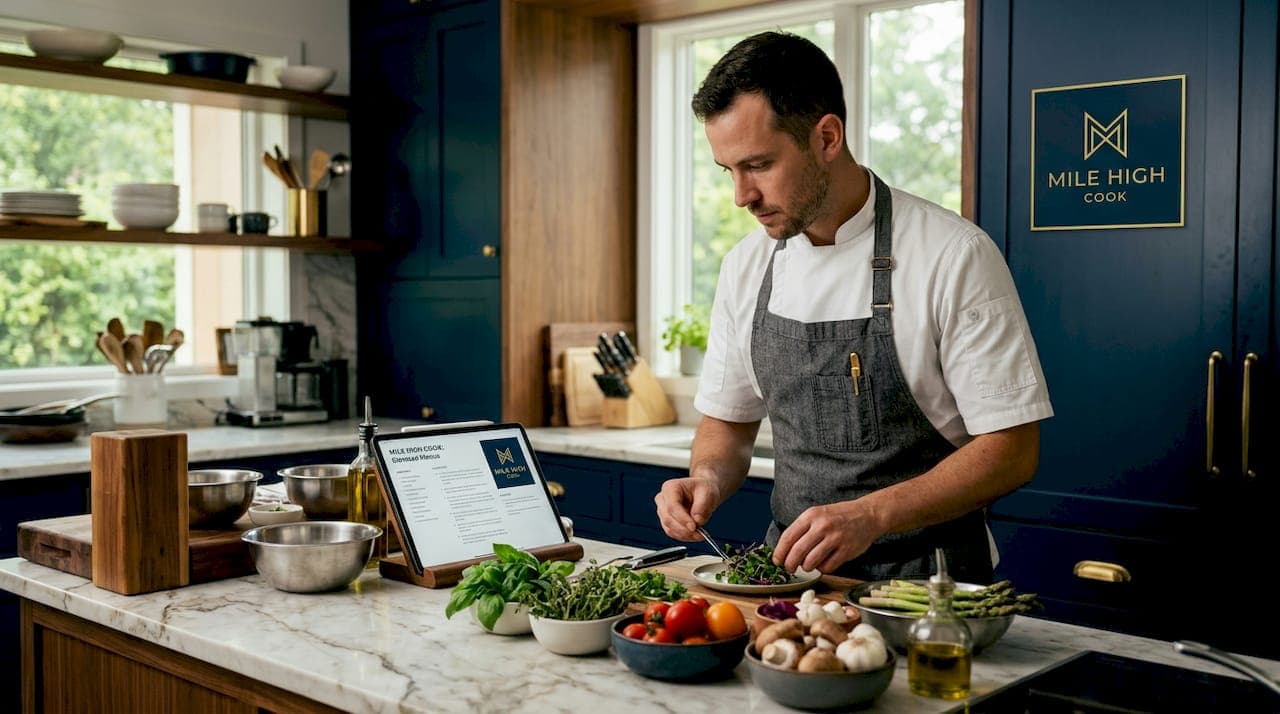
Your kitchen setup is the single most important factor in whether a private chef visit runs smoothly or turns into a frustrating series of workarounds. Before the first ingredient hits the cutting board, the physical arrangement of your space determines how fast the chef moves, how safely food is handled, and how polished the final dining experience feels. The role of kitchen setup in a private chef visit extends well beyond tidiness. It covers zone planning, food safety protocols, lighting, and even legal considerations that most hosts never think about until something goes wrong.
How does an optimized kitchen layout support a private chef's work?
A well-organized kitchen layout is the foundation of every successful private chef visit. Professional kitchens are built around distinct work zones, and your home kitchen needs to mirror that logic as closely as possible to give your chef the conditions they need to perform.
The core zones in any functional cooking setup are:
- Prep zone: A clear, clean surface near the refrigerator where ingredients are washed, chopped, and measured
- Cooking zone: The cooktop and oven area, kept free of clutter and surrounded by heat-resistant counter space
- Cleaning zone: The sink and dishwasher area, dedicated to washing tools and managing waste
- Storage zone: Organized pantry, cabinets, and refrigerator with logical grouping of ingredients and equipment
The counter space flanking your cooktop matters more than most hosts realize. Heat-resistant counter space of 15 to 24 inches on either side of the cooktop is the professional standard. Without it, your chef is forced to carry hot pans across the kitchen, which slows service and creates a genuine safety risk. Small functional gaps like this are the most common source of production friction during private dinners.
Kitchen zone design also follows a strict directional flow: raw ingredients move from storage to prep to cooking without backtracking. When your kitchen forces a chef to cross back through zones already used, the risk of cross-contamination rises and timing suffers. Aisle width compounds this. A minimum of 42 inches is recommended for a single cook, and 48 inches for situations where a sous chef or service staff member is also moving through the space.
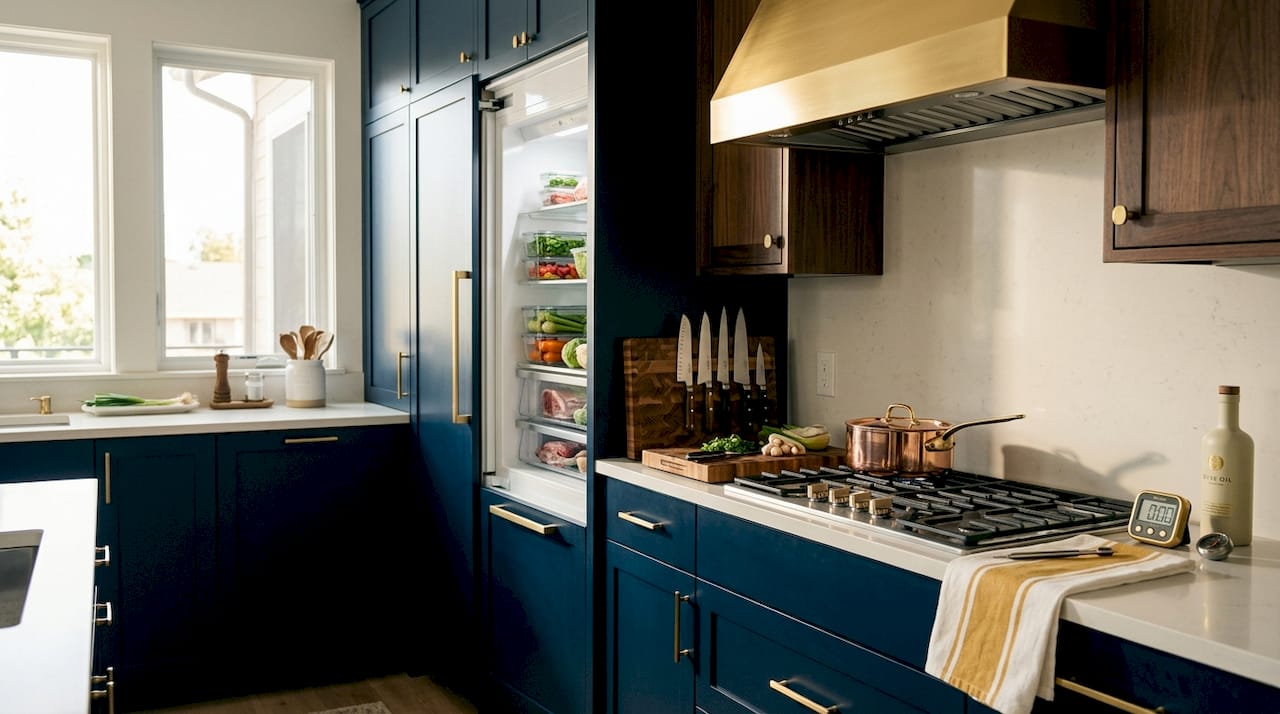
Pro Tip: Before your chef arrives, walk through your kitchen as if you were cooking a four-course meal. Notice where you have to double back, where counter space runs out, and where the lighting goes dark. Those friction points are exactly what your chef will encounter.
What food safety measures are essential in private kitchen setups for chef visits?
Food safety in a private home kitchen is not optional. It is the professional standard that separates a memorable dinner from a liability event. Private home kitchens often lack formal health inspections, which makes voluntary protocols more critical, not less.
Here are the non-negotiable food safety elements to have in place before your chef arrives:
- Dedicated hand-washing station. Your chef needs a sink with soap and paper towels within arm's reach of the prep zone. Cloth towels are not acceptable for hand drying during food service because they harbor bacteria between uses.
- Digital food thermometer. A probe thermometer is a sanitation essential for verifying internal temperatures of proteins. Make sure one is accessible and calibrated.
- Refrigerator temperature control. Your fridge should hold below 40°F (the American equivalent of 5°C). Place a fridge thermometer inside so your chef can verify this on arrival.
- Separate chemical storage. Cleaning chemicals stored near food are a contamination risk that most home hosts overlook entirely. Move bleach, dish soap, and surface sprays to a cabinet that does not share space with any food items.
- Cross-contamination prevention. Designate separate cutting boards for proteins and produce. Color-coded boards (red for meat, green for vegetables) are the professional standard and cost very little to implement.
Food safety is not an add-on to professional kitchen execution. It is integral to it, covering handwashing discipline, temperature monitoring, and chemical separation as baseline requirements, not best practices.
The practical implication for you as a host is straightforward: your chef brings culinary expertise, but the physical safety infrastructure of the kitchen is your responsibility to provide. A CIA-trained chef working in a kitchen without a functioning thermometer or proper hand-washing access is being set up to fail before the appetizers are plated.
What legal considerations affect kitchen setups when hosting a private chef?
Most hosts assume that inviting a private chef into their home is entirely unregulated. The reality is more nuanced, and understanding the distinction protects both you and your chef.
The key legal dividing line is whether food is being prepared on-site in your home or prepared off-site for sale or distribution. A private chef cooking solely in a client's home does not trigger commercial kitchen licensing requirements. The chef is providing a personal service in your space, not operating a food business. This is the scenario that covers the vast majority of intimate dinner and private gathering situations.
The calculus changes when:
- The chef prepares food off-site and transports it to your home for service
- Any portion of the meal is sold or resold to third parties
- The event is large enough to be classified as a catering operation under local ordinance
- The kitchen is used for recurring commercial food production
In those cases, commercial kitchen approval and city permits may be required, and your home kitchen almost certainly does not meet those standards. The practical advice is to verify your local jurisdiction's rules before booking any chef for an event that involves off-site prep or a guest count that approaches commercial scale. A property manager's guide to private chef compliance is a useful reference if you manage a rental property or vacation home where these situations arise more frequently.
A well-organized kitchen setup also reduces your liability exposure. When your space has proper food storage, clear zones, and documented temperature controls, you demonstrate reasonable care as a host, which matters if a food safety issue ever arises.
What practical steps can hosts take to prepare their kitchen for a chef visit?
Preparing your kitchen for a private chef visit does not require a renovation. It requires deliberate organization and a few targeted upgrades that pay off immediately in the quality of service you receive.
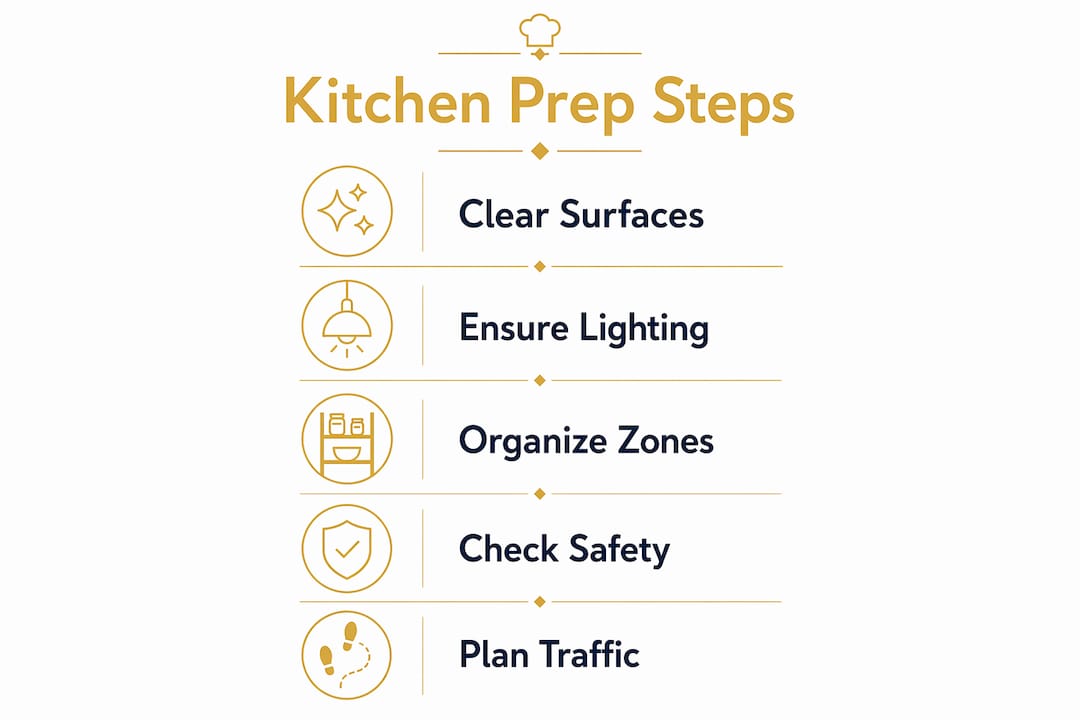
Start with the countertops. Clear every surface in the prep and cooking zones completely. Your chef needs unobstructed counter runs to work efficiently. Decorative items, small appliances, and mail piles all need to find another home for the evening. Ergonomic storage matters too: pull spices, oils, and frequently used utensils to the front of cabinets so your chef is not hunting through drawers mid-service.
Lighting is one of the most overlooked elements on any private chef visit checklist. LED task lighting under cabinets dramatically improves visibility on prep surfaces and reduces the shadow that overhead fixtures create over cutting boards. If your kitchen relies solely on a single ceiling fixture, consider adding a portable LED strip or repositionable puck lights before the visit.
Traffic flow is the other variable hosts consistently underestimate. Your guests should not be moving through the kitchen during service. Plan a clear boundary between the dining area and the work zones, and communicate it to your guests before the chef begins cooking. This protects both your guests from hot surfaces and your chef from the distraction of navigating around people while plating.
Pro Tip: Ask your chef in advance whether they are bringing any specialty equipment, such as an immersion circulator, induction burner, or large stockpot. Knowing this lets you clear the right counter space and confirm you have the correct outlet access before the evening begins.
A few additional items that belong on your cooking setup checklist:
- Confirm your garbage and compost bins are empty and accessible
- Have extra dish towels and a clean apron available if your chef needs them
- Test your ventilation hood before the visit so smoke management is not an issue mid-service
- Designate a staging area near the dining room for plated dishes to rest before service
For hosts planning intimate dinners, why more people hire private chefs for small gatherings in 2025 and beyond comes down to exactly this kind of prepared, professional environment. The kitchen setup you provide is the stage. The chef's performance depends on how well that stage is set.
Key takeaways
A well-prepared kitchen is the non-negotiable foundation of a successful private chef visit, covering zone organization, food safety infrastructure, and clear traffic flow as equally important priorities.
| Point | Details |
|---|---|
| Zone planning is non-negotiable | Separate prep, cooking, cleaning, and storage zones to eliminate backtracking and cross-contamination. |
| Counter space drives chef speed | Maintain 15 to 24 inches of heat-resistant counter on each side of the cooktop to prevent dangerous pan transport. |
| Food safety is the host's responsibility | Provide a hand-washing station, probe thermometer, calibrated fridge, and chemical-free food storage before the chef arrives. |
| Legal exposure is real but manageable | In-home chef service avoids commercial licensing, but off-site prep or large-scale events may trigger local regulations. |
| Lighting and traffic flow matter | Add task lighting to prep surfaces and keep guests out of work zones during service to protect both safety and timing. |
What I've learned from watching great kitchens and bad ones
I've seen CIA-trained chefs turn out flawless five-course dinners in modest home kitchens, and I've watched equally talented chefs struggle in spaces that looked beautiful but were functionally broken. The difference was almost never the equipment. It was the organization.
The most common overlooked issue is the area directly beside the cooktop. Hosts spend money on high-end ranges and then fill the adjacent counter with a coffee maker, a fruit bowl, and a stack of cookbooks. That 18 inches of counter is the most valuable real estate in the kitchen during a private dinner. Clearing it takes two minutes and changes the entire service dynamic.
The second thing I'd push back on is the idea that food safety is the chef's problem. It is a shared responsibility. Your chef brings technique and training. You bring the physical environment. When that environment lacks a proper hand-washing setup or has cleaning chemicals stored next to the olive oil, you are asking your chef to work around hazards that should not exist. The a day in the life of a private chef in Denver makes clear how much of a chef's mental energy goes into managing the environment they are given. A well-prepared kitchen frees that energy for the food.
Finally, small upgrades compound. Under-cabinet LED strips, a fridge thermometer, color-coded cutting boards, and an empty compost bin cost less than a single bottle of wine from your dinner menu. They signal to your chef that you take the experience seriously, and that signal changes how the entire evening unfolds.
— Stephen
Bring a Milehighcook chef into your prepared kitchen
Milehighcook pairs CIA-trained private chefs with hosts across Colorado, Arizona, Utah, and Wyoming who want a dining experience that goes beyond restaurant quality. Every booking includes groceries, chef fees, service staff, and complete cleanup under one all-inclusive price, so there are no surprises on the invoice. With a 4.9-star rating across more than 65 verified reviews, Milehighcook brings the professional standard to your home kitchen. Whether you are hosting an intimate dinner for six or a corporate gathering, explore private chef and catering services and see how a prepared kitchen and a skilled chef create something genuinely memorable.
FAQ
What is the role of kitchen setup in a private chef visit?
Kitchen setup determines how efficiently and safely a private chef can work in your home. Proper zone planning, counter clearance, and food safety infrastructure directly affect the quality and timing of the meal you receive.
How much counter space does a private chef need near the cooktop?
Professional kitchen design standards call for 15 to 24 inches of heat-resistant counter space on each side of the cooktop. Without this, chefs must transport hot pans across the kitchen, which slows service and creates safety risks.
Does hosting a private chef require a commercial kitchen license?
A private chef cooking on-site in your home does not require commercial kitchen licensing. Licensing requirements apply when food is prepared off-site for sale or when the event crosses into commercial catering territory under local regulations.
What food safety items should hosts provide before a chef visit?
Hosts should provide a dedicated hand-washing sink with soap and paper towels, a calibrated digital food thermometer, a refrigerator holding below 40°F, and food storage areas completely separate from cleaning chemicals.
How do I keep guests out of the kitchen during a private chef visit?
Establish a clear physical boundary between your dining area and the kitchen work zones before service begins, and communicate it to guests in advance. This protects guests from hot surfaces and gives your chef uninterrupted focus during plating and service.