

TL;DR:
- A private dining room offers complete physical separation, dedicated staff, and acoustic isolation that enhance emotional intimacy. It provides structured, personalized service, reduced stress for hosts, and creates stronger, more memorable experiences, especially for special occasions. Alternatively, in-home private chef services deliver similar benefits without venue minimums or noise concerns, providing full control over the environment.
A private dining experience is defined as an exclusive, physically separated meal setting with dedicated staff, a customized menu, and controlled acoustics designed to serve a specific group without interruption. For couples and individuals planning a special occasion, the advantages of private dining go far beyond a quiet corner table. You get full control over the atmosphere, the pacing, and the conversation. This article breaks down exactly why private dining delivers a fundamentally different and more meaningful experience than booking a standard restaurant reservation.
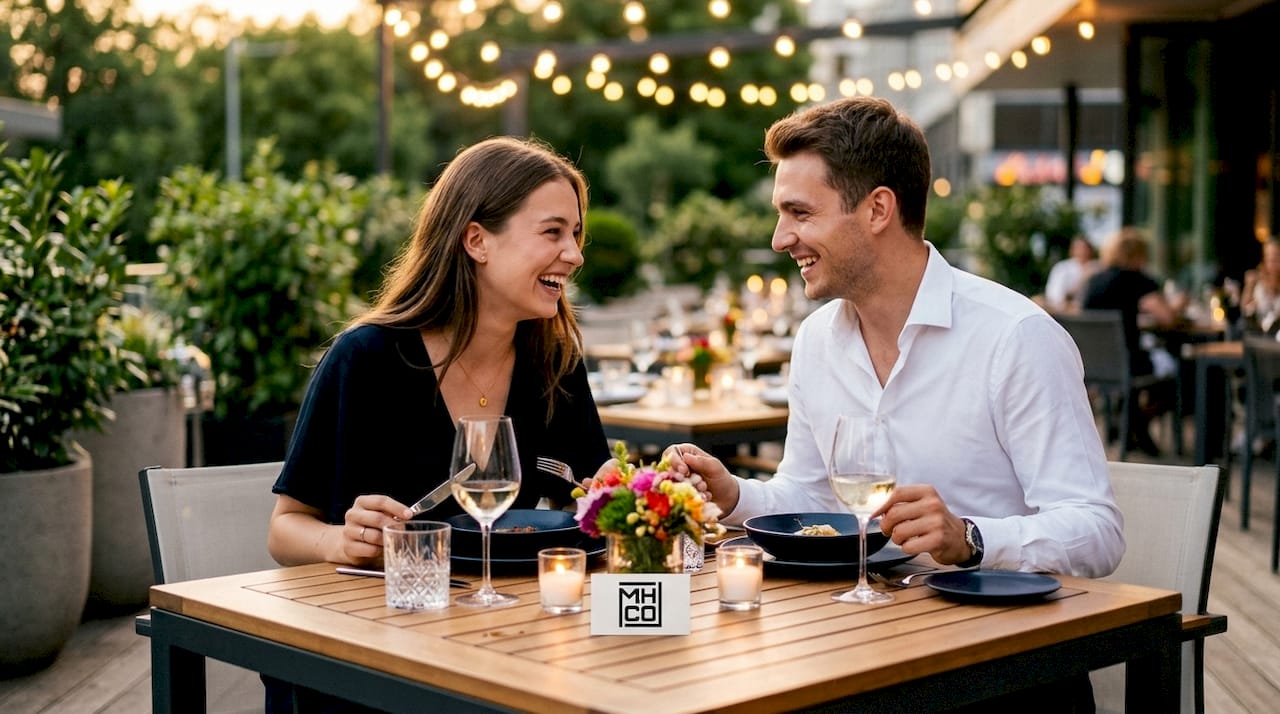
1. Private dining experience benefits start with true exclusivity
Exclusivity and privacy are the foundation of every private dining experience benefit worth discussing. A true private room is physically separated from the main dining floor, with its own door, climate control, and acoustic isolation. Fine Dining Authority is clear on this point: curtained nooks and semi-private alcoves do not qualify as private dining rooms because they lack full separation. That distinction matters more than most guests realize.
When you are seated in a genuinely private room, the ambient noise from other diners disappears. HillPoint Global advises that a reverberation time below 0.7 seconds supports comfortable conversation, and that treating 40 to 60 percent of ceiling surfaces prevents the noise spiral that forces people to raise their voices. In a private room with proper acoustic treatment, you never hit that spiral. Conversation stays natural, relaxed, and genuinely intimate.
For couples celebrating an anniversary, a proposal, or a milestone birthday, this level of quiet changes the entire emotional tone of the evening. You are not competing with the table next to you. You are fully present with the people who matter.
Pro Tip: When booking, ask the venue directly whether the room has a solid door and independent climate control. If the answer is vague, the space is likely semi-private at best.
2. How personalized service unfolds in a private dining setting
Private dining service follows a structured five-stage process: inquiry, menu selection, contract, deposit, and dedicated day-of execution by a specialized team. This is not how a standard restaurant table operates. The service choreography in a private room is built around your event, not around the restaurant's general floor plan.
The advantages of this model are concrete:
- Dedicated staff ratio. Your group receives a server team assigned exclusively to your room, not shared across multiple tables.
- Menu customization. Pre-selected or prix-fixe menus are built around your group's dietary needs, preferences, and occasion. You are not choosing from a standard menu under time pressure.
- Pacing control. The kitchen and service team coordinate courses around your timeline. If you need a pause for a speech or a toast, the team holds the next course without any awkwardness.
- Allergy and dietary handling. Precise service orchestration means dietary restrictions are communicated to the kitchen in advance and handled discreetly, not announced across the table.
- Event captain oversight. A dedicated event captain manages the room, acting as a single point of contact for every request throughout the evening.
This level of attention is structurally impossible in a main dining room where servers split their focus across eight or ten tables simultaneously. The private dining model exists specifically to remove that split.
Pro Tip: Review sample menus before your consultation so you arrive with a clear sense of the cuisine style and course structure that fits your occasion.
3. Stress reduction for the person hosting the event
Planning a special occasion at a standard restaurant means managing multiple moving parts across different contacts. Private dining consolidates all of that into a single venue relationship. The food, the space, the service staff, and the cleanup are handled by one team under one agreement.
Private dining contracts typically include food and beverage minimums ranging from $3,000 to $8,000 for groups of 16 to 20 guests in major U.S. markets, along with service charges averaging 20 to 22 percent. Knowing these numbers upfront eliminates the anxiety of an unpredictable bill at the end of the night. The minimum spend functions as a budget floor, and clarifying exactly what it includes prevents unexpected overages.
| Factor | Private dining | Standard restaurant table |
|---|---|---|
| Single point of contact | Yes, dedicated event captain | No, shared floor manager |
| Menu pre-confirmed | Yes, selected in advance | No, ordered night-of |
| Pricing transparency | Contract with stated minimums | Variable, bill calculated at end |
| Service interruptions | Minimal, room is exclusive | Frequent, shared floor traffic |
| Acoustic control | Engineered for the room | Dependent on full restaurant volume |
The table above shows why private event dining reduces cognitive load for the host. Every variable that typically causes stress on a special occasion has already been resolved before the evening begins.
4. Why private dining creates stronger memories
Exclusivity boosts guest comfort and natural engagement, making conversation flow easier and the event more enjoyable for everyone in the room. WithUS identifies space control, tailored service, and layout management as the core drivers of this effect. When guests know the room belongs entirely to their group, their behavior shifts. They relax faster, speak more openly, and engage more deeply with the people around them.
The sensory environment reinforces this. Controlled acoustics, personalized décor, and a service team that anticipates needs rather than reacting to them all signal to guests that this evening was designed specifically for them. That signal is what separates a good dinner from a genuinely memorable one.
Private dining is particularly well suited to occasions where the emotional stakes are high: proposals, milestone anniversaries, 40th or 50th birthday celebrations, and intimate rehearsal dinners. These are moments where a stranger walking past your table or a loud group nearby can break the atmosphere entirely. A private room removes that risk by design.
5. How private dining compares to semi-private spaces
True private rooms always have dedicated staff and solid doors, which differentiates them operationally from semi-private spaces that lack both service choreography and acoustic isolation. This is a distinction that venues do not always volunteer, so understanding it before you book protects you from a disappointing experience.
Semi-private spaces, such as curtained alcoves or partitioned sections of a dining room, offer partial separation. They reduce visual exposure but rarely eliminate noise bleed. A couple trying to have a meaningful conversation during a proposal dinner does not benefit from a curtain if the adjacent table is audible throughout the meal.
When choosing between options, consider these factors:
- Group size. Rooms under 10 guests benefit most from true private rooms where the intimacy is preserved. Larger groups may find semi-private spaces adequate if conversation quality is less critical.
- Occasion sensitivity. Proposals, milestone anniversaries, and grief-related gatherings (such as memorial dinners) require full acoustic and visual privacy.
- Budget. True private rooms carry minimum spends. If the budget does not support a minimum, an in-home private chef experience delivers equivalent exclusivity without a venue contract.
- Desired pacing. If you need service to pause for speeches, presentations, or a surprise element, only a true private room with a dedicated event captain can reliably deliver that.
Pro Tip: Ask the venue for the room's RT60 rating or simply request a walkthrough during a busy service period. If you can hear the main dining room clearly from inside the private room, the acoustic separation is insufficient.
6. Why in-home private dining is a growing alternative
Private chef services for small gatherings deliver the core benefits of private meals without requiring a restaurant venue at all. For couples who want exclusivity, personalized menus, and dedicated service, hiring a private chef at home removes every logistical constraint that comes with a restaurant booking.
The in-home model is particularly effective for intimate occasions. There is no minimum spend contract to negotiate, no shared parking lot, and no ambient restaurant noise to manage. The chef arrives, sets up, cooks, serves, and cleans up. The couple or small group experiences a restaurant-quality meal in a space that is already familiar and comfortable to them.
Personalized in-home dining is especially well matched to date nights and anniversaries where the goal is connection rather than spectacle. The absence of other diners, the ability to control the music and lighting, and the presence of a chef who has built the menu around your preferences combine to create an experience that a restaurant private room cannot fully replicate.
Key takeaways
Private dining delivers its strongest benefits through physical separation, dedicated service, and pre-confirmed logistics that together remove every variable capable of disrupting a meaningful occasion.
| Point | Details |
|---|---|
| True private rooms require physical separation | Solid doors and acoustic isolation distinguish private rooms from semi-private alcoves. |
| Service choreography is the real differentiator | Dedicated staff, pacing control, and an event captain transform service quality. |
| Contracts reduce financial stress | Pre-confirmed minimums and inclusions eliminate bill anxiety on the night. |
| Exclusivity changes guest behavior | Guests in private spaces relax faster and engage more openly with each other. |
| In-home dining extends the model | Private chef services deliver equivalent exclusivity without venue minimums or noise concerns. |
What I've learned from watching private dining transform an evening
I have spent years observing how couples and small groups experience the same meal differently depending on the setting. The most consistent pattern I have seen is this: the physical environment does more work than the food. A technically excellent meal served in a noisy, semi-private alcove leaves guests feeling vaguely unsatisfied, even if they cannot articulate why. The same menu served in a properly isolated room with a coordinated service team produces a completely different emotional outcome.
The detail most people overlook is service pacing. Coordinated toasts, a held course during a speech, a dessert that arrives with a personal note rather than a generic candle. These are not extras. They are the mechanism by which a dinner becomes a memory. Precise orchestration of these moments is what separates a well-executed private dining event from a standard restaurant booking that happens to be in a quieter room.
My practical recommendation for couples planning a milestone occasion: do not compromise on acoustic separation. It is the single factor that most reliably determines whether conversation flows naturally or feels forced. If the venue cannot confirm full acoustic isolation, consider an in-home private chef experience instead. The benefits of a private chef in Colorado and across the Mountain West are well documented, and the format gives you complete control over every variable that matters.
— Stephen
Bring the private dining experience home with Milehighcook
Milehighcook delivers the full range of private dining experience benefits directly to your home, with CIA-trained chefs who build every menu around your occasion, your preferences, and your dietary needs. The all-inclusive pricing model covers groceries, chef fees, service staff, and complete cleanup, so there are no contracts to negotiate and no surprise charges at the end of the evening. Milehighcook operates across 30-plus markets including Colorado, Arizona, Utah, and Wyoming, and holds a 4.9-star rating from over 65 verified reviews. Explore private chef services and book your next intimate dinner or special occasion today.
FAQ
What makes private dining different from a regular restaurant?
A private dining room is physically separated from the main floor with its own door, dedicated staff, and acoustic isolation. Fine Dining Authority defines this separation as the core requirement that distinguishes true private dining from semi-private or shared spaces.
How does private dining service work from booking to the event?
Private dining booking follows five stages: inquiry, menu selection, contract signing, deposit, and day-of execution by a dedicated event team. The process is designed to resolve every logistical variable before the evening begins.
Is private dining worth the cost for a couple's special occasion?
Yes. The exclusive dining perks, including noise control, pacing flexibility, and dedicated service, directly improve conversation quality and emotional engagement. WithUS confirms that exclusivity increases guest comfort and natural interaction in ways a standard table cannot replicate.
What is the typical minimum spend for a private dining room?
Minimum spends for private dining rooms in major U.S. markets range from $3,000 to $8,000 for groups of 16 to 20 guests, with service charges averaging 20 to 22 percent. In-home private chef services offer comparable exclusivity without venue minimums.
Can a private chef at home replace a restaurant private dining room?
For couples and small groups, a private chef at home delivers equivalent benefits: a customized menu, dedicated service, and full acoustic and visual privacy. The in-home format removes venue contracts entirely and gives you complete control over the atmosphere.