
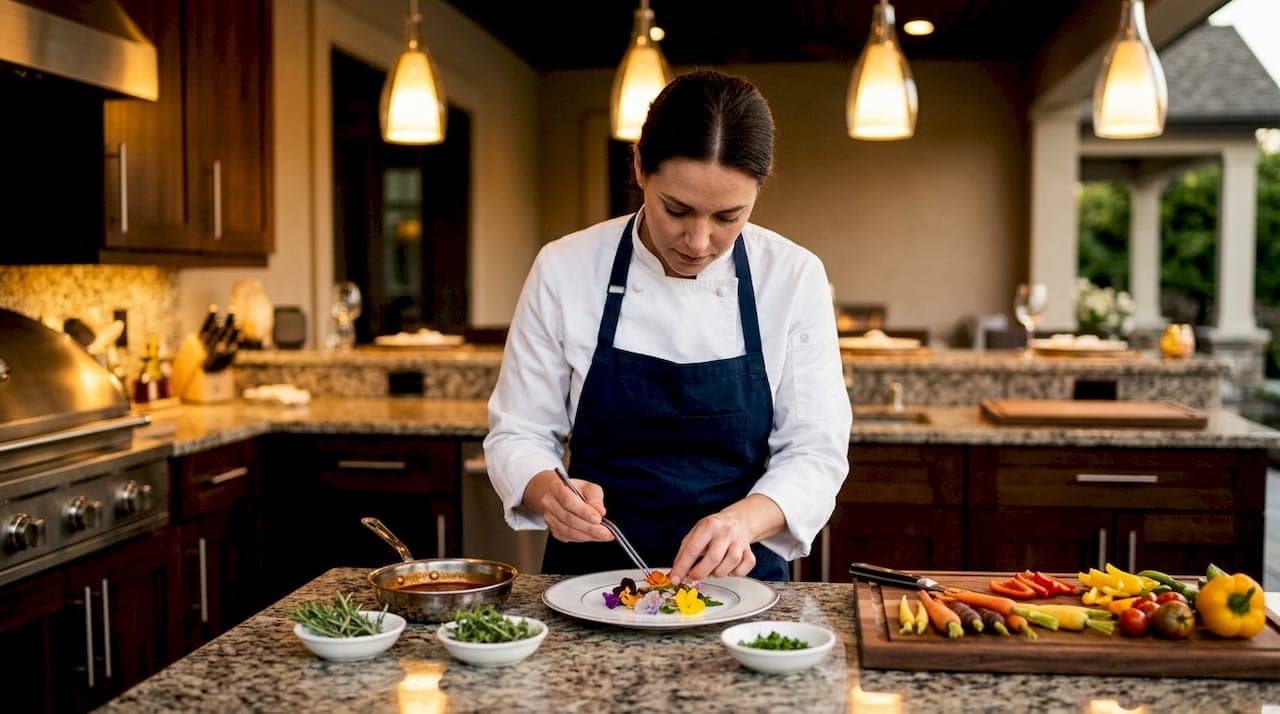
A personal chef for dinner is a culinary professional who creates custom menus, cooks onsite, and manages every detail of your dining experience from grocery run to final cleanup. Unlike ordering takeout or hiring a caterer, a private dinner chef treats your table as a restaurant of one. The role extends well beyond cooking. It covers hospitality logistics, dietary accommodation, course pacing, and guest engagement. Services like Milehighcook, staffed by CIA-trained chefs, have made this level of personalized dining accessible across 30-plus markets including Colorado, Arizona, Utah, and Wyoming.
What does the role of a personal chef for dinner actually involve?
A personal chef's role extends beyond cooking to hospitality logistics and meal flow management. That distinction matters more than most people realize when they first consider hiring one. The chef is simultaneously your menu designer, grocery shopper, line cook, and front-of-house manager for the evening.
The responsibilities break down into five clear areas:
- Menu development. The chef consults with you before the event to build a menu around your preferences, dietary restrictions, and the tone of the occasion. A romantic anniversary dinner calls for a different approach than a birthday celebration for twelve.
- Ingredient sourcing. The chef handles all purchasing, often prioritizing seasonal and local produce to maximize flavor. You never set foot in a grocery store.
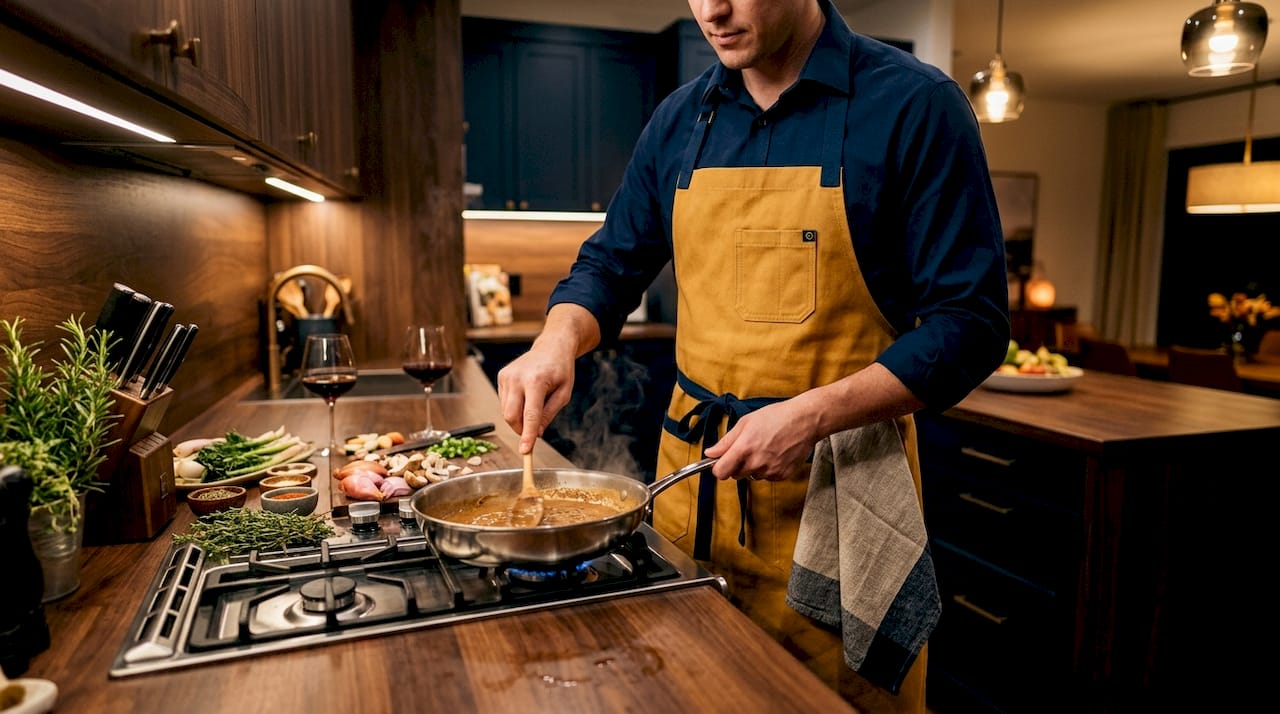
- Onsite cooking. Every dish is prepared fresh in your kitchen, timed to the flow of conversation and the pace your guests set.
- Course pacing and service. Private chefs manage pacing and timing of courses to craft a flowing, memorable dinner experience. A rushed third course or a 40-minute gap between plates can derail an otherwise perfect evening.
- Cleanup. The kitchen is returned to its original condition before the chef leaves. You wake up to a clean home, not a pile of dishes.
Pro Tip: Ask your chef to walk you through the menu narrative before guests arrive. Knowing the story behind each dish lets you share it at the table, turning a great meal into a genuine conversation piece.
The best personal chef services handle planning, cooking, and cleanup so hosts remain fully present and engaged throughout the event. That presence is the real product being sold.
How does a personal chef differ from a caterer?
Most people conflate personal chefs with caterers, but the two services solve different problems. Understanding the distinction helps you choose the right option for your specific event.
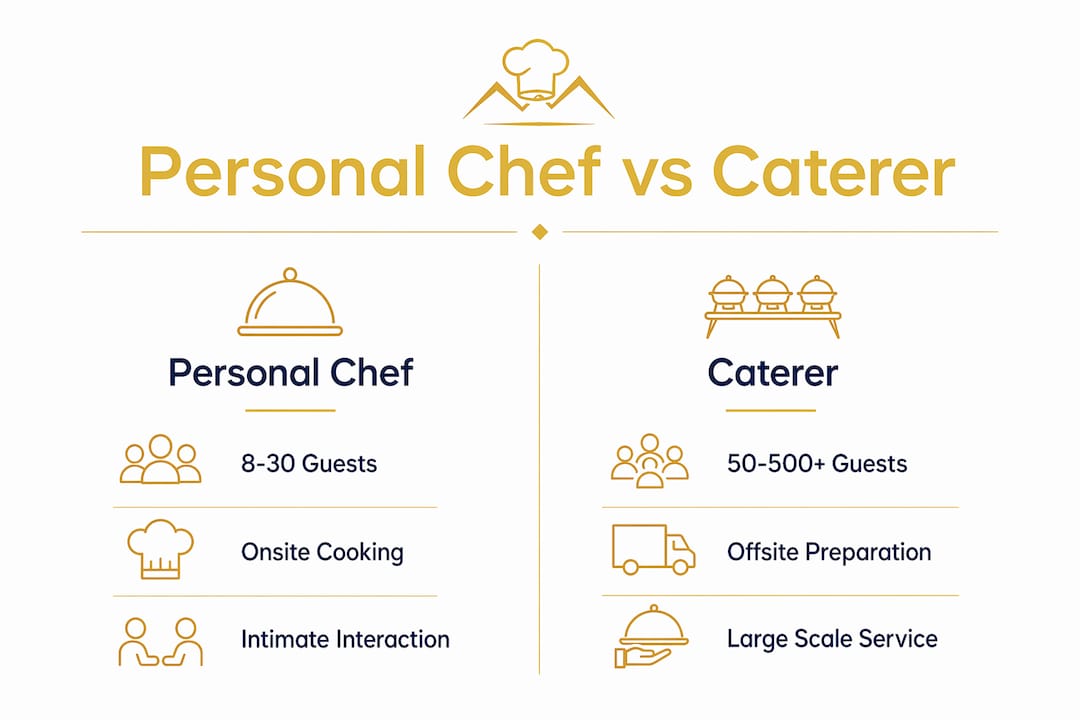
Personal chef services are ideally suited for small intimate gatherings, typically between 8 and 30 guests. Caterers are built for scale. They batch-cook off-site, transport food in warming trays, and deploy a team to serve a crowd of 100 or more. Neither model is inherently better. They simply serve different needs.
The table below captures the core differences:
| Factor | Personal chef | Caterer |
|---|---|---|
| Ideal guest count | 8 to 30 guests | 50 to 500-plus guests |
| Cooking location | Your kitchen, onsite | Off-site commissary kitchen |
| Menu customization | Built around your preferences | Preset packages with limited options |
| Dietary accommodation | Fully personalized per guest | General options available |
| Guest interaction | Chef engages guests, describes dishes | Minimal direct interaction |
| Cleanup included | Yes, full kitchen cleanup | Typically limited to service area |
The interaction style is where the gap becomes most visible. A private dinner chef engages guests with descriptions and stories about ingredients and dishes during the meal. That kind of hospitality turns dinner into theater. A caterer, by contrast, is focused on throughput.
For a deeper look at how these two services compare across event types, the personal chef vs. catering breakdown on Milehighcook's site covers the decision framework clearly.
Restaurant-trained chefs and private chefs require different skills. Success in a private setting depends more on adaptability and household experience than on culinary specialty alone. The best private chefs read the room, adjust their pace, and make themselves invisible when the moment calls for it.
What unique benefits do personal chef dinner services offer?
The clearest benefit is stress elimination. A private dinner party chef manages pacing, timing, and discreet cleanup, freeing the host from pre- and post-event stress. For couples hosting an anniversary dinner or a small group celebrating a milestone, that freedom is the entire point.
Here is what you actually gain when you hire a private dinner chef for a special occasion:
- Full presence as a host. You sit at your own table and enjoy the evening. No disappearing into the kitchen to check on the roast or apologizing for a delayed course.
- Custom dietary accommodation. Personal chefs integrate knowledge of guests' allergies, preferences, and event tone to build a tailored gastronomic narrative. One guest is gluten-free, another keeps kosher, and a third just hates cilantro. A skilled chef handles all of it without making anyone feel like a burden.
- Restaurant-quality ingredients. Chefs source premium, often local produce that most home cooks would not find at a standard grocery store. The quality difference shows up in every bite.
- Venue adaptability. Personal chefs operate in various unique venues, adjusting menus and equipment to fit spatial constraints. Whether you are hosting in a mountain cabin, a rooftop apartment, or a yacht, a skilled chef adapts.
- Elevated event tone. The presence of a professional chef signals to guests that the evening matters. It sets an expectation of quality that shapes how people show up and engage.
Pro Tip: If you are hosting for the first time with a personal chef, brief your guests in advance that a chef will be present. Some guests feel more relaxed knowing the format, and it builds anticipation for the meal.
The most valuable personal chef dinner experiences combine restaurant-level cooking with flawless hospitality logistics. That combination is what separates a memorable evening from a merely good one. For more on why this service resonates with small-group hosts, the reasons to hire a private chef resource from Milehighcook is worth reading before you book.
How to plan and communicate effectively with your chef
Clear communication before the event is the single biggest factor in whether your dinner succeeds. The most frequent failure for private chef hires is lack of expectation alignment about dietary flexibility and off-menu requests. Getting this right upfront takes less than an hour and prevents almost every common problem.
Follow these steps to set your event up for success:
- Schedule an initial consultation. Share your guest count, any dietary restrictions, the occasion, and the tone you want. Formal seated dinner, relaxed family-style, or interactive tasting menu each require a different approach from the chef.
- Discuss budget and purchasing authority. Clarifying budget and purchasing authority upfront avoids disputes and keeps operations smooth. Decide whether the chef uses a purchasing card you provide, submits receipts for reimbursement, or works within an all-inclusive package like Milehighcook's model.
- Confirm the service level. Do you want the chef to plate and serve each course formally, or set dishes on the table family-style? Do you need a server alongside the chef, or will the chef handle both roles?
- Get the menu in writing before the event. A written menu with agreed substitutions protects both parties. It also gives you something to share with guests in advance if you want to build anticipation.
- Discuss timing and kitchen access. Confirm what time the chef arrives to prep, when the first course hits the table, and how long the full service is expected to run. A three-hour dinner with five courses needs a different prep window than a casual two-course supper.
Defining cooking scope and schedule prior to hire is a key factor in private chef success. Misalignment on guest count or dietary changes is one of the leading causes of turnover in the first year of a chef relationship. Even for a one-night engagement, that same principle applies.
Personal chefs function as senior household professionals, supporting lifestyle rhythms and privacy. Treat the consultation as a professional briefing, not a casual chat, and you will get a far better result.
Key takeaways
A personal chef for dinner delivers value through five interconnected roles: menu design, ingredient sourcing, onsite cooking, course pacing, and full cleanup, and the quality of the experience depends entirely on how clearly those roles are defined before the event.
| Point | Details |
|---|---|
| Role goes beyond cooking | Personal chefs manage sourcing, pacing, service, and cleanup as a complete package. |
| Ideal for intimate groups | Services work best for 8 to 30 guests where customization and interaction matter most. |
| Distinct from catering | Personal chefs cook onsite with custom menus; caterers batch-cook for larger, preset events. |
| Communication is critical | Written menus, defined budgets, and clear service expectations prevent the most common failures. |
| Adaptability defines quality | The best private chefs adjust to any venue, dietary need, or event tone without friction. |
What I have learned from watching personal chef dinners transform events
I have spent years writing about hospitality and food culture, and the detail that surprises most first-time clients is not the food quality. It is the pacing. A skilled private dinner chef reads the table the way a great sommelier reads a room. When a conversation is running deep, the next course waits. When energy is high and guests are ready, the kitchen moves. That invisible choreography is what separates a dinner people talk about for months from one they simply enjoyed.
The second thing most people underestimate is the cleanup factor. Hosts consistently report that waking up to a spotless kitchen the morning after a dinner party changes how they feel about the entire experience. It removes the psychological weight that normally lingers after hosting.
My honest advice: do not treat the pre-event consultation as a formality. The chefs who deliver the best evenings are the ones who asked the most specific questions beforehand. They wanted to know not just what guests cannot eat, but what they love. That distinction produces a menu that feels personal rather than merely safe.
Adaptability and discretion define the best private chefs who integrate smoothly into household lifestyle and rhythms. If a chef you are considering cannot articulate how they would handle a last-minute dietary change or a guest who arrives an hour late, keep looking. The technical cooking skill is table stakes. The hospitality mindset is what you are actually hiring.
— Stephen
Plan your next dinner with Milehighcook
Milehighcook brings CIA-trained chefs directly to your home, handling every detail from custom menu design and grocery sourcing to onsite cooking and complete cleanup. The all-inclusive pricing model covers groceries, chef fees, service staff, and cleanup, so there are no surprise costs after the evening ends.
With a 4.9-star rating across more than 65 verified reviews and coverage across 30-plus markets including Denver, Phoenix, Salt Lake City, and Jackson Hole, Milehighcook delivers a consistent standard that marketplace models simply cannot guarantee. Explore the full range of private chef dinner services and find out how straightforward it is to book a chef for your next special occasion.
FAQ
What is the role of a personal chef at a dinner event?
A personal chef designs the menu, sources ingredients, cooks onsite, manages course pacing, and handles full cleanup. The role covers every detail of the dining experience so the host can focus entirely on guests.
How many guests can a personal chef typically serve?
Personal chef services work best for intimate gatherings of 8 to 30 guests. Beyond that scale, catering models with larger teams and off-site preparation are generally better suited to the logistics.
How far in advance should you book a personal chef for dinner?
Booking two to four weeks in advance gives the chef enough time to plan a custom menu, source specialty ingredients, and confirm all logistics. For holiday dates or large events, six to eight weeks is more practical.
What should you discuss during the initial chef consultation?
Cover guest count, dietary restrictions, service style, budget, purchasing authority, timing, and whether you want a written menu beforehand. Clear upfront communication prevents the most common expectation mismatches.
Is a personal chef the same as a private chef?
The terms are often used interchangeably, but a private chef typically works exclusively for one household on an ongoing basis, while a personal chef serves multiple clients for individual events or weekly meal prep sessions.