
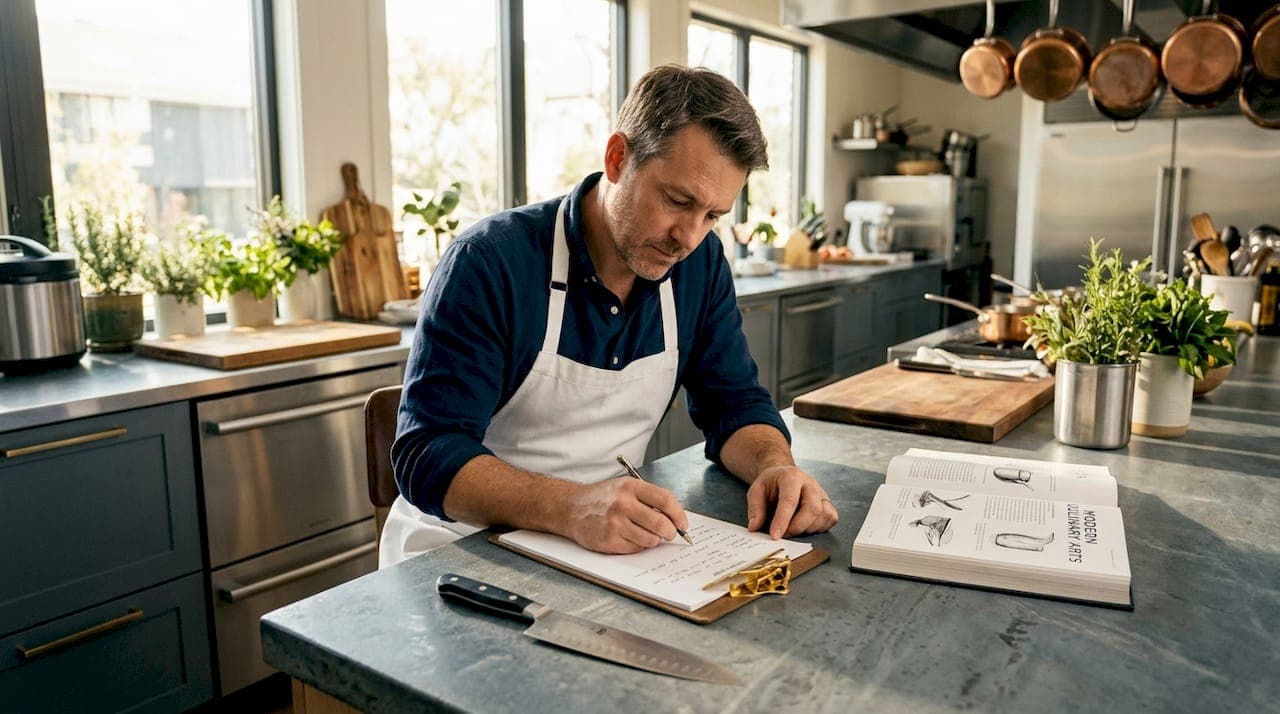
A chef-driven event menu is a curated dining experience where a professional chef leads every decision, from ingredient sourcing and course sequencing to flavor pairing and service pacing, to deliver a personalized culinary journey tailored to the event. Unlike standard catering, this approach places the chef's vision at the center of the guest experience rather than treating food as a logistical checkbox. Corporate event planners, wedding hosts, and private celebration organizers increasingly rely on this model because it transforms a meal into a defining moment of the event itself. Milehighcook, which deploys CIA-trained chefs across 30-plus markets including Colorado, Arizona, Utah, and Wyoming, is one example of how this model is being delivered at scale with consistent quality.
What is a chef-driven event menu, exactly?
A chef-driven event menu is defined by chef authorship. The chef does not simply execute a pre-approved list of dishes. Instead, the chef designs the menu from scratch, selecting ingredients based on seasonality, the event's tone, the guest profile, and a deliberate culinary progression. The result is a menu that reflects a specific point of view rather than a generic catalog of crowd-pleasing options.
This model is well established in fine dining restaurants, where tasting menus have long been the format of choice for chef-led storytelling. The same philosophy now applies directly to private and corporate events. Chef-driven menus combined with curated beverage programs and personalized service are now actively promoted by major restaurant groups for corporate gatherings and private celebrations. That shift signals mainstream adoption, not a niche trend.
The industry term for this format is the chef-curated menu, sometimes called a chef's tasting menu when structured as a multi-course progression. Both terms describe the same core principle: the chef holds creative authority over what guests eat, how courses are ordered, and how flavors build across the meal.
Pro Tip: When briefing a chef for your event, share the event's emotional tone, not just dietary restrictions. A chef designing for a celebratory gala will sequence courses very differently than one designing for a focused corporate dinner.
How does a chef-driven menu differ from traditional event catering?
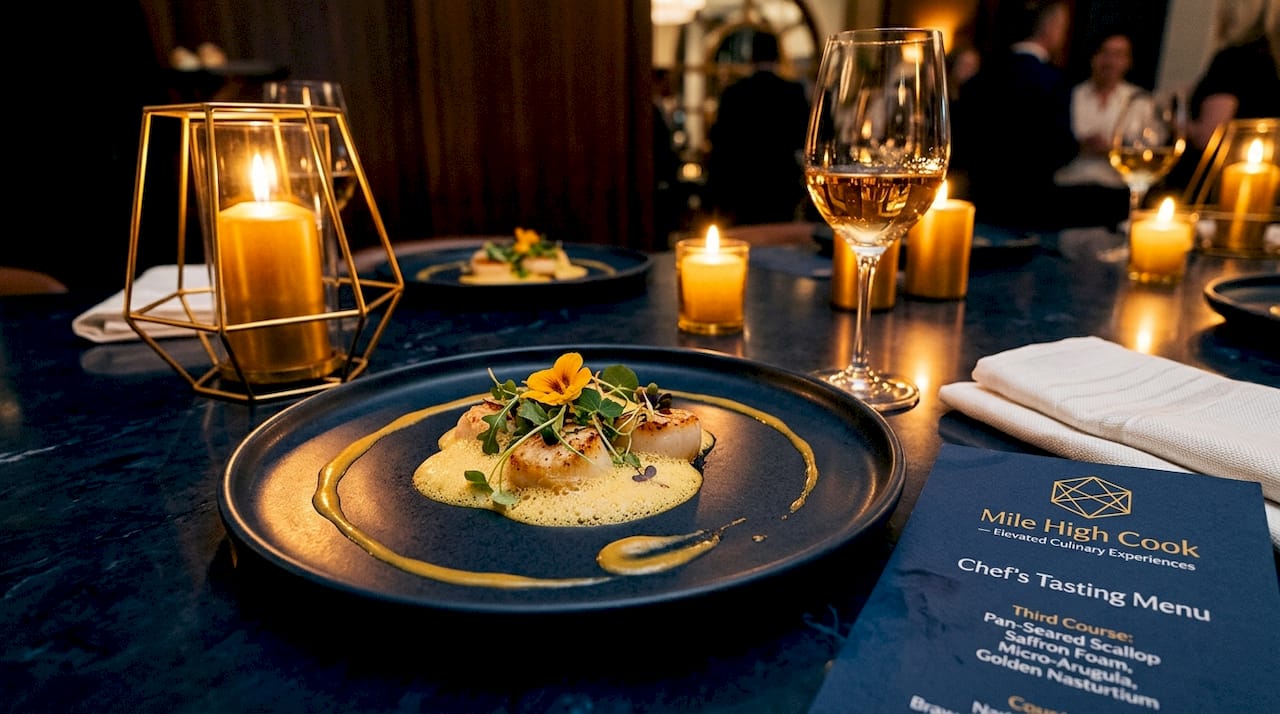
Traditional event catering operates on a selection model. A catering company presents a fixed menu of proteins, sides, and desserts. The client picks from column A and column B. The result is efficient and predictable, but it is also generic by design. The food serves the logistics, not the guest experience.
A chef-driven approach inverts that relationship entirely. Consider these structural differences:
- Creative authority: The chef proposes the menu based on culinary vision, seasonal availability, and event context. The client approves and refines, but the chef leads.
- Course progression: Tasting menus reflect the chef's narrative, sequencing dishes to build flavor and intensity rather than presenting courses as interchangeable modules.
- Ingredient sourcing: Chef-driven menus prioritize local, seasonal, and sometimes hyper-specific ingredients that a corporate catering catalog would never include.
- Pacing control: The chef, working with service staff, controls how quickly courses arrive, creating rhythm and anticipation rather than a buffet-style free-for-all.
- Beverage integration: Wine, cocktail, or non-alcoholic pairings are selected to complement each course, not offered as a separate bar package.
The guest experience shifts from selection to reception. Guests are not choosing what they want. They are receiving what the chef has determined will create the best possible experience for them. That is a fundamentally different psychological contract, and it produces a fundamentally different memory of the event.
How chef-driven menus enhance the guest experience at events
The impact of a chef-driven menu on guest perception is both sensory and emotional. Menus that start with light, fresh dishes and move toward richer, more complex flavors before ending with a balanced finale create a narrative arc that guests feel even if they cannot articulate it. That arc is what separates a memorable dinner from a forgettable one.
"The evolution of fine dining spots emotion and atmosphere as key to memorable experiences beyond precise gastronomy." — Mauro Colagreco on fine dining and events
This principle applies directly to event catering. Consider how the format plays out across different event types:
- Gala dinners: A five-course chef-curated progression gives guests a shared experience to discuss between courses, turning the meal into a social catalyst rather than a pause between speeches.
- Corporate gatherings: A thoughtfully paced three-course menu signals that the host invested in the guest experience, which directly affects how attendees perceive the hosting organization. Convention centers now advertise chef-driven menus specifically to enhance exhibitor and attendee impressions.
- Private celebrations: Birthdays, anniversaries, and milestone dinners benefit from menus designed around the guest of honor's preferences, creating a personalized experience that a standard catering package cannot replicate.
- Intimate dinner parties: A chef-led four-course meal in a private home, with courses timed to conversation, creates the feeling of a restaurant-quality experience without requiring guests to leave.
Chef-led tasting menus transform passive diners into active participants in a culinary story, which heightens engagement and extends the emotional impact of the event well beyond the meal itself.
Key components of designing a chef-driven event menu
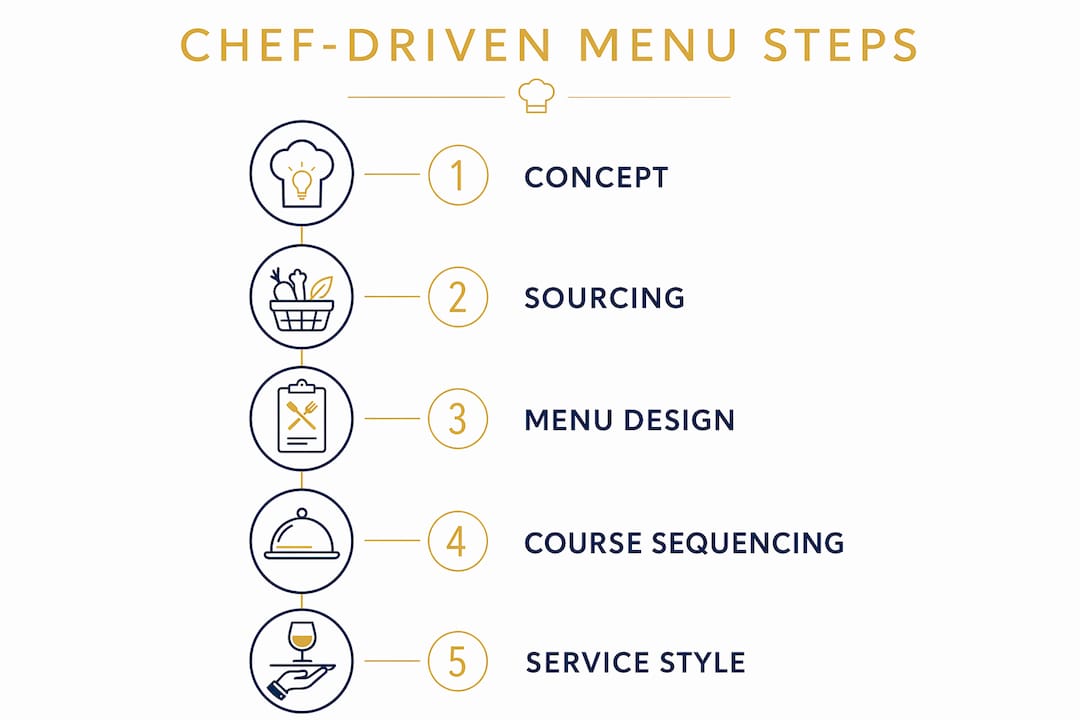
A well-executed chef-curated menu is not just a list of dishes. It functions as an integrated system, and understanding its components helps event planners collaborate more effectively with chefs.
| Component | What it involves | Why it matters |
|---|---|---|
| Menu sequencing | Ordering courses by flavor weight and intensity | Creates a narrative arc guests feel throughout the meal |
| Seasonality and sourcing | Using peak-season, locally available ingredients | Improves flavor quality and supports menu authenticity |
| Service format | Choosing plated, family-style, or station service | Must match the event's formality and venue layout |
| Beverage pairing | Selecting wine, cocktails, or non-alcoholic options per course | Amplifies flavor and signals hospitality investment |
| Dietary accommodation | Proactively designing for restrictions, not retrofitting | Prevents last-minute substitutions that break the menu's integrity |
Seasonality deserves particular attention. A chef designing a menu in January for a Colorado mountain event will work with entirely different ingredients than one designing for an August rooftop dinner in Phoenix. The best chef-driven menus are inseparable from their time and place. That specificity is part of what makes them memorable.
Integrating service style, beverage pairing, and personalized hospitality amplifies the impact of the menu significantly. A beautifully sequenced five-course meal served by staff who do not understand the dishes, or paired with wines chosen at random, loses much of its effect. The system only works when all parts are designed together.
Pro Tip: Ask your chef to design at least one dietary-restriction version of the full menu during the planning phase, not the week before the event. A gluten-free or vegan guest should receive the same narrative arc as every other guest, not a plate of steamed vegetables.
For event planners looking at Denver catering trends in 2026, chef-driven menus with hyper-local sourcing and beverage integration are consistently among the most requested formats for luxury events.
How event planners can successfully implement a chef-driven menu
Execution is where most chef-driven menus succeed or fail. The culinary vision can be exceptional, but if the logistics do not support it, the guest experience suffers. Effective event catering planning begins by defining event purpose, guest expectations, and service realities before food selection. That sequence matters.
Here is what experienced planners do differently:
- Engage the chef early. Bring the chef into planning conversations at least six to eight weeks before the event. Menu design, sourcing, and staffing all require lead time that last-minute bookings cannot accommodate.
- Share the full event brief. Give the chef the event's purpose, the guest profile, the venue layout, the timeline, and the tone. A chef designing in an information vacuum will produce a generic result.
- Align service format with venue reality. A plated five-course menu requires adequate kitchen facilities, trained service staff, and a dining room that supports timed service. Verify these before committing to a format.
- Build dietary accommodation into the design phase. Collect dietary restrictions from guests at RSVP and share them with the chef during menu development, not after the menu is finalized.
- Confirm staffing ratios. Chef-driven menus with multiple courses require more service staff per guest than buffet formats. A ratio of one server per eight to ten guests is standard for plated fine dining service.
- Plan for a pre-event tasting. For events of 30 or more guests, a tasting session with the host and key stakeholders allows the chef to refine dishes and gives the host confidence in the final menu.
Considering chef-driven menus as a holistic system involving kitchen operations, staffing, timing, and guest pacing alongside culinary creativity is the single most important mindset shift for planners new to this format. The food is the centerpiece, but the infrastructure is what makes it possible.
For practical guidance from working chefs, the chef tips from Milehighcook cover sourcing, timing, and menu design in formats directly applicable to private and corporate events.
Key takeaways
A chef-driven event menu works because it integrates culinary creativity, deliberate course sequencing, and coordinated service into a single guest experience that generic catering cannot replicate.
| Point | Details |
|---|---|
| Chef authorship defines the format | The chef leads menu design from sourcing to sequencing, not the client or a catering catalog. |
| Course progression creates emotional impact | Menus built to move from light to rich flavors produce a narrative arc guests remember. |
| Integration is non-negotiable | Service format, beverage pairing, and staffing must be designed alongside the menu, not added after. |
| Early planning is the biggest success factor | Engaging the chef six to eight weeks out allows proper sourcing, staffing, and dietary planning. |
| Dietary accommodation belongs in the design phase | Retrofitting restrictions after menu finalization breaks the culinary narrative for affected guests. |
Why chef-driven menus are the clearest signal of event sophistication
I have seen hundreds of event menus over the years, and the single clearest indicator that a host truly invested in their guests is not the venue or the decor. It is the food. Specifically, it is whether the food tells a story or just fills a plate.
What strikes me most about the shift toward chef-curated menus is that it is not driven by budget. I have seen chef-driven three-course dinners outperform lavish buffets at twice the cost. The difference is intentionality. When a chef sequences a meal to build toward something, guests feel it, even if they cannot name what they are feeling. That is the emotional dimension that Mauro Colagreco and other fine dining leaders have been articulating for years, and it is now filtering into corporate and private event catering in a real way.
The trend I find most interesting in 2026 is the move toward beverage-integrated menus, where the espresso and coffee program is designed with the same intentionality as the food courses. That level of detail is what separates a genuinely chef-driven experience from one that simply uses the phrase as a marketing label.
My honest advice to any event planner reading this: stop treating the menu as a line item and start treating it as the event's primary communication to guests. Everything else at your event is set dressing. The food is the experience.
— Stephen
Plan your event with Milehighcook's chef-driven catering
Milehighcook brings CIA-trained private chefs directly to your event, whether that is an intimate dinner for eight or a corporate gathering for 200. Every menu is designed from scratch around your event's purpose, your guests' preferences, and the season's best ingredients. The all-inclusive pricing model covers groceries, chef fees, service staff, and complete cleanup, so there are no surprises on the invoice. With a 4.9-star rating across more than 65 verified reviews and coverage across Colorado, Arizona, Utah, and Wyoming, Milehighcook is the standard for private chef catering at events where the food actually matters. Explore the full range of services or book a consultation to start designing your chef-curated menu today.
FAQ
What is a chef-driven event menu?
A chef-driven event menu is a curated dining experience where a professional chef designs every course, from ingredient selection to flavor sequencing, to create a personalized and cohesive meal tailored to the event's purpose and guests.
How is a chef-driven menu different from standard catering?
Standard catering offers pre-set selections from a fixed catalog. A chef-driven menu gives the chef creative authority to design a progression of courses that builds flavor and tells a culinary story, rather than presenting interchangeable dishes.
What events benefit most from a chef-curated menu?
Gala dinners, corporate gatherings, milestone celebrations, and intimate private dinners all benefit significantly. Convention centers and major restaurant groups use chef-driven menus specifically to enhance attendee impressions at high-profile events.
How early should I involve a chef in event menu planning?
Engage the chef at least six to eight weeks before the event. This timeline allows for proper ingredient sourcing, dietary accommodation planning, staffing coordination, and a pre-event tasting if needed.
Does a chef-driven menu have to be a multi-course tasting menu?
No. A chef-driven menu can be a single-course station format, a family-style dinner, or a three-course plated meal. The defining feature is chef authorship and intentional design, not the number of courses.