
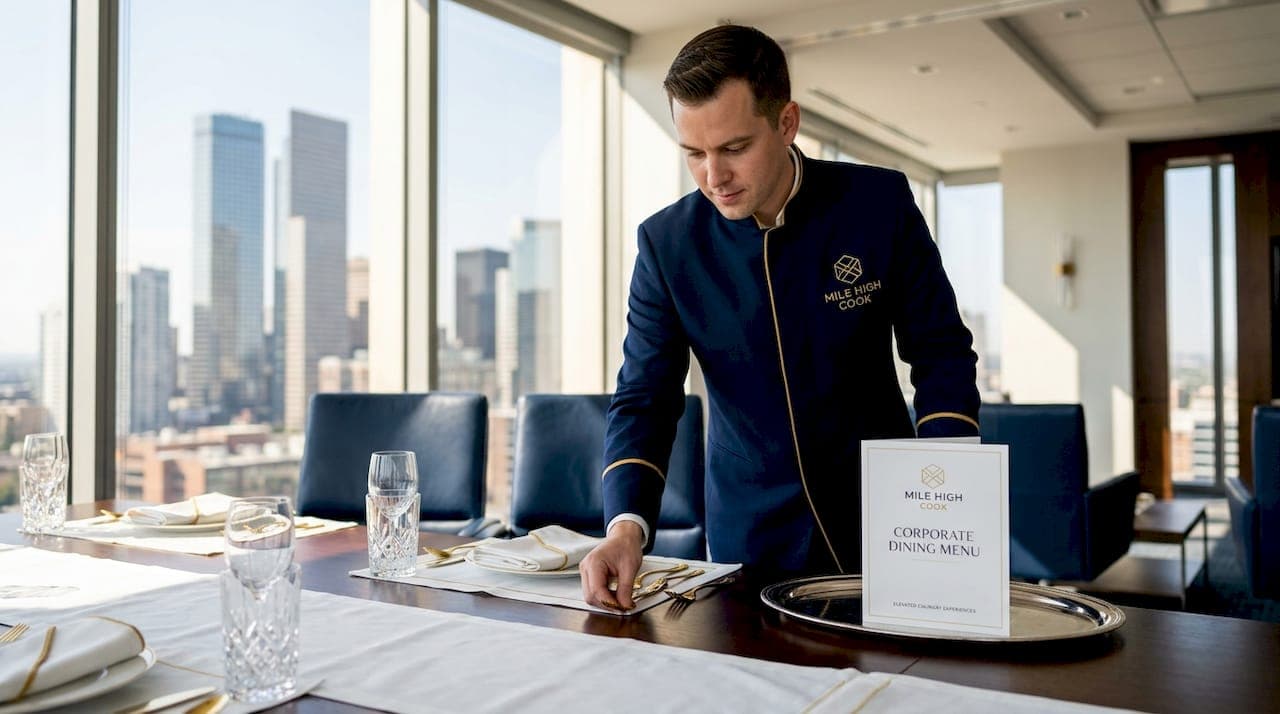
Executive catering service is the provision of high-quality, professionally managed dining tailored for corporate functions, board meetings, executive retreats, and upscale private events. Unlike standard catering, it combines refined menu design, trained service staff, and precise operational execution to create a dining experience that reflects the standards of the event itself. The service is led by professionals including executive chefs, banquet managers, and dedicated event coordinators. Whether the format is a plated dinner for a board of directors or a private chef experience at a corporate retreat in Colorado, the defining feature is consistency at a level that standard catering rarely achieves.
What is executive catering service and how does it differ from standard catering?
Executive catering service is defined by three core characteristics: bespoke menu design, professional service delivery, and operational precision at scale. Standard catering fills a room with food. Executive catering fills a room with an experience. The distinction matters because corporate events carry reputational weight. A poorly timed meal service during a leadership summit communicates disorganization just as clearly as a missed presentation.
The menus in executive catering are built around the event's objectives, not just the guest count. A product launch dinner calls for a different culinary narrative than a quarterly board meeting. Executive catering teams work with event planners to align food choices with event themes, dietary requirements, and the overall program flow. This level of customization is what separates the category from off-the-shelf corporate catering options.
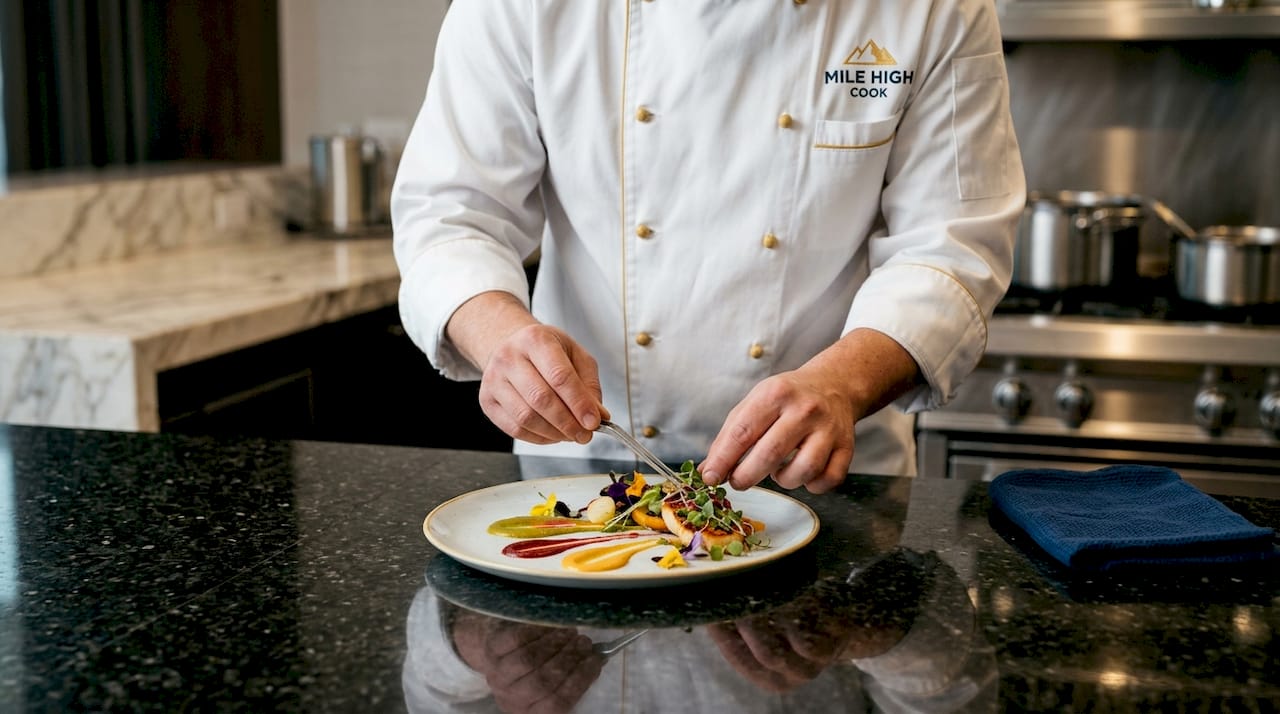
Named entities matter here. The Culinary Institute of America (CIA) trains many of the chefs who lead executive catering teams, and that training shows in the precision of plating, timing, and flavor balance. Organizations like the National Association for Catering and Events (NACE) set professional benchmarks that executive catering providers follow. When you hire at this level, you are buying into a system, not just a menu.
What types of executive catering are available?
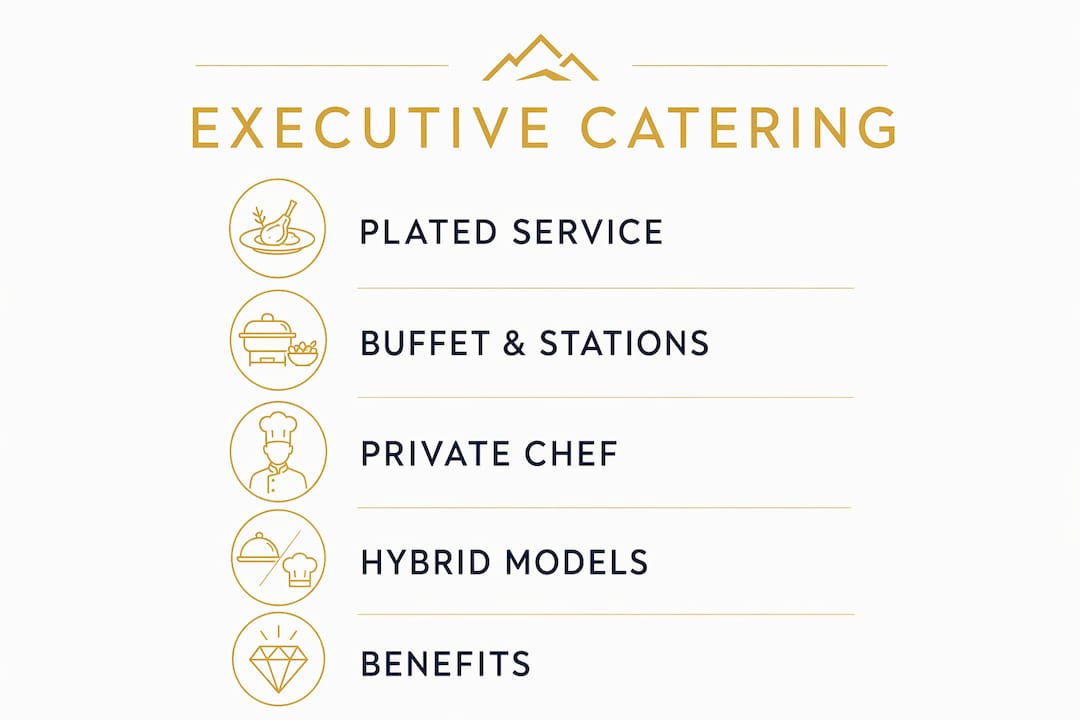
The three primary service models in executive catering are plated service, buffet and station service, and private chef or curated service. Each suits a different event profile, and choosing the wrong one creates friction between the food experience and the event's goals.
Plated service
Plated service is the standard for formal executive functions requiring strict timing control. Courses arrive simultaneously to all guests, which keeps the program on schedule and signals formality to attendees. Board dinners, award ceremonies, and investor presentations typically use this format. The tradeoff is staffing intensity: plated service requires more servers per guest than any other model.
Buffet and station service
Buffet and station catering suits events where guest movement and social interaction are priorities. Networking receptions, product showcases, and multi-track conferences benefit from the flexibility this format provides. Guests control their own pace, which encourages conversation and reduces the pressure of a fixed seating arrangement. The service style selection should align directly with whether the event prioritizes a formal program or open networking.
Private chef and curated service
Executive retreats increasingly favor private chef or curated service models over traditional buffets. This model delivers a quieter, more exclusive dining experience that aligns with corporate values of understated elegance. A private chef prepares meals on-site, often with interactive elements like tableside finishing or cooking demonstrations, which turns the meal into a shared experience rather than a logistical necessity.
Hybrid models
Hybrid models combine elements from multiple formats. A corporate gala might open with a cocktail reception using stations, transition to a plated dinner for the awards program, and close with a dessert buffet. This approach requires strong operational coordination but delivers the most flexible guest experience.
| Service style | Formality | Guest movement | Timing control | Best suited for |
|---|---|---|---|---|
| Plated | High | Low | Tight | Board dinners, award ceremonies |
| Buffet/stations | Medium | High | Flexible | Networking events, conferences |
| Private chef | High | Low | Curated | Executive retreats, intimate functions |
| Hybrid | Variable | Variable | Moderate | Galas, multi-phase events |
Pro Tip: If your event includes a keynote or formal presentation, plated service protects your program timeline. If the event's value comes from attendee interaction, buffet or station service will serve you better.
How does executive catering work operationally?
The operational backbone of executive catering is the executive banquet chef, a role that goes well beyond cooking. Executive banquet chefs manage complex culinary production for multi-event, large-scale catered functions, overseeing timing, portion control, and quality consistency across every course. At a large corporate venue running three simultaneous events, this person is the production director, not just the head cook.
Staffing structures in executive catering are layered. The kitchen team includes sous chefs, line cooks, and prep staff. The front-of-house team includes captains, servers, and bussers. Effective banquet staffing requires leadership that can manage multiple simultaneous events, including hiring, scheduling, and training to maintain quality under pressure. A single event with 200 guests might require 20 or more service staff, all coordinated through a single chain of command.
Kitchen production workflows are built around timing targets. For a plated dinner, the kitchen works backward from the moment the first course hits the table. Every station has a countdown. Proteins rest, sauces hold, and garnishes are staged so that 200 plates can leave the kitchen within a three-minute window. This level of production discipline is what distinguishes premium executive catering from typical catering at scale.
Food cost management is another operational layer that planners rarely see but always benefit from. Executive catering teams track yield, waste, and portion sizes to keep costs predictable. This protects your budget and prevents the surprise invoices that plague less organized providers.
Pro Tip: Before signing a contract, ask your catering vendor how they manage simultaneous events. If they cannot describe a clear chain of command and a production timeline, that is a red flag for execution risk on the day of your event.
What are the benefits of executive catering for corporate events?
The most direct benefit of executive catering is that it removes the food and service variables from your event planning equation. When the catering team is operating at an executive level, you stop managing logistics and start managing outcomes. That shift in focus is worth more than any single menu upgrade.
Refined presentation communicates professionalism before a single word is spoken. Guests at a corporate dinner form impressions of the host organization based on the quality of the experience, and food is a significant part of that signal. Private chef experiences offer personalized menus that address dietary restrictions and elevate the dining experience with interactive demonstrations, which turns a meal into a memorable touchpoint.
Executive catering also supports tight event schedules. A plated dinner that runs 15 minutes long can compress a keynote, delay a panel, and frustrate attendees. Professional catering teams build buffer time into their service sequences and communicate proactively with event managers when timing shifts. That operational awareness is a feature, not an accident.
Key benefits of executive catering service include:
- Menu customization that accommodates dietary restrictions, event themes, and cultural preferences without compromising quality
- Consistent quality across every course and every guest, regardless of event size
- Professional service staff trained to read the room and adjust pace without being prompted
- Stress reduction for hosts, who can focus on guests rather than logistics
- Enhanced networking environment created by thoughtful food placement, station design, and service flow
- Budget predictability through structured pricing that covers staffing, food, and cleanup
How to choose the right executive catering service for your event
Choosing an executive catering provider starts with understanding your event's primary objective. A service format aligned with guest behavior and event goals creates an effortless and polished experience. A format chosen for cost or convenience alone creates friction.
Follow these steps to evaluate and select the right provider:
- Define your event profile. Identify the guest count, event type, venue constraints, and program structure before contacting any vendor. This information determines which service models are even viable.
- Assess menu customization capability. Ask for sample menus and confirm the provider can accommodate your dietary requirements, cultural preferences, and event theme. Review sample menus from providers you are considering to evaluate range and quality.
- Evaluate operational leadership. Ask specifically who leads production on the day of your event and how they manage timing across multiple service points. The answer reveals whether you are hiring a team or just a menu.
- Check staffing ratios. For plated service, expect a minimum of one server per ten guests. For buffet service, the ratio shifts but the total headcount should still be clearly defined in the contract.
- Review track record and references. Ask for references from events of similar size and format. A provider with strong reviews from board dinners is not automatically the right choice for a 500-person networking reception.
- Clarify pricing structure. Confirm whether the quote includes staffing, groceries, service equipment, and cleanup. All-inclusive pricing eliminates the surprise costs that inflate final invoices.
Pro Tip: Ask your shortlisted vendors to walk you through a specific event they have executed that matches your profile. The level of detail in their answer tells you more about their operational capability than any sales presentation.
The difference between a good corporate event and a great one often comes down to whether the catering team was a vendor or a partner. Providers who understand private chef versus catering distinctions can help you make the right call for your specific event format.
Key takeaways
Executive catering service succeeds when service style, staffing structure, and menu design are aligned with the event's objectives from the start.
| Point | Details |
|---|---|
| Definition matters | Executive catering is defined by bespoke menus, trained staff, and operational precision, not just food quality. |
| Service style drives outcomes | Plated service controls timing; buffet service enables networking; private chef models deliver exclusivity. |
| Operational leadership is critical | Executive banquet chefs manage production, staffing, and timing to keep large-scale events on track. |
| Benefits extend beyond food | Professional catering reduces host stress, supports program flow, and signals organizational quality to guests. |
| Selection requires a process | Evaluate vendors on operational capability, staffing ratios, and pricing transparency, not menu appeal alone. |
Why executive catering is more than a luxury upgrade
I have worked with enough corporate event planners to know that the catering decision is almost always underweighted in the early planning stages. Planners spend weeks on venue selection and speaker logistics, then treat catering as a line item to be resolved in the final month. That sequencing creates real risk.
What I have observed consistently is that the events where catering becomes a problem are the ones where the service style was chosen for the wrong reasons. A buffet selected because it seemed easier to manage, or plated service chosen because it sounded more impressive, without considering how guests actually move through the event. The format has to serve the objective, not the planner's comfort level.
The trend toward private chef experiences at executive retreats is not just a preference for better food. It reflects a broader shift toward what the industry is calling quiet luxury: understated, personalized, and deeply considered. A CIA-trained chef preparing a four-course dinner for 12 executives at a mountain retreat in Utah communicates something very different than a hotel banquet buffet. Both feed people. Only one creates a memory.
The operational side of executive catering is where I see the biggest gap between expectation and reality. Planners often assume that a reputable catering company will handle everything. The best ones do. But you still need to ask the right questions about production leadership, staffing depth, and contingency planning. The catering team that can tell you exactly what happens if a key staff member calls in sick on the day of your event is the team worth hiring.
Flexibility is the final variable that separates good executive catering from great executive catering. Last-minute dietary changes, program overruns, and venue surprises are not exceptions. They are the rule. The catering team's ability to absorb those changes without disrupting the guest experience is the real measure of their capability.
— Stephen
Elevate your next corporate event with Milehighcook
Planning an executive retreat, board dinner, or upscale corporate function in Colorado, Utah, Arizona, or Wyoming? Milehighcook provides private chef services built specifically for events where the dining experience cannot be an afterthought. Every chef is CIA-trained, and the all-inclusive pricing model covers groceries, chef fees, service staff, and complete cleanup so your final invoice matches your quote.
Milehighcook holds a 4.9-star rating from over 65 verified reviews across 30+ markets, and the team specializes in the kind of personalized, high-standard service that corporate event planners need when the guest list includes executives, investors, or board members. For corporate catering in Denver or private chef services across the Mountain West, Milehighcook delivers the operational consistency and culinary quality your event demands.
FAQ
What is executive catering service in simple terms?
Executive catering service is professionally managed, high-quality dining designed for corporate and upscale events. It combines bespoke menus, trained service staff, and precise operational execution to deliver a dining experience that matches the standards of the event.
How does executive catering differ from regular catering?
Regular catering focuses on food delivery and volume. Executive catering adds menu customization, professional service leadership, and operational precision, including staffing structures and production timelines that keep large events running on schedule.
What types of executive catering service are most common?
The three most common types are plated service for formal events with tight timing, buffet and station service for networking-focused events, and private chef or curated service for executive retreats and intimate upscale functions.
How do I know which service style is right for my event?
Align your service format with your event's primary objective. Formal programs with presentations call for plated service. Events where guest interaction drives value call for buffet or station formats.
What should I ask an executive catering vendor before hiring them?
Ask how they manage production on the day of the event, what their staffing ratio is for your service style, and how they handle last-minute changes. A vendor who can answer those questions with specifics has the operational depth your event requires.