

In-home meal preparation is the practice of cooking meals inside your own home, either by yourself, a hired personal chef, or a caregiver, tailored to your household's preferences and lifestyle. The term covers everything from a personal chef's weekly cook day to a caregiver helping a senior chop vegetables and follow a family recipe. It is distinct from a home meal delivery service, where meals arrive premade and require only reheating. Understanding the difference matters because the right option depends on how much customization, control, and human presence you actually want in your kitchen.
What is in-home meal preparation and how does it work?
In-home meal preparation, known in the culinary industry as personal chef or private cook services, describes any arrangement where meals are planned, cooked, and packaged inside your home by a skilled professional or support person. The three most common formats are personal chef cook days, caregiver-assisted meal prep, and self-directed batch cooking with professional guidance.
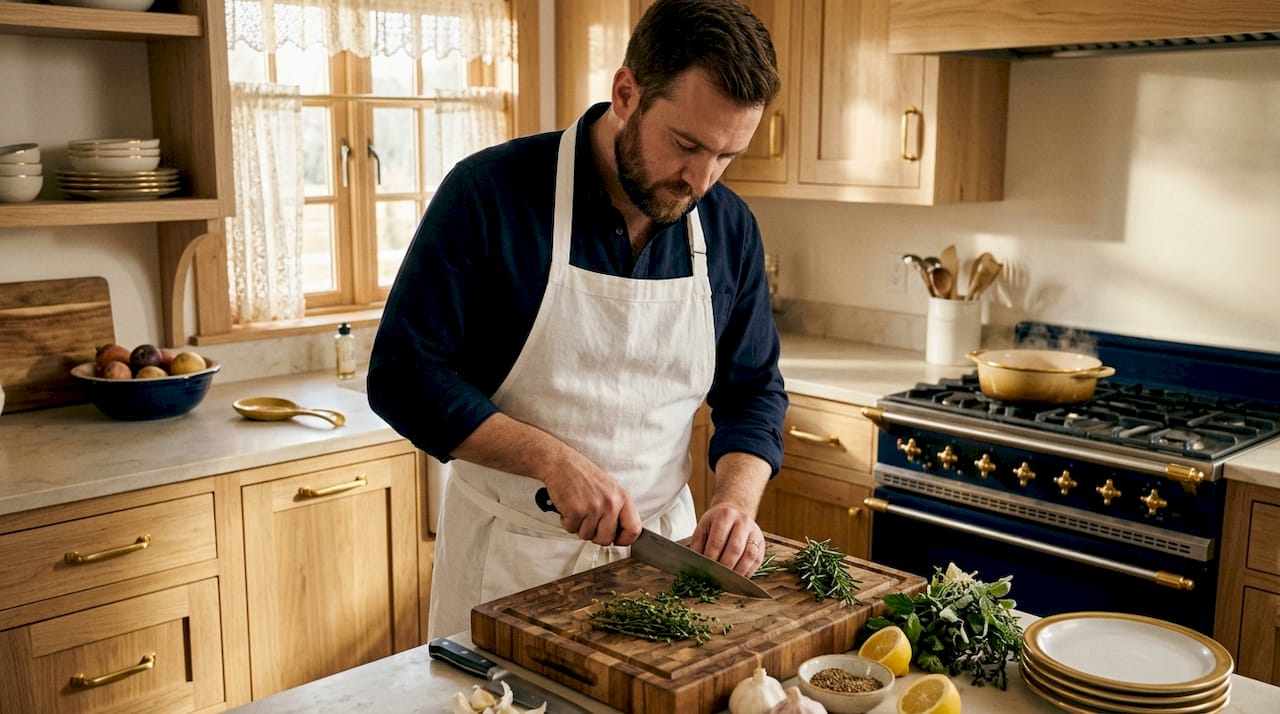
A personal chef cook day is the most structured format. The chef arrives at your home, shops for groceries in advance, cooks multiple meals in your kitchen, packages and labels everything, and leaves the space clean. Personal chefs deliver planning, shopping, cooking, packaging, and cleanup all within a single visit. That all-in-one scope is what separates a cook day from simply hiring someone to make dinner.
Caregiver-assisted meal prep is a softer version of the same concept. A home care aide helps with grocery shopping, light kitchen tasks, and following existing meal preferences. Caregivers assist with preparation but do not create medical or specialized dietary plans, so families must supply any specific nutrition instructions. This format works well for seniors, people recovering from illness, or anyone who needs support rather than a full culinary service.
Self-directed home cooking with a meal planning framework sits at the other end of the spectrum. You do the work, but structured meal prep ideas at home, like batch cooking proteins on Sunday or prepping grain bowls for the week, reduce daily decision fatigue significantly.
Pro Tip: If you are exploring in-home cooking services for the first time, start by identifying whether you need customization, convenience, or companionship. Each format solves a different problem.
- Personal chef cook day: Full service including shopping, cooking, packaging, and cleanup
- Caregiver-assisted prep: Grocery help, light cooking support, and companionship
- Self-directed batch cooking: You cook in advance using a structured weekly plan
- Hybrid services: Some providers offer labeled, freezable entrées on flexible monthly plans with pick-up or delivery options
How does in-home meal prep compare to meal delivery and meal kits?
The market for home-based eating now includes at least three distinct categories, and confusing them leads to expensive mismatches between what you pay and what you actually get.
Ready-to-eat meal delivery services send fully premade meals that require only microwave or oven heating. Brands in this space prioritize speed above all else. You trade freshness and customization for near-zero effort. The meals are cooked in a commercial kitchen, not yours, and the menu rotates on a fixed schedule.
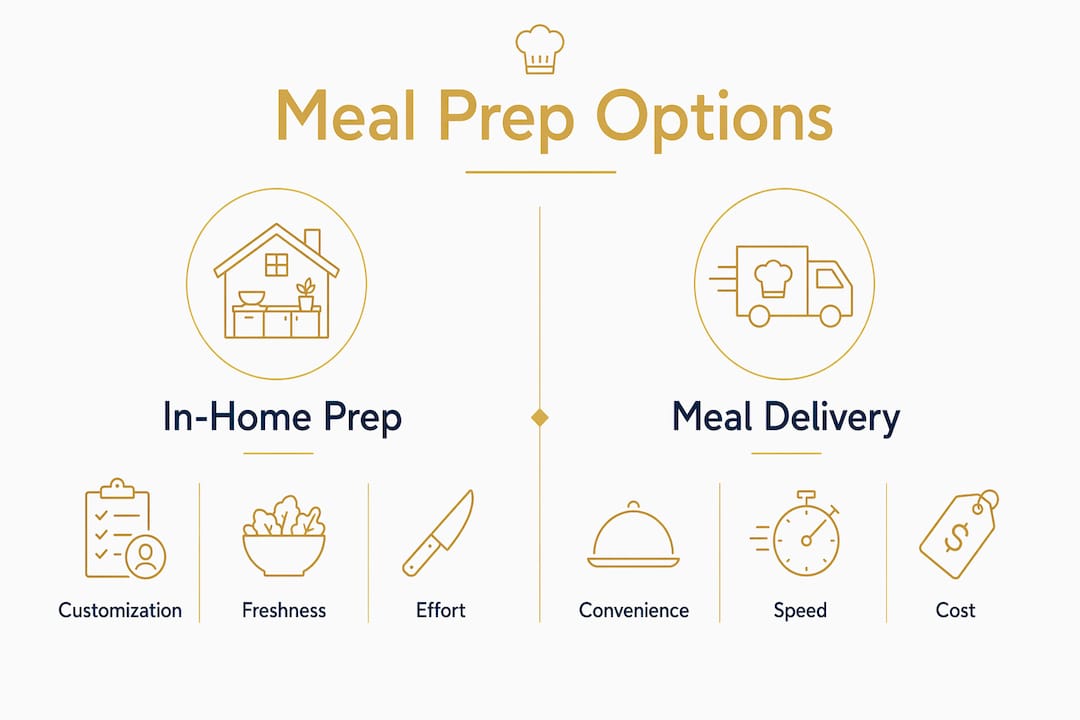
Meal kits sit in the middle. You receive pre-portioned ingredients and follow a recipe card, so some cooking is required. The experience feels more personal than reheating a tray, but the menu is still chosen by the company, not by you. Substitutions for allergies or strong preferences are limited.
In-home meal preparation, whether through a personal chef or a caregiver, offers the highest level of customization. Your kitchen, your ingredients, your preferences. The tradeoff is cost and scheduling. A personal chef cook day typically runs in the mid-$300 range plus grocery reimbursement, which adds up to over $1,300 per month for weekly service. That is a meaningful investment compared to a $12 meal kit box.
| Option | Customization | Effort required | Freshness | Typical cost |
|---|---|---|---|---|
| In-home personal chef | Very high | None (you) | Freshly cooked | $300+ per cook day |
| Caregiver-assisted prep | High | Minimal | Freshly cooked | Varies by care plan |
| Meal kits | Moderate | 20-40 minutes cooking | Fresh ingredients | $10-$15 per serving |
| Ready-to-eat delivery | Low | Reheating only | Premade, not fresh | $12-$20 per meal |
Consumer research from 2026 shows the average household spends 14.8 minutes on lunch and 33.7 minutes on dinner preparation. That data tells you most families are already looking for shortcuts. The question is whether a shortcut that sacrifices quality and personalization is actually the right one for your household.
What practical considerations should you know before starting?
Food safety is the most overlooked factor when people begin exploring how to prepare meals at home in bulk. Prepared meals must be refrigerated within two hours of cooking. Your refrigerator must stay at 40°F or below, and any reheated meal must reach an internal temperature of 165°F to eliminate contamination risk. Refrigerated prepared meals are safe for three to four days. Anything beyond that should be frozen.
Scheduling a personal chef cook day requires more planning than most people expect. You need to confirm the menu at least a few days in advance, account for grocery shopping time, and make sure your kitchen is accessible and reasonably organized before the chef arrives. Most households settle into a rhythm after two or three sessions.
Customization is one of the strongest arguments for in-home cooking services, but it has limits depending on the format you choose. A personal chef can adapt recipes to gluten-free, dairy-free, low-sodium, or specific cultural preferences with ease. A caregiver, however, follows existing dietary preferences rather than designing medical diets. If your household includes someone with a medically prescribed diet, you need to provide written instructions and confirm that the caregiver's scope covers your needs.
Pro Tip: Before your first cook day, write down your household's top ten favorite meals, any allergies, and two or three cuisines you want to explore. Handing that list to your chef saves time and produces better results from day one.
Pricing models vary by provider. Personal chefs typically charge a flat cook day rate, not hourly or per plate, which makes budgeting predictable. Groceries are usually reimbursed separately. Some services bundle everything into an all-inclusive fee, which eliminates surprise costs. When comparing providers, look at what one cook day actually delivers: number of meals, portions, packaging, and whether cleanup is included.
What benefits do individuals and families gain from in-home meal preparation?
The benefits of meal prep extend well beyond saving time on a Tuesday night. For busy families, the biggest gain is decision elimination. When meals are already planned, cooked, and labeled in your refrigerator, you stop spending mental energy on "what's for dinner" every single day.
Customization is the second major advantage. A personal chef working in your kitchen can accommodate the picky eater, the athlete on a high-protein plan, and the grandparent with a low-sodium requirement all in the same cook day. No delivery service or meal kit offers that level of household-specific flexibility.
For seniors and individuals recovering from surgery or illness, caregiver-assisted meal prep carries emotional weight beyond nutrition. The companionship that comes with having someone in the kitchen, following familiar recipes, and sharing conversation around food supports independence and mental wellbeing in ways that a delivered tray simply cannot replicate.
- Time savings: Eliminating daily cooking decisions frees up 30 to 60 minutes per evening for most households
- Nutritional control: Meals are built around your ingredients and preferences, not a commercial kitchen's cost margins
- Reduced food waste: A personal chef shops specifically for your menu, buying only what gets used
- Support for independence: Seniors and recovering individuals maintain familiar routines with professional or caregiver support
- Meal quality: Freshly cooked food prepared in your own kitchen consistently outperforms reheated delivery meals in taste and texture
You can explore why hiring a private chef delivers value beyond the plate if you want a deeper breakdown of the return on investment for professional in-home cooking.
Key takeaways
In-home meal preparation delivers the highest level of customization and freshness of any home dining option, but requires clear communication, proper food safety practices, and realistic budget planning to work well.
| Point | Details |
|---|---|
| Definition matters | In-home meal prep is cooking inside your home by a chef or caregiver, not reheating delivered food. |
| Service types differ | Personal chefs, caregiver-assisted prep, and self-directed batch cooking each solve a different household need. |
| Food safety is non-negotiable | Refrigerate within 2 hours, store below 40°F, and reheat to 165°F to keep prepared meals safe. |
| Customization has limits | Caregivers follow existing preferences but do not design medical diets. Provide written instructions. |
| Cost requires full comparison | Evaluate personal chef value by the full cook day scope, not cost per plate. |
Why I think most families choose the wrong option first
I have spent years watching families default to meal kits or delivery apps when what they actually needed was a personal chef or even just a structured batch cooking routine. The appeal of a subscription box is obvious. It feels manageable, low-commitment, and modern. But after a few weeks, the novelty fades, the recipes pile up uncooked, and the household is back to takeout on Wednesday.
The families who get the most out of in-home meal preparation are the ones who treat it as a system, not a product. They know their household's real preferences, they communicate clearly with whoever is cooking, and they take food safety seriously rather than assuming a refrigerator handles everything automatically.
One thing I have seen trip people up repeatedly: underestimating the value of the cook day model. When you calculate what a personal chef actually delivers, including planning, shopping, cooking, packaging, labeling, and cleanup, the per-cook-day value looks very different from a simple dollar comparison to meal kits. You are not paying for food. You are paying for a fully managed kitchen operation that runs without you.
My honest recommendation is to start with one cook day, give the chef a detailed preference list, and evaluate the result before committing to a recurring schedule. Most people who do that never go back to delivery subscriptions.
— Stephen
Bring a personal chef into your home with MileHighCook
If in-home meal preparation sounds like the right fit for your household, MileHighCook makes it straightforward to get started. CIA-trained chefs serve 30+ markets across Colorado, Arizona, Utah, and Wyoming, including Denver and Salt Lake City. Every booking includes groceries, chef fees, and complete cleanup in one all-inclusive price, so there are no surprise costs after the fact. With a 4.9-star rating from over 65 verified reviews, the quality standard is consistent across every market.
Whether you want weekly meal prep for a busy family or a one-time private dining experience, MileHighCook's private chef services are built around your preferences, not a fixed menu. Explore service options and book a consultation directly on the website.
FAQ
What is in-home meal preparation exactly?
In-home meal preparation is the practice of cooking meals inside your own home, either by yourself, a personal chef, or a caregiver, tailored to your household's dietary preferences and schedule. It differs from meal delivery in that food is freshly cooked on-site rather than reheated from a commercial kitchen.
How much does a personal chef cook day cost?
Personal chefs typically charge a flat rate in the mid-$300 range per cook day, plus grocery reimbursement. One weekly client can represent over $1,300 per month when groceries are included.
Can a caregiver handle special dietary needs during meal prep?
Caregivers assist with grocery shopping, light cooking, and following existing meal preferences, but they do not design medically specific diets. Families should provide written dietary instructions for caregivers to follow.
How long do home-prepared meals stay safe in the refrigerator?
Prepared meals stored at 40°F or below stay safe for three to four days. Meals should be refrigerated within two hours of cooking and reheated to an internal temperature of 165°F before eating.
Is in-home meal prep worth it compared to meal kits?
In-home meal preparation offers greater customization, freshness, and household-specific flexibility than meal kits, but at a higher cost. The right choice depends on how much you value personalization versus convenience and budget.