

Hiring a chef for family meals means bringing professional culinary expertise directly into your home to save time, improve nutrition, and create personalized dining experiences built around your family's exact preferences and dietary needs. A personal chef for families is not a luxury reserved for celebrities. It is a practical solution for busy households that want restaurant-quality food, zero meal-planning stress, and more hours back in their week. This article breaks down the real benefits, honest costs, and how to find the right fit for your family in 2026.
What are the main benefits of hiring a personal chef for families?
Hiring a personal chef for families delivers one outcome above all others: time. Families that bring in a professional chef reclaim 10 to 15 hours per week previously spent on meal planning, grocery shopping, cooking, and cleanup. That is the equivalent of a part-time job handed back to you every single week.
The benefits extend well beyond time savings:
- Personalized nutrition. A chef designs menus around your family's specific health goals, allergies, and preferences. Private chefs are trained to handle complex dietary accommodations including gluten-free, kosher, macrobiotic, and medically restricted diets, which requires specialized knowledge most home cooks simply do not have.
- Consistent meal variety. Without a professional in the kitchen, most families rotate through the same 10 to 15 meals indefinitely. A chef introduces seasonal ingredients, global techniques, and balanced menus that keep children and adults genuinely interested in eating at home.
- Reduced food waste. Professional chefs plan ingredient use across multiple meals, which means fewer half-used vegetables rotting in the fridge and fewer impulse food orders on busy nights.
- Healthier eating habits. The shift toward personalized nutrition is one of the strongest drivers behind families hiring chefs. When meals are designed around your family's health goals rather than convenience, the long-term impact on energy, weight, and wellbeing is measurable.
Pro Tip: Ask your chef to prepare a two-week rotating menu before the first session. This gives you a clear picture of variety, nutritional balance, and whether their style matches your family's taste.
How does a personal chef compare to meal delivery and catering?

Not all food services are equal, and the differences matter when you are choosing what works for your family long-term.
A personal chef serves multiple clients on a rotating schedule, batch-cooking meals once or twice per week and storing them for reheating. A private chef works exclusively for one household, cooking fresh meals daily and managing the full kitchen operation. Both are distinct from meal kit services like HelloFresh or Blue Apron, which deliver pre-portioned ingredients but still require you to cook. They are also distinct from catering companies, which focus on event-scale food production rather than personalized, ongoing family dining.
| Service type | Customization | Freshness | Cost range | Best for |
|---|---|---|---|---|
| Personal chef | High | Batch-cooked | $30–$76 per meal | Weekly family meals |
| Private chef | Very high | Daily fresh | $55–$76+ per person | Full-time household needs |
| Meal kit delivery | Low | Requires home cooking | $10–$15 per serving | DIY cooking households |
| Catering service | Moderate | Event-day prep | Varies by event size | One-time events |
A private chef also enhances family celebrations and social events with curated menus and personalized service that traditional catering cannot match. Catering operates on volume. A private chef operates on relationship. That distinction shapes every plate that comes out of your kitchen.
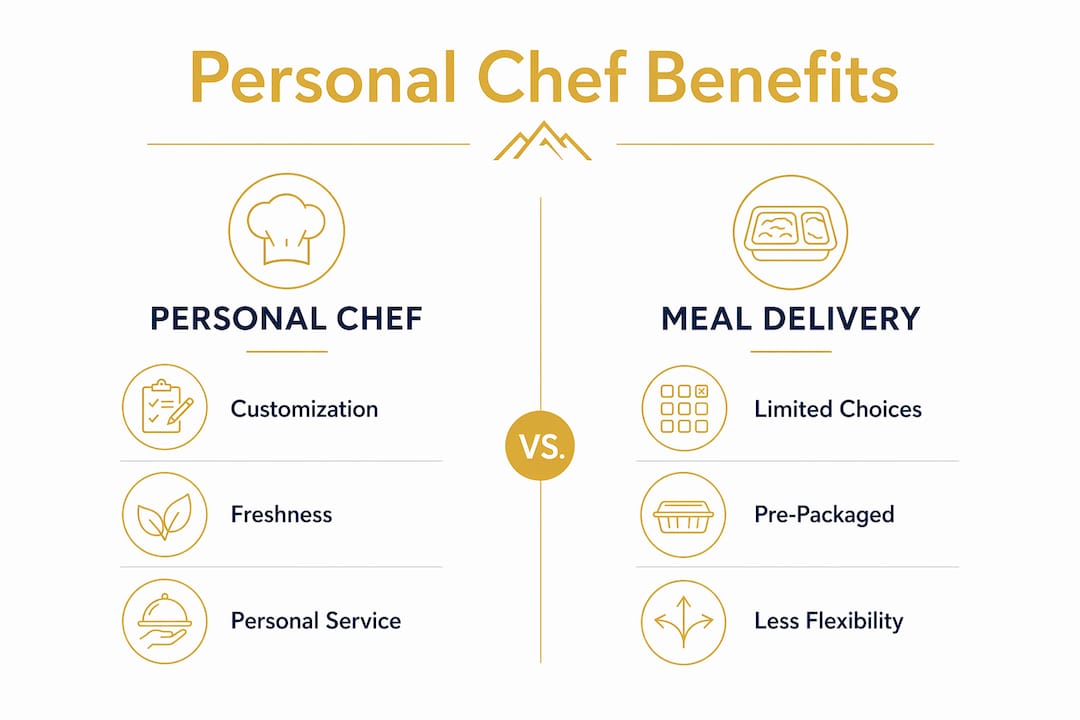
The practical advantage of a personal or private chef over meal delivery is control. You are not choosing from a fixed weekly menu. You are directing a professional who adapts to your family's schedule, preferences, and health needs in real time.
What factors affect the cost of hiring a chef for family meals?
Cost is the question most families ask first, and the answer is more nuanced than a single number. Personal chef labor averages $55 to $76 per person per meal in 2026, with groceries billed separately at cost. For a family of four eating four dinners per week, chef labor alone runs approximately $240 to $300 weekly.
Several variables push that number up or down:
- Family size and meal complexity. Larger families require more prep time and ingredient volume. Multi-generational households or families with young children increase chef complexity and cost by 10 to 20% compared to a standard adult household.
- Dietary specialization. Allergy management, medical diets, or cuisine-specific expertise commands higher rates because it demands additional training and kitchen protocols.
- Service model. A part-time personal chef who batch-cooks twice a week costs significantly less than a full-time private chef with daily presence.
- Entertaining frequency. Families that host dinners or events regularly get more value from a private chef arrangement, since the chef can handle both daily meals and special occasions under one agreement.
Pro Tip: Compare your current monthly spend on dining out, takeout, and meal delivery before dismissing chef costs as too high. Families spending $3,000 or more per month on food outside the home often find that a private chef is cost competitive while delivering better nutrition and zero delivery fees.
The hidden costs of cooking at home also factor in. Time, planning, food waste, and cleanup are real expenses. A professional chef eliminates all of them.
How to choose the right chef for your family's needs
Selecting the right chef is not simply about culinary credentials. It is about fit. Here is a practical process for making the right call:
- Define your family's dietary priorities first. Before interviewing anyone, write down your family's allergies, health goals, cuisine preferences, and any foods that are off-limits. This list becomes your filter for every candidate.
- Match chef expertise to your dietary complexity. Matching chef specialization to family dietary complexity significantly affects satisfaction and health outcomes. A chef trained in plant-based cooking is not the right hire for a family that eats primarily meat-forward meals.
- Ask about nutrition literacy, not just cooking technique. A chef who understands macronutrients, food sensitivities, and age-appropriate meal planning for children brings a different level of value than one focused purely on flavor.
- Request a trial meal before committing. A single session tells you more than any resume. Watch how the chef handles your kitchen, communicates with family members, and manages cleanup.
- Clarify scheduling expectations upfront. Decide whether you need a personal chef for two batch-cook sessions per week or a private chef available five days a week. Misaligned expectations are the most common reason chef arrangements end early.
- Review verified reviews and references. Platforms and services with documented client feedback give you a realistic picture of reliability, communication, and food quality over time.
The right chef becomes a genuine extension of your household. The wrong one creates friction. Taking the time to vet candidates properly pays off in months of smooth, stress-free family dinners.
What do real families experience after hiring a personal chef?
The impact of hiring a chef shows up in ways families do not always anticipate before they start.
Actress Diana Danielle made headlines in 2026 when she publicly searched for a private chef focused on nutrition to serve her children's busy schedules. Her stated priority was not gourmet presentation. It was nutritional variety and balance, specifically because her children were eating the same meals on repeat. Her search reflects a pattern seen across high-demand households: the breaking point is not laziness. It is the realization that consistent, high-quality nutrition requires professional input.
Chef Tim Mitchell demonstrated a different dimension of this impact when he prepared hot meals for 30 foster families at a community event, serving gourmet mac and cheese, pulled pork, and barbecue salad. The response was not just gratitude for the food. It was relief. Families under pressure responded to being cared for through a professionally prepared meal in a way that a catered tray of sandwiches never would have achieved.
"A 9-person AI startup replaced a $13,500-per-month food delivery habit by hiring a private chef, cutting costs while dramatically improving team nutrition and focus." — Mazech, 2026
The startup example is instructive for families too. When food quality and cost are tracked honestly, the math often favors a chef over the accumulation of delivery orders, restaurant bills, and wasted groceries.
Key takeaways
Hiring a chef for family meals delivers the most value when families treat it as a long-term investment in time, nutrition, and household quality of life rather than a one-time luxury.
| Point | Details |
|---|---|
| Time reclaimed weekly | A personal chef returns 10 to 15 hours per week by handling planning, shopping, cooking, and cleanup. |
| Cost is competitive | Families spending $3,000+ monthly on dining out often find chef services cost-neutral with better nutrition. |
| Customization is the key differentiator | Personal and private chefs tailor every meal to allergies, health goals, and family preferences in ways delivery services cannot. |
| Chef type determines service model | Personal chefs batch-cook for multiple clients; private chefs cook fresh daily for one household exclusively. |
| Selection process determines satisfaction | Matching chef expertise to your family's dietary complexity is the single most important hiring decision. |
What I've learned after years of watching families hire chefs
Most families come to the decision to hire a chef after a specific breaking point. It is rarely a gradual realization. It is usually a Tuesday night when three family members want three different things, the fridge is empty, and someone orders pizza for the fourth time that week. I have seen this pattern repeat across dozens of households.
What surprises people most is how quickly the relationship evolves. In the first month, a chef is a service provider. By month three, they are a trusted part of the household rhythm. They know which child refuses cilantro, which parent is cutting carbs, and which nights need a 20-minute meal because of soccer practice. That institutional knowledge is genuinely hard to replace once you have it.
The families that get the most out of the arrangement are the ones who communicate clearly and consistently. A weekly five-minute check-in about upcoming schedules, preferences, and any dietary changes keeps the chef aligned and the meals relevant. The families that treat the chef as a set-and-forget solution tend to drift into repetition, which defeats the purpose entirely.
The other insight worth sharing: do not wait for a special occasion to justify the investment. The families who hire a chef for everyday meals, not just dinner parties, are the ones who report the most meaningful lifestyle change. Daily nutrition compounds. So does the time you get back.
— Stephen
Bring restaurant-quality meals to your family table with Milehighcook
Milehighcook connects families across Colorado, Arizona, Utah, and Wyoming with CIA-trained private chefs who specialize in personalized, in-home dining. Every booking includes groceries, chef fees, service staff, and complete cleanup under one all-inclusive price, so there are no surprise costs after the meal. With a 4.9-star rating from over 65 verified reviews, Milehighcook delivers a consistent standard that marketplace models simply cannot guarantee. Whether you need weekly family dinners or a chef for a special occasion, explore private chef services tailored to your household, or read the full breakdown of why hiring a private chef is worth it for families like yours.
FAQ
What is the difference between a personal chef and a private chef?
A personal chef works with multiple clients, batch-cooking meals once or twice per week for each household. A private chef works exclusively for one family, cooking fresh meals daily and managing the full kitchen operation.
How much does it cost to hire a chef for family dinners?
Personal chef labor averages $55 to $76 per person per meal in 2026, with groceries billed separately. For four dinners per week for a family of four, expect to pay $240 to $300 in chef labor alone.
Is hiring a personal chef worth it for everyday family meals?
For families spending $3,000 or more per month on dining out and delivery, a personal chef is often cost-neutral while delivering better nutrition, zero food waste, and 10 to 15 hours of time savings per week.
How do I find a qualified chef for my family's dietary needs?
Start by listing your family's allergies, health goals, and cuisine preferences, then match candidates whose training and experience align with that profile. Always request a trial meal before committing to a long-term arrangement.
Can a private chef handle special dietary restrictions like allergies or medical diets?
Yes. Private chefs are trained to manage complex dietary accommodations including gluten-free, kosher, macrobiotic, and medically restricted diets, though these specializations typically command higher rates due to the additional protocols required.