
For most backyard weddings, the best catering approach is either an all-inclusive private chef (ideal for intimate gatherings of 10–50 guests who want a turnkey, zero-logistics experience) or a buffet, food station, or food truck setup (better for 50–100+ guests on a tighter budget who want flexibility and casual flow).
When to hire an all-inclusive private chef:
- Guest count under 50, limited kitchen access, and you want one vendor to handle groceries, cooking, service staff, and cleanup
- Formality matters, dietary needs are complex, or you simply don't want to coordinate five separate vendors
When to go buffet, stations, or food truck:
- Guest count above 50, budget is the primary constraint, or the backyard layout suits self-serve flow
- You're comfortable managing rentals and staffing separately, or a food truck fits the vibe
Either way, schedule a site visit before you sign anything. The yard's power access, kitchen proximity, and shade coverage will determine which approach actually works on the day.
Key Takeaways
Backyard wedding catering works best when the menu is chosen after the yard's constraints are assessed — power, kitchen access, and weather backup determine which service styles will actually succeed on the day.
| Point | Details |
|---|---|
| Start with a site visit | Confirm power, kitchen access, and serving flow before finalizing any menu or service style. |
| Match format to guest count | Buffet and stations suit 40–100 guests; a private chef is the strongest fit for under 30–50 guests. |
| Budget from a moderate range per person typically covering food, basic staffing, and rentals | This range typically covers food, basic staffing, and rentals; premium all-inclusive service runs $125–$200+. |
| Ask about insurance and cleanup | Confirm liability insurance and what "cleanup" includes before signing any catering contract. |
| Milehighcook all-inclusive option | One quote covers groceries, CIA-trained chef, service staff, and cleanup across CO, AZ, UT, and WY. |
Table of Contents
- What service formats work best for backyard wedding catering?
- How much does backyard wedding catering cost per person?
- What logistics do you need to confirm before booking?
- When should you book, and how many staff do you need?
- How do you handle dietary restrictions for an outdoor wedding menu?
- Six sample menus that work reliably in backyard settings
- What questions should you ask a caterer before you sign?
- How do you choose between a private chef, caterer, or food truck?
- How Milehighcook handles backyard weddings end to end
- What most couples get wrong about backyard wedding food
- Milehighcook makes backyard wedding catering genuinely simple
- Sources
- FAQ
What service formats work best for backyard wedding catering?
Start menu and service planning from the backyard constraints — kitchen access, power availability, and serving flow determine which dishes and formats will succeed outdoors. Picking a menu before you've assessed the yard is the single most common planning mistake.
Buffet
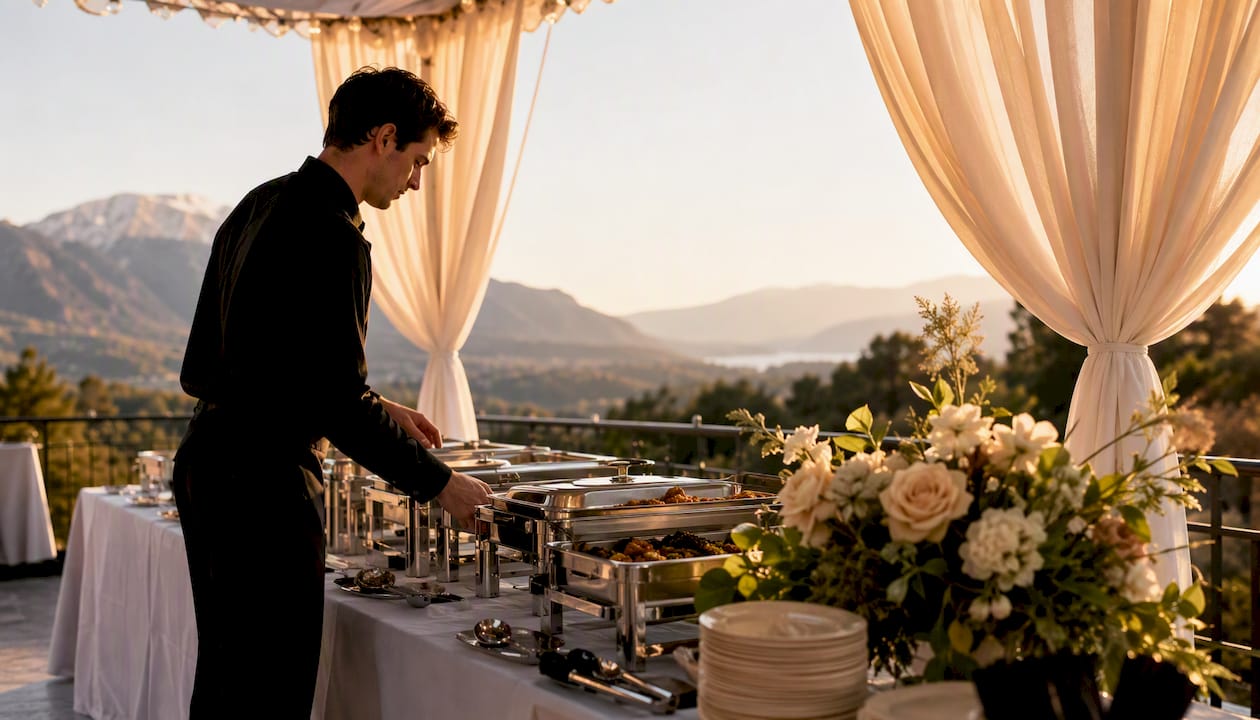
Buffet is the workhorse of outdoor receptions. Guests move at their own pace, you need fewer servers, and chafing dishes keep food at temperature without constant attention. It works best for 40–100 guests with a clear traffic path from the serving table to seating. The downside: portion control is loose, and a long single-line setup creates a bottleneck fast. Fix that by running two identical buffet lines on opposite sides of the yard.
Food stations
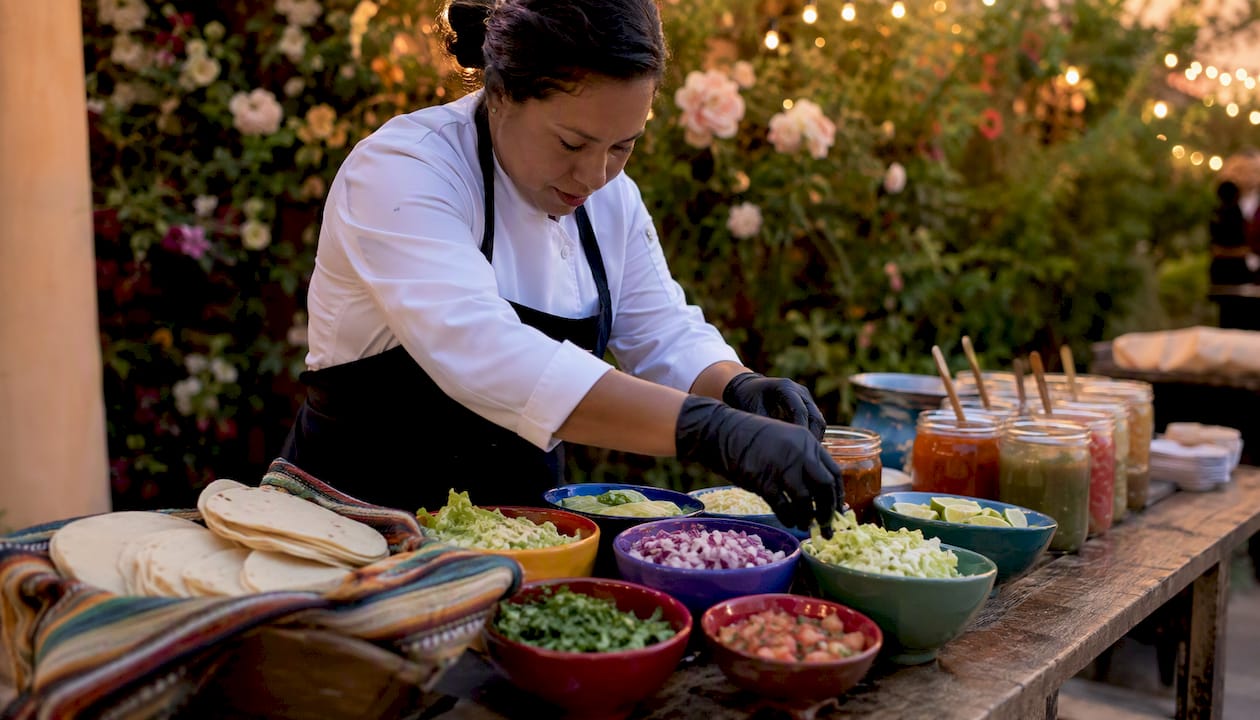
Interactive stations like taco bars, pasta stations, and bruschetta bars spread guests across the space and eliminate the single-line problem entirely. They also create a social moment — guests linger, customize, and talk. The trade-off is staffing: each station typically needs one attendant to keep it clean and replenished. Budget for that labor cost upfront.
Family-style
Platters passed around shared tables work beautifully for intimate dinners of 20–40 guests. It feels warm and unhurried, and it reduces the number of trips servers make. The catch is table space — you need wide tables and enough room between guests to pass dishes comfortably. Tight backyard setups with round tables under 60 inches tend to struggle with this format.
Passed hors d'oeuvres
Best used during the cocktail hour rather than as the primary meal. Passed bites keep guests moving, reduce the need for seating during the reception gap, and let the kitchen stage food in waves. For a small wedding of under 30 guests, a cocktail-hour-plus-stations combination can replace a formal seated dinner entirely.
Food trucks
A food truck handles its own equipment, power (most run on a generator), and prep space, which removes a huge logistics burden from the couple. They work well for casual weddings of 60–150 guests. The limitation is menu range — most trucks do one cuisine well, so pair a truck with a separate dessert or appetizer station if you want variety.
Grazing tables and charcuterie
Roasted proteins, composed salads, handhelds, and stable desserts hold well outdoors, and a well-built grazing table leans into exactly those items. A grazing spread works as a cocktail-hour anchor or a light reception alternative for very small weddings. Keep it in shade and replenish every 30–45 minutes in warm weather.
Pro Tip: Prioritize dishes that can be prepped off-site and finished on location. A CIA-trained private chef will often do the bulk of prep in a commissary kitchen, then plate or finish on-site — this sidesteps the "limited backyard kitchen" problem entirely.
How much does backyard wedding catering cost per person?
Buffet and station service usually cost less than plated service, and seasonal ingredients help control costs further. As a directional benchmark, The Knot reports that catering is one of the largest single line items in a wedding budget, with per-person costs varying widely by service style and region.
For backyard events in the U.S., here are realistic planning ranges:
For detailed Colorado-specific figures, wedding catering costs in Colorado break down regional pricing with real numbers.
What drives the price up or down
Guest count is the biggest lever. Labor and fixed vendor fees (photographer, DJ, florals) stay relatively flat regardless of headcount, but catering and rentals scale directly with guests.
Service style is the second lever. Plated dinners require more servers, more coordination, and more time — all of which cost money. A well-run buffet or station setup with two servers for 60 guests is far more cost-efficient than a plated dinner requiring four.
Alcohol costs vary depending on the selection and service style A signature cocktail plus beer and wine is the most common cost-control move — it feels generous without the full open-bar price tag.
Pro Tip: Swap one expensive protein for two mid-range ones. A carving station with roasted chicken and a slow-braised pork shoulder costs less per head than a beef tenderloin station and reads as more abundant.
What logistics do you need to confirm before booking?
A backyard is not a catering venue. It has no commercial kitchen, no loading dock, and no guaranteed power supply. Confirming these items before you sign a catering contract prevents the most common day-of failures.
Site items to confirm before booking:
- Kitchen access: Does the caterer have use of the indoor kitchen, or do they need to bring portable equipment?
- Refrigerator space: Is there enough cold storage for the volume of food, or does the caterer need a portable refrigeration unit?
- Power outlets: How many 20-amp circuits are available? Chafing equipment, warming trays, and lighting all draw power simultaneously.
- Load-in route: Can a catering van or food truck reach the serving area without crossing landscaping or stairs?
- Parking: Is there vendor parking within a reasonable distance for unloading?
- Restrooms: Are the home's bathrooms adequate for guest count, or do you need a portable restroom trailer?
Rentals commonly needed for outdoor receptions:
- Tent or canopy (sun and rain backup)
- Chafing dishes and warming equipment
- Portable refrigeration unit (for events over 50 guests)
- Tables, chairs, and linens
- String lighting or uplighting
- Portable restroom trailer (for 50+ guests or if the home has limited bathrooms)
Permits and neighborhood considerations: Check with your local municipality before the event. Many cities and counties require a temporary event permit for gatherings above a certain guest count (often 50 or more). Noise ordinances typically cap outdoor events at 10 PM or 11 PM. Street parking rules matter if vendors need to park trucks nearby. A quick call to your city's permit office takes 15 minutes and prevents a fine.
Weather contingency: A tent is not optional in most U.S. climates — it's insurance. For summer events, add oscillating fans inside the tent. For spring or fall, portable propane heaters keep guests comfortable after sunset. Insect control (citronella candles, perimeter sprays applied 24 hours before the event) is easy to overlook and miserable to skip.
For outdoor events near national parks or mountain regions, wedding catering near Zion National Park offers a useful example of how logistics adapt to remote outdoor settings.
When should you book, and how many staff do you need?
Booking timeline
- 6–12 months out: Request quotes from caterers and private chefs. The best providers in most markets book out 6–9 months for peak wedding season (May–October).
- 4–6 months out: Confirm your caterer, sign the contract, and pay the deposit. Schedule a tasting.
- 2–3 months out: Conduct a site visit with the caterer present. Walk the load-in route, test power outlets, and confirm the serving layout.
- 4–6 weeks out: Finalize the guest count, confirm dietary restrictions, and lock the menu.
- 1 week out: Confirm day-of timing with the caterer, rental company, and any other vendors.
The site visit at the 2–3 month mark is the most skipped and most important step. Caterers who have seen the yard before the day of the event make far fewer mistakes.
Staffing ratios
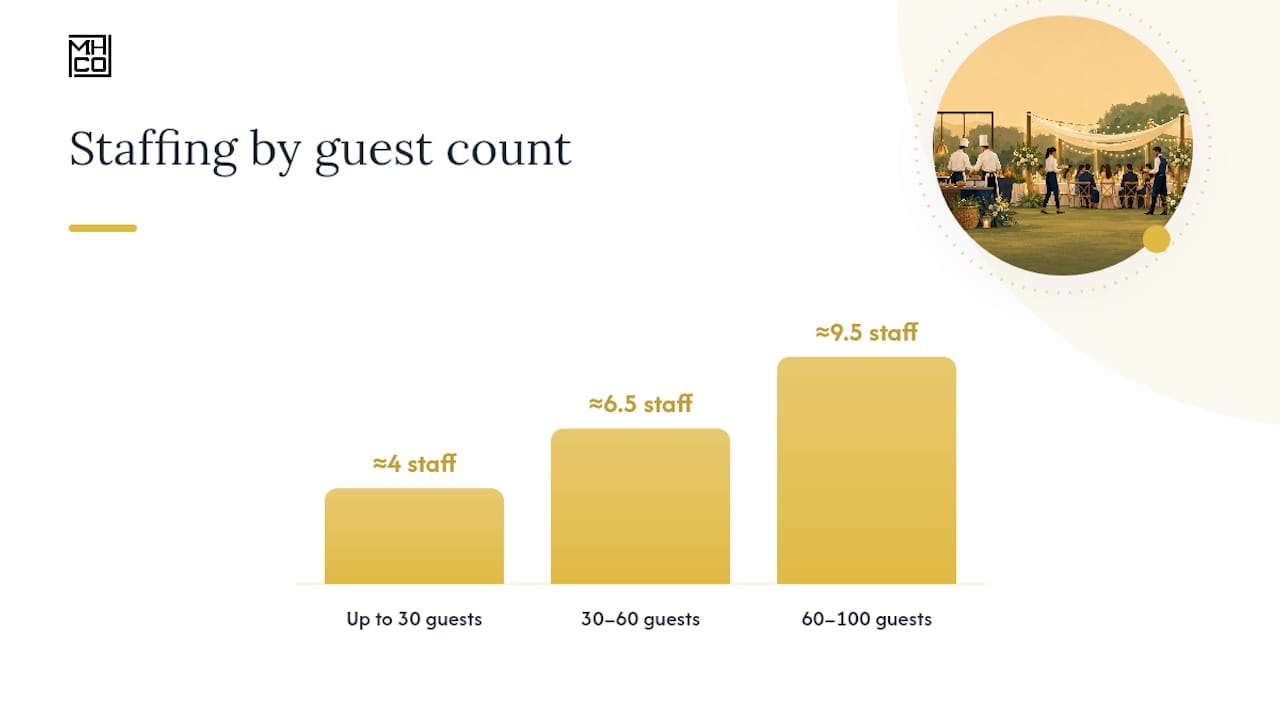
Careful rental and staffing planning is one of the primary cost-control levers for backyard events. Here are practical staffing benchmarks:
| Event size | Servers needed | Bartenders | Kitchen crew |
|---|---|---|---|
| Up to 30 guests | 1–2 | 1 | 1–2 |
| 30–60 guests | 2–3 | 1–2 | 2–3 |
| 60–100 guests | 3–5 | 2 | 3–4 |
For corporate event logistics that translate directly to backyard wedding operations, how corporate event catering unfolds covers staffing and coordination in detail.
Day-of schedule checkpoints
- T-3 hours: Caterer arrives for setup; confirm power and refrigeration are working.
- T-1 hour: Food prep complete; serving stations or buffet staged; bar stocked.
- Ceremony: Kitchen crew on standby; no hot food service during ceremony.
- Cocktail hour: Passed hors d'oeuvres or grazing table open; bar service begins.
- Reception: Main service begins within 15 minutes of guests being seated.
- End of service: Cleanup crew begins; leftover food packaged or disposed of per food-safety guidelines.
How do you handle dietary restrictions for an outdoor wedding menu?
Dietary accommodation at a backyard wedding is easier than most couples expect — if you plan it before the menu is finalized, not after.
Minimum dietary coverage checklist:
- At least one protein-forward vegetarian main (not just a side salad)
- One clearly labeled gluten-free starch option
- Dairy-free alternative for any cream-based sauce or dessert
- Nut-free preparation for any station where cross-contact is possible
- Kid-friendly option that doesn't require a separate kids' menu (pasta, sliders, or a build-your-own station covers both adults and children)
Labeling at buffet and station service: Every dish needs a small tent card with the name and a short allergen note (e.g., "contains gluten," "dairy-free," "vegan"). This takes 20 minutes to prepare and prevents a guest from having to track down a server to ask. For stations with shared utensils, use separate serving spoons for each dish and note cross-contact risks on the label.
Pro Tip: Build the menu around two or three dishes that are naturally gluten-free and dairy-free — roasted vegetables, grilled proteins, grain salads with vinaigrette — and add the indulgent options on top. This way, restricted-diet guests have full plates without a separate "allergy menu."
Plant-forward mains like a roasted cauliflower steak or a lentil-and-herb grain bowl cost less per head than beef or seafood and satisfy vegetarian, vegan, and gluten-free guests simultaneously. Backyard-friendly dishes that hold well outdoors include roasted proteins and composed salads that work equally well for omnivores and plant-based guests.
For kids, serve at the same time as adults and keep the option simple. A pasta station or slider bar handles children and picky adults without a separate service wave.
Six sample menus that work reliably in backyard settings
These concepts are built around dishes that travel well, hold temperature outdoors, and don't require a commercial kitchen to execute.
1. Classic backyard BBQ
Slow-smoked brisket and pulled pork with cornbread, coleslaw, baked beans, and grilled corn. Served buffet-style. This is the most forgiving format outdoors — everything holds in chafing dishes for hours without quality loss. Pair with a cold-brew lemonade cocktail station and a local craft beer selection. Rental needs: chafing dishes, a carving station, and a cooler for beverages.
2. Garden party stations
Three stations: a composed salad bar (mixed greens, roasted beets, goat cheese, candied walnuts), a grilled vegetable and flatbread station, and a charcuterie and cheese spread. Light, seasonal, and visually striking. Stylized grazing tables and colorful station displays increase perceived value without premium ingredient costs. Pair with a rosé and sparkling water bar. Works for 20–60 guests.
3. Taco and build-your-own bar
Seasoned ground beef, grilled chicken, and roasted black beans with all toppings. Interactive build-your-own concepts reduce bottlenecks and keep guests engaged. One station attendant handles replenishment. Add a margarita station and a non-alcoholic agua fresca. Rental needs: warming trays, topping bowls, and a toppings display stand.
4. Italian buffet
Penne with marinara and a cream-based option, Caesar salad, garlic bread, and a roasted chicken thigh with herbs. Crowd-pleasing, easy to scale, and holds well in chafing dishes. Pair with a Chianti and sparkling water. For a polished look, add a small antipasto display at the entrance. Works for 40–100 guests.
5. Plated intimate dinner
A three-course plated dinner: amuse-bouche (smoked salmon crostini), a composed salad, and a choice of seared salmon or filet mignon with roasted fingerling potatoes and seasonal vegetables. This format requires a private chef and at least one server per 10–12 guests. Best for 10–30 guests. Sample menus from Milehighcook show how a CIA-trained chef structures a plated dinner for a small backyard event.
6. Grazing and charcuterie spread
A large grazing table with cured meats, artisan cheeses, seasonal fruits, nuts, olives, pickles, and artisan crackers. Works as a cocktail-hour anchor or a light reception for very small weddings (under 25 guests). Keep it in shade and refresh every 30 minutes. Seasonal and festive menu trends for 2026 events point toward locally sourced cheeses and charcuterie as crowd-pleasing, high-perceived-value choices. Pair with a natural wine selection and sparkling water.
What questions should you ask a caterer before you sign?
Most catering disputes come from assumptions, not bad intentions. These questions close the gaps before the contract is signed.
Contract and scope:
- What exactly is included in the quoted price (food, labor, rentals, cleanup, gratuity)?
- What is the overtime policy if the event runs long?
- What is the cancellation and refund policy, and what happens if the caterer cancels?
- Are there minimum guest counts or minimum spend requirements?
Operational:
- Will you conduct a site visit before the event?
- Who is responsible for renting equipment (chafing dishes, tables, tents)?
- What is your plan if a key staff member is sick on the day?
- How do you handle leftover food — packaged for the couple, donated, or disposed of?
- Who handles cleanup, and what does "cleanup" include (trash removal, dishwashing, breakdown of rentals)?
Food safety and insurance:
- Do all food handlers hold current food handler certifications?
- How do you maintain safe food temperatures for outdoor service?
- Do you carry general liability insurance, and can you provide a certificate of insurance?
Red flags to watch for:
- Vague line items ("service fee" with no explanation of what it covers)
- No mention of a site visit in the contract
- No proof of liability insurance
- Cancellation policy that keeps the full deposit regardless of timing
- Service time listed as a range ("5–7 hours") with no overtime rate specified
How do you choose between a private chef, caterer, or food truck?
The right provider type depends on four factors: guest count, desired formality, on-site kitchen access, and budget. Here's a decision framework:
-
Under 30 guests, high formality, limited kitchen access: A private chef is the strongest fit. They handle prep off-site, bring their own equipment, and manage service from start to cleanup. The all-inclusive model means one invoice, no vendor coordination, and no surprise add-ons.
-
30–75 guests, mid-range formality, some kitchen access: A full-service caterer works well here. They bring staff, equipment, and food, but you'll typically coordinate rentals separately. Confirm who owns the rental relationship before signing.
-
50–150 guests, casual vibe, outdoor-friendly layout: A food truck handles its own power and prep, which removes significant logistics from your plate. Most trucks need a flat surface, 20–30 feet of clearance, and access to a water source for cleanup. Lead time for booking popular trucks is 4–6 months in most markets.
-
Any size, budget is the primary constraint: A buffet-style caterer using seasonal ingredients and a beer-and-wine bar is the most cost-efficient option. Budget-conscious backyard plans with limited open bar and seasonal menus can reduce per-person costs significantly while keeping the event feeling intentional.
-
Any size, you want zero day-of logistics stress: An all-inclusive private chef service covers groceries, cooking, service staff, and cleanup under one contract. You confirm the menu, show up, and eat. Milehighcook's model is built exactly for this scenario.
For mountain and destination backyard weddings, Breckenridge wedding catering planning and Estes Park wedding catering show how provider selection adapts to remote outdoor settings.
How Milehighcook handles backyard weddings end to end
A typical Milehighcook backyard wedding engagement looks like this: a couple in Colorado with 25 guests, a modest backyard, and no commercial kitchen. Milehighcook assigns a CIA-trained chef who conducts a site visit, designs a custom three-course menu around the couple's dietary needs, sources all groceries, and arrives with service staff. The couple receives one all-inclusive invoice covering groceries, chef fees, service staff, and complete cleanup. No rental coordination, no vendor calls, no leftover logistics.
The pricing model eliminates the hidden-fee problem that plagues traditional catering quotes. What you see in the quote is what you pay. For couples who've received a catering quote only to find gratuity, equipment fees, and travel charges added at the end, the difference is significant.
Milehighcook covers 30+ markets across Colorado, Arizona, Utah, and Wyoming, with CIA-trained chefs available across all markets. The brand holds a 4.9-star rating from over 65 verified reviews. For Utah-specific backyard events, wedding catering in Kanab and Sundance show how the model adapts to different outdoor settings.
Pro Tip: Request a site visit as part of your initial quote conversation. A caterer who won't visit the yard before the event is a caterer who hasn't accounted for your specific constraints — and you'll feel that on the day.
What most couples get wrong about backyard wedding food
The conventional wisdom says: keep it simple, go buffet, save money. That's not wrong, but it misses the real risk.
The actual failure mode at most backyard weddings isn't the menu — it's the logistics gap between "we have food" and "guests are eating well." A beautiful buffet that runs out of serving spoons, sits in direct sun for two hours, or gets hit by a gust of wind that sends napkins into the food is a worse guest experience than a modest plated dinner executed cleanly.
The couples who have the best experiences are the ones who treat the yard as a constraint to solve, not a backdrop to decorate. That means a site visit, a power audit, a weather plan, and a caterer who has worked outdoors before. A CIA-trained private chef who preps off-site and arrives with everything needed is not a luxury — for a small backyard wedding, it's often the most stress-free and cost-predictable option available.
The food truck is underrated for casual weddings above 60 guests. The grazing table is overrated as a primary meal (it's a cocktail-hour anchor, not a dinner). And the biggest budget mistake couples make is underestimating staffing — one server for 40 guests is not enough, and the math on adding a second server is almost always worth it.
Milehighcook makes backyard wedding catering genuinely simple
Planning a backyard wedding means managing a dozen moving parts at once. Milehighcook removes the catering piece entirely. One all-inclusive quote covers the custom menu, CIA-trained chef, service staff, groceries, and complete cleanup — no separate rental coordination, no surprise fees, no day-of vendor calls.
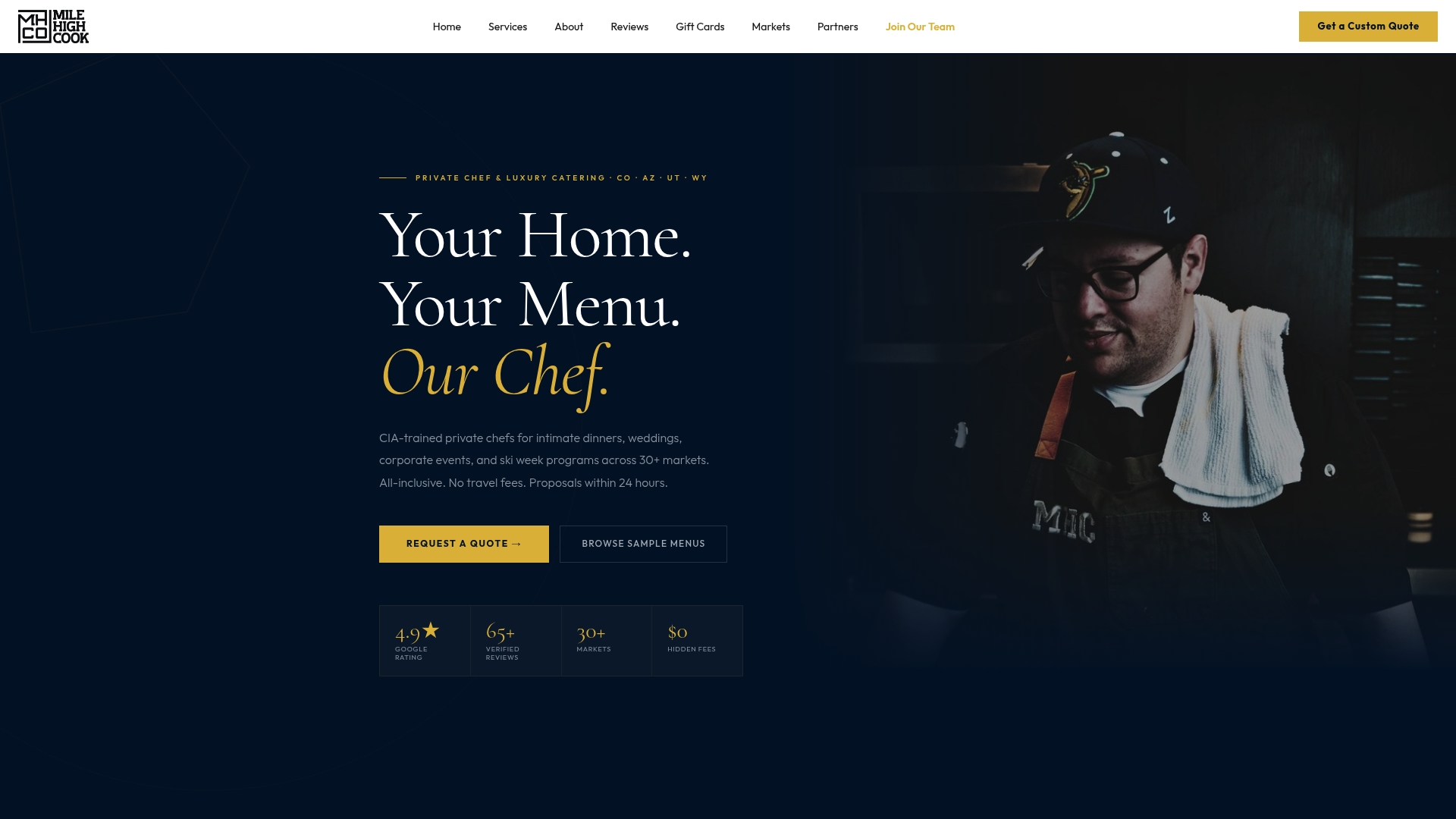
Available across Colorado, Arizona, Utah, and Wyoming, Milehighcook's private chef services are built for exactly the kind of intimate, high-quality backyard event where the food should feel special without the couple spending the day managing it. Browse sample menus to see what a custom backyard wedding menu looks like, then request a custom quote and schedule your site visit.
Sources
- How to Choose Food for a Backyard Wedding: A Practical Guide for 2026
- 30 Backyard Wedding Food Ideas That Will WOW Your Guests (On Any Budget) - Chic Ceremony
- 73 Backyard Wedding Food Ideas Guests Will Love - Green In May
- Backyard Wedding Catering: Tips For A Memorable Diy Celebration | ShunBridal
- You Need to Know The Average Wedding Catering Cost
FAQ
What food should you serve at a backyard wedding?
Dishes that hold temperature well and travel reliably work best outdoors: roasted proteins, composed salads, handhelds, and stable desserts. Buffets, taco bars, and grazing tables are the most practical formats for backyard settings.
What is the cheapest way to cater a backyard wedding?
A self-serve buffet with seasonal ingredients, a beer-and-wine bar, and minimal staffing is the most cost-efficient approach, typically running $30–$60 per person for food alone. Cutting guest count is the single fastest way to reduce total catering spend.
What is a realistic budget for a backyard wedding?
Mid-range backyard wedding catering runs $65–$120 per person, covering food, basic service staff, and rentals. A full all-inclusive private chef experience typically starts around $125–$200 per person depending on menu complexity and guest count.
What is the 50/20/30 rule for weddings?
Definitions vary by source, so treat it as a rough framework rather than a fixed standard.
Can Milehighcook handle a small backyard wedding?
Yes. Milehighcook's all-inclusive private chef service is specifically well-suited to intimate backyard weddings of 10–50 guests across Colorado, Arizona, Utah, and Wyoming, covering the full scope from custom menu design and groceries to service staff and cleanup under one quote.