

Hire an all-inclusive private chef when your retreat has six or more guests, spans multiple days, or marks a milestone worth getting right. One quote covers groceries, labor, staff, and cleanup, so there's no billing surprise at checkout. MileHighCook, staffed by CIA-trained chefs and rated 4.9 stars from more than 65 verified reviews, is a solid benchmark for what that experience should look like.
TL;DR:
- Booking a private chef for a multi-night or milestone retreat generally costs less than dining out for each meal, especially when including setup and transportation.
- Requesting an itemized quote that separates labor, groceries, and service fees can prevent hidden costs and ensure transparency before signing a contract.
- The ideal booking window is a few weeks in advance for standard dates and three to six months for peak seasons to guarantee availability and better rates.
- Ensure the chef's menu adapts to dietary restrictions and is finalized at least a week before the event to allow sourcing and menu adjustments.
- A comprehensive all-inclusive package covers groceries, chef labor, service staff for larger groups, and cleanup, with gratuity typically 15% to 20% unless already included.
Table of Contents
- Why an All-Inclusive Private Chef Fits a Luxury Retreat
- How to Choose the Right Private-Chef Service Model
- What Does a Private Chef for a Retreat Actually Cost?
- Planning the Menu and Handling Dietary Needs
- Kitchen and Venue Checklist Before the Chef Arrives
- Contract Terms That Protect Your Budget
- Lessons From Booking Chefs for Luxury Retreats
- Booking a Private Chef for Your Retreat
- Sources
- FAQ
Why an All-Inclusive Private Chef Fits a Luxury Retreat
The math tends to favor a chef once you add up what a group actually spends eating out. Per-meal dinners in U.S. resort markets commonly run from moderate to premium price ranges per person, and that's before tip, transportation, and the hour lost shuttling eight adults to a reservation. A flat chef fee spread across a bigger group often beats that per-person restaurant tab, especially across a multi-night stay.
Beyond cost, there's an experience gap restaurants can't close. A private chef shops the same local markets a resort kitchen does, but builds the menu around your group instead of a fixed dinner rotation. That means:
- Courses paced to your schedule, not a restaurant's turn-and-burn seating
- Privacy for toasts, business discussions, or a milestone announcement
- One itemized quote instead of a stack of nightly checks and tip calculations
For organizers managing a group budget, that single quote is the real win. It turns eight separate dinner bills into one line item you can approve once and forget.
How to Choose the Right Private-Chef Service Model
Not every retreat needs the same setup, and picking the wrong one is the most common budget mistake organizers make. Work through these five questions before you sign anything:
- What service model actually fits? Per-meal works for a single celebration dinner. Daily or weekly packages fit multi-night retreats where the group eats in most nights. A resident chef for the full stay usually delivers better menu continuity and value than booking separate contractors for each meal.
- Does the staffing level match your headcount? A chef alone can handle an intimate dinner for six. Groups past 12, or anything plated and multi-course, need at least one server; formal events often call for a bartender too.
- Can they show you real menus and handle your group's diets? Ask for sample menus, sourcing practices, and how they've handled allergies or strict diets before, not just whether they "can accommodate."
- Is the quote broken into labor and groceries? Separating those two line items and requesting receipts is the clearest way to avoid a dispute when the final invoice lands.
- What's the booking window? Standard dates need a few weeks of lead time; peak season and holiday weeks fill up far earlier.
Pro Tip: Ask every candidate for two references from events your size, not just their best five-star review. A chef who nails an intimate anniversary dinner for two won't necessarily handle a 20-person retreat kitchen the same way.
What Does a Private Chef for a Retreat Actually Cost?
Private-chef pricing breaks into two parts: a labor fee and groceries, usually billed at or near cost. U.S. day rates in high-demand markets commonly run $700 to $1,200, with groceries adding an additional cost per person per day. Per-meal dinners land around $85 to $200 per person, while full-week packages in some markets typically fall within a broad price range per guest for the entire stay for the entire stay, groceries included.
Group size changes the math more than most hosts expect. A flat labor fee split across 14 guests costs far less per person than the same fee split across four, which is why weekly or fully staffed models usually beat per-meal bookings for a group retreat.
A few numbers worth locking down before you book:
- Standard gratuity in North America runs 15% to 20%, and some packages already build in an automatic service charge of 15% to 18%. Check which applies before you tip twice.
- Ask whether groceries are billed at cost, cost-plus-markup, or a flat per-person food charge. All three are common, and none is a red flag on its own, but you need to know which one you're signing.
- Get a written grocery cap in the contract. It's the single clearest way to keep provisioning costs from drifting once the chef starts shopping for eight dinners instead of the two you initially discussed.
Planning the Menu and Handling Dietary Needs
The menu format should match what the retreat is actually for. A seated tasting menu suits a milestone dinner where pacing and presentation matter. Family-style service fits a retreat built around connection and conversation. Interactive formats, like a chef-led pasta station or a live grill night, work well for groups that want the cooking itself to be part of the entertainment.
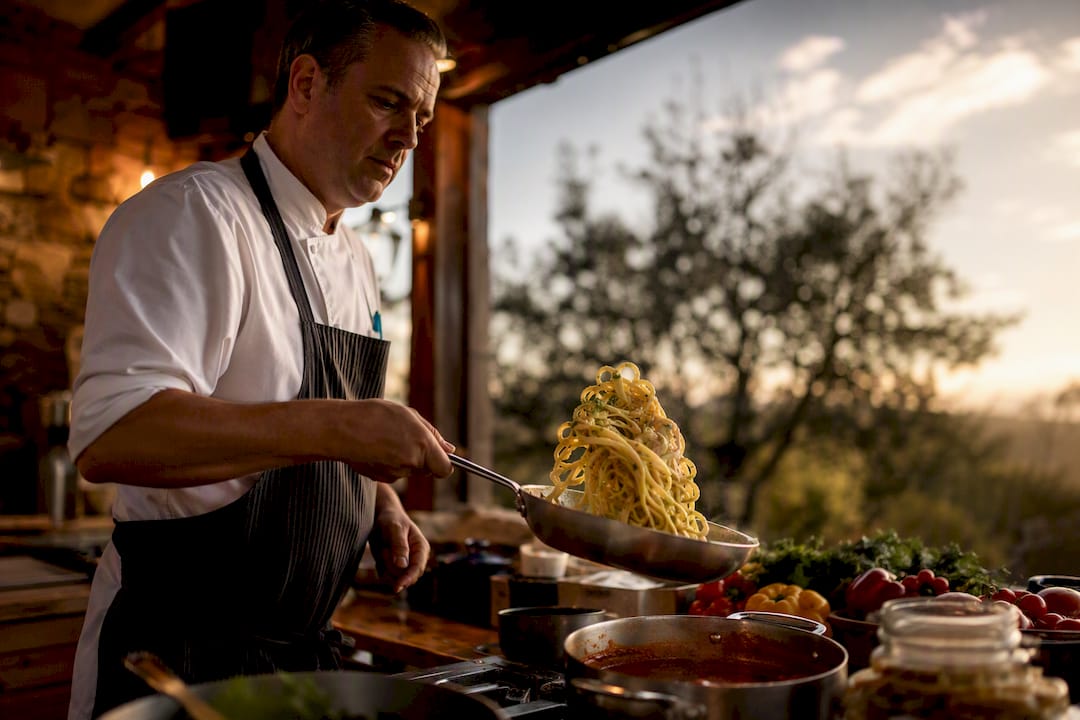
Timing matters more than most hosts plan for. Finalize the core menu about seven days before arrival for a standard event, but push that to four to six weeks out if you're requesting specialty or hard-to-source ingredients. Seasonal, local sourcing gives a chef more flexibility and often better flavor, but it also means the exact dish list can shift closer to the date than a rigid caterer's menu would.
For dietary needs:
- Disclose allergies and strict diets at booking, not the week before. Severe allergies especially need lead time for ingredient substitutions and separate prep protocols.
- Ask how the kitchen handles cross-contact if anyone in the group has a serious allergy.
- If you want a cooking demo, market tour, or wine pairing built into the retreat, ask for that as a separate line item. It's rarely bundled into a standard quote by default.
Reviewing sample menus ahead of your call gives you a faster way to communicate the style you want, rather than describing it from scratch.
Kitchen and Venue Checklist Before the Chef Arrives
A great chef can still have a rough service day if the kitchen wasn't checked in advance. Walk through this list with your venue or property manager:
- Confirm the kitchen's capacity. Stove and oven type, fridge and freezer space, counter and plating surface, and whether the electrical circuits can handle commercial-grade equipment if the chef brings any.
- Check ventilation. A retreat house built for weekend cooking, not multi-course dinners for 15, may need a fallback plan for smoke or heat.
- Map access and parking. Loading zones, gate codes, and where staff will park and change matter more at a private residence than most hosts expect.
- Plan the dining setup. Seating count, table flow, and a weather fallback if dinner was supposed to be outdoors.
- Clarify who brings what. Some retreats need rental chairs, linens, or extra cookware. Ask explicitly whether that's on the chef or the host.
Pro Tip: Send kitchen photos to your chef before the event, not just a verbal description. A quick look at the stove and counter space lets them flag equipment gaps early instead of improvising on service day.
Contract Terms That Protect Your Budget
A solid private-chef contract should spell out the date, time, guest count, and what happens if that count grows the week before the event. It needs a clear payment schedule, a cancellation policy, and language on liability if something goes wrong in someone else's kitchen.
Deposits commonly run 30% to 50% of the total, with the balance due closer to the event date. Rush bookings inside a few weeks of a peak date often carry a surcharge, so locking in early saves money as much as it saves stress.
Before you sign, confirm:
- Whether groceries are billed at cost with receipts, or at a flat markup
- What counts as overtime if the evening runs long
- The exact gratuity or service-charge language, so you're not tipping on top of a built-in charge
- The refund or chef-replacement policy if illness or an emergency forces a last-minute change
Lessons From Booking Chefs for Luxury Retreats
The mistakes I see organizers make are almost always the same three: under-budgeting groceries for a group that eats more than expected, hiring a chef alone for an event that really needed a server, and booking peak dates too late to get their first-choice team.

Grocery underestimation is the sneakiest one. A host quotes a per-person food number based on a casual dinner, then the group turns out to include three guests with dietary restrictions that push toward pricier specialty ingredients. That's exactly why a written grocery cap matters more than most contracts give it credit for.
MileHighCook's model was built around closing those gaps before they happen. Every booking runs through CIA-trained chefs, with groceries, labor, staff, and cleanup folded into one quote across 30-plus markets including Colorado, Arizona, Utah, and Wyoming. Hosts still need to supply accurate guest counts and dietary details early. What they don't need to manage is the provisioning math, the staffing ratio, or the cleanup crew.
— Stephen
Booking a Private Chef for Your Retreat
MileHighCook is the practical alternative to piecing together a chef, a server, and a cleanup crew separately for your retreat: one all-inclusive quote covers groceries, chef fees, service staff, and cleanup, so there's no second invoice waiting after the last plate is cleared.
Getting a quote takes less than the checklist above. Send your event dates, guest count, dietary notes, a few kitchen photos, and your preferred service level, whether that's a chef alone for an intimate dinner or a fully staffed team for a multi-night retreat. Standard dates need a few weeks of lead time; peak-season weeks should be locked in earlier, with a deposit securing the booking. Start with private dining in Denver from $150 per person to see what a full quote looks like before your next retreat date fills up.
Sources
- The Case for Hiring a Private Chef on Vacation | Travel Magazine
- Private Chef Dining in Luxury Villas
- Private Chef Event Planning: From First Call to Final Cleanup (2026 Guide)
FAQ
How much does a private chef cost for a retreat?
Expect a flat labor fee plus groceries, with U.S. day rates commonly between $700 and $1,200 and groceries adding $80 to $160 per person per day; per-meal dinners run roughly $85 to $200 per person.
How far in advance should I book a chef for a retreat?
Book standard dates two to four weeks out and peak-season or holiday retreats three to six months ahead, since availability tightens fast around high-demand dates.
What's included in an all-inclusive private-chef package?
An all-inclusive quote from a provider like MileHighCook typically covers groceries, the chef's labor fee, service staff for larger groups, and full cleanup, so the number you approve upfront is the number you pay.
Should I tip a private chef on top of the quote?
Standard gratuity runs 15% to 20%, but check your contract first since some packages already include an automatic service charge in that range.