
Pick your service style first, then match it to a menu that fits your headcount and budget. That order matters more than any single dish choice. A buffet built for 40 people falls apart at 150; a plated dinner budgeted for a reception ends up over cost before the appetizers land.
Here are three sample menus you can copy today:
- Working lunch (afternoon office party, 30-60 people): carved turkey and roast vegetable grain bowls, a build-your-own salad bar, spiced cider and sparkling water. $18-$28 per person.
- Reception with heavy apps (50-150 people, evening mixer): passed short rib sliders, wild mushroom tartlets, a shrimp cocktail station, mini dessert bites, full bar. $35-$55 per person.
- Seated dinner (25-100 people, formal holiday gala): plated beef tenderloin or salmon, roasted winter vegetables, a shared bread course, plated yule log or bourbon pecan tart. $65-$120 per person.
Use the working lunch for daytime celebrations since research from Cvent shows 55% of employees prefer celebrating during work hours. Swap in the reception menu for teams that want mingling over sitting, and reserve the plated dinner for leadership events or client-facing parties where formality signals investment.
Key Takeaways
The best corporate holiday party menu starts with choosing a service style, then matching dishes, budget, and dietary coverage to your confirmed guest count.
| Point | Details |
|---|---|
| Pick service style first | Buffet, stations, plated, boxed, or cocktail reception shapes staffing, cost, and flow before any dish gets chosen. |
| Budget by group size | Small groups run $16-$100 per person; large groups favor $30-$50 station formats for better scaling. |
| Build in dietary coverage | Design vegan and gluten-free dishes into the core menu instead of ordering them as special add-ons. |
| Lock timing 10-12 weeks out | Reserve venue and caterer early, finalize menu 6-8 weeks out, and open RSVPs 3-4 weeks before the event. |
| Consider an all-inclusive option | Milehighcook bundles chef fees, groceries, staffing, and cleanup into one quote across four states. |
Table of Contents
- Corporate Holiday Party Menu Ideas By Service Style
- Sample Corporate Holiday Menus By Group Size and Budget
- Handling Dietary Restrictions Without the Extra Cost
- Booking Timeline: When to Lock In Your Corporate Holiday Catering
- Questions to Ask Before You Book a Caterer
- Entrées and Main-Course Options That Work for Holiday Crowds
- Desserts and Sweet Options for a Holiday Menu
- Beverage Ideas: Alcoholic and Non-Alcoholic Options
- Matching Your Menu to the Event Theme and Venue
- Let Milehighcook Handle Your Corporate Holiday Menu
- Sources
- FAQ
Corporate Holiday Party Menu Ideas By Service Style
The service style you choose shapes everything downstream, from staffing to how guests actually interact with each other. Get this decision right before you touch a single recipe.
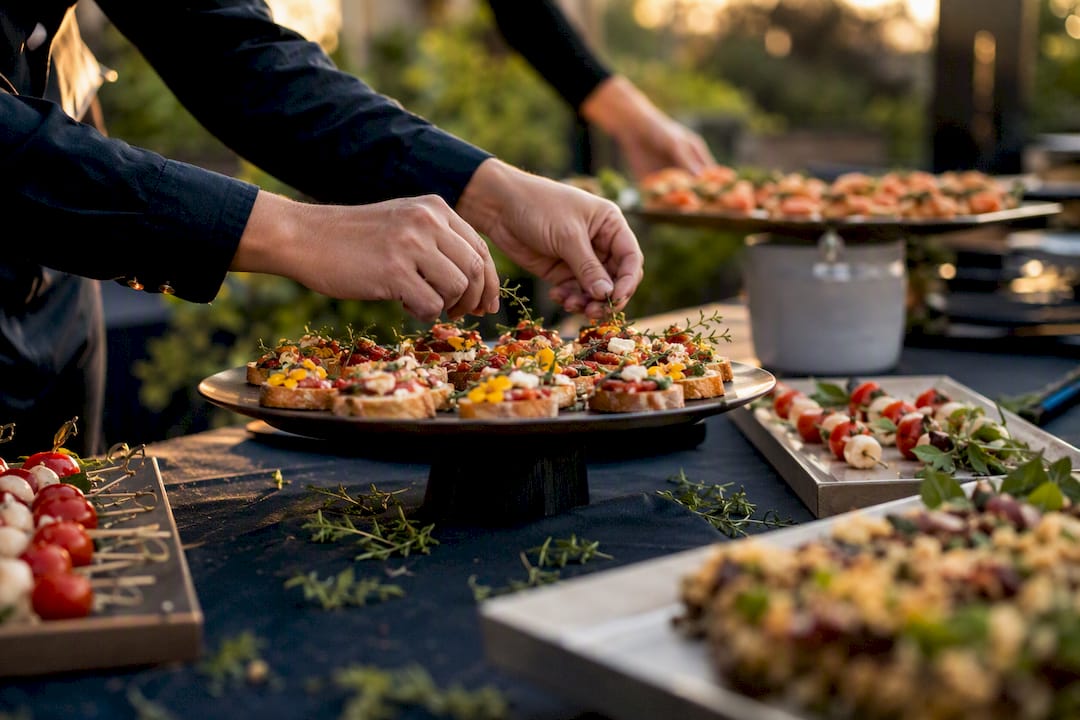
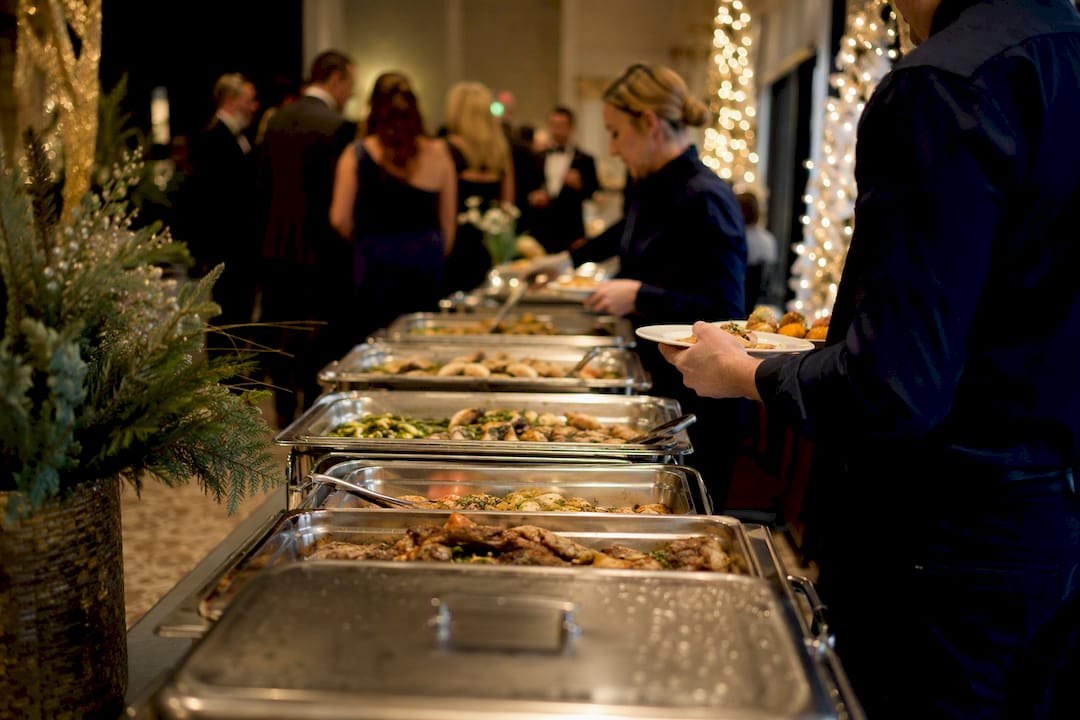
Buffet works for most mid-size holiday parties because it balances cost against variety. Guests self-serve from a spread of 2-3 entrées, 3-4 sides, and a carving station if budget allows. Staffing runs lighter than plated service, but you still need attendants to refresh trays and manage the line. Expect setup 60-90 minutes before doors open.
Stations trade a single buffet line for multiple smaller setups: a taco bar, a carving station, a pasta station, a raw bar. This format encourages movement and mingling, which is exactly what a reception-style party needs. Cvent's planning research notes that stations and buffets support a looser, more social atmosphere than plated dinners, where guests stay seated and conversation stays contained to one table.
Plated service is the formal option. It signals a higher-stakes event, whether that's a client dinner or an executive holiday gala. It requires the most staff (one server per 8-10 guests is standard) and the tightest timeline, since every course goes out in sync.
Boxed lunches solve the daytime office party problem when a full setup isn't practical. Individually packed meals with a protein, side, and dessert work well for teams spread across floors or hybrid staff who can grab a box and go.
Cocktail receptions lean on passed hors d'oeuvres rather than stationary food, which keeps the room moving and cuts down on lingering lines.
- Passed apps early in the event encourage mingling before people settle into groups.
- Stations should include at least one substantial item (carving, pasta, grain bowl) so guests don't leave hungry.
- Plated dinners need a confirmed headcount at least a week out. No exceptions.
Pro Tip: Hold back a portion of your most popular vegetarian station item and offer it "on request" once initial plates go out. SHRM's research on inclusive holiday menus found that omnivores often clear out vegetarian dishes before the guests who actually need them arrive.
Sample Corporate Holiday Menus By Group Size and Budget
Guest count changes more than quantity. It changes which service styles even make sense.
Small groups (25-50 people): A drop-off working lunch runs $16-$25 per person and typically includes disposable serviceware with no staff on-site. A staffed reception with 3-4 passed apps and a small bar runs $40-$60 per person. A plated dinner for this size, often used for leadership teams, runs $70-$100 per person.
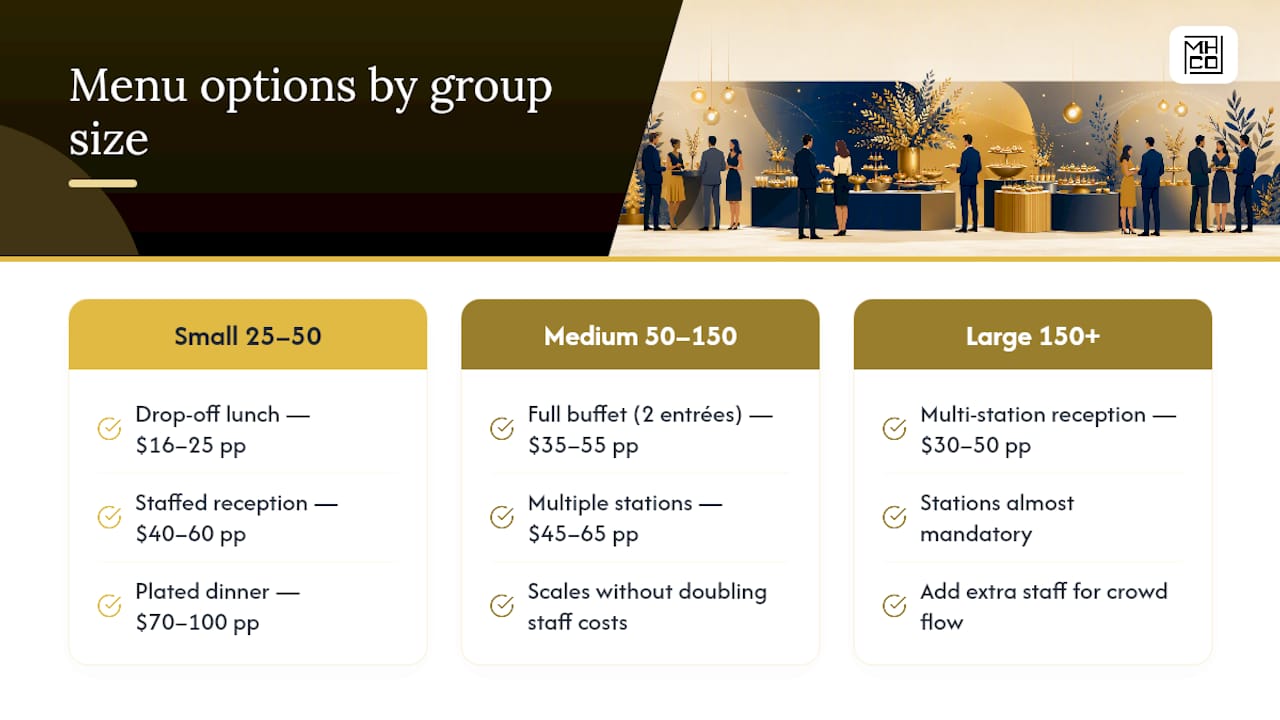
Medium groups (50-150 people): Buffet or station-based receptions dominate this range because they scale without doubling staff costs. Budget $35-$55 per person for a full buffet with two entrées and a dessert table, or $45-$65 for multiple stations with a bartender.
Large groups (150+ people): Stations become almost mandatory at this scale since a single buffet line creates bottlenecks. Budget $30-$50 per person for a multi-station reception, factoring in additional staff for crowd flow.
Peak-season pricing typically runs 10% to 20% higher than off-peak rates in December, so build that into your budget early rather than discovering it at contract time.
To scale a menu up, add one station per additional 50 guests rather than stretching the existing setup thinner. For passed apps, plan on 4-6 pieces per person for a 90-minute reception, closer to 8-10 if there's no seated dinner afterward.
Handling Dietary Restrictions Without the Extra Cost
Build vegan and gluten-free options into the core menu rather than treating them as special orders. A grain bowl with roasted vegetables, quinoa, and a tahini dressing covers vegan, vegetarian, dairy-free, and gluten-free guests in a single dish, which cuts down on the number of separate SKUs your caterer has to prepare.
SHRM recommends starting menu planning with a strong vegan option first, then building the rest of the spread around it. About 1 in 10 Americans manage a food allergy, so labeling matters as much as the dish itself.
- Aim for at least one dish per course that's vegan and gluten-free by default.
- Reserve certified kosher or halal meals for special order once you know a guest needs them. Don't assume a "kosher-style" dish satisfies certification requirements.
- Label every dish with a small card noting allergens (nuts, dairy, shellfish, gluten).
- Use separate serving utensils for allergen-heavy dishes to prevent cross-contact.
Pro Tip: Collect dietary needs at RSVP, not at the door. It gives your caterer time to plan accurate quantities and avoids the scramble of a last-minute special plate request mid-event.
Booking Timeline: When to Lock In Your Corporate Holiday Catering
December fills up fast. Caterers with strong reputations book out weeks in advance, and waiting until Thanksgiving to start planning usually means settling for whoever still has an opening.
| Timing | Milestone |
|---|---|
| 10-12 weeks out | Lock venue and caterer; confirm service style |
| 6-8 weeks out | Finalize menu and headcount estimate |
| 3-4 weeks out | Open RSVPs and start collecting dietary needs |
| Final week | Confirm final headcount, delivery time, and setup access |
The Centre's catering guide stresses knowing your attendance and format before you even start comparing menus, since both drive every decision after.
On the day itself:
- Confirm vendor arrival time allows for setup at least 60-90 minutes before doors open.
- Verify holding temperatures for hot and cold dishes are written into the contract.
- Assign one point person on your team to coordinate staff handoffs and answer vendor questions.
- Confirm cleanup expectations and end time in writing, not verbally.
Questions to Ask Before You Book a Caterer
The difference between a smooth event and a stressful one usually comes down to what you asked before signing the contract, not what happened after.
- What's the staffing ratio for the service style we're booking?
- Is the quoted price all-inclusive, or are groceries, staff, and cleanup billed separately?
- What's your substitution policy if a dish becomes unavailable?
- How do you handle allergen labeling and cross-contact prevention?
- Who provides chafing dishes, linens, and serving equipment?
- Is gratuity or a service charge already built into the quote?
A caterer who can't give you a written menu commitment, gets vague about insurance and liability, or quotes inconsistent per-person pricing across conversations is a red flag worth walking away from. Reliable vendors put everything in writing before you sign.
Plated service demands the tightest staffing and timeline commitments; stations need fewer servers but more equipment; boxed lunches need almost no on-site staff at all. Match your ask to the format.
Entrées and Main-Course Options That Work for Holiday Crowds
Entrées carry the most weight in a corporate holiday party menu because they set the tone for everything else on the table. Classic options like roasted turkey, herb-crusted beef tenderloin, and pan-seared salmon remain reliable because they're familiar without being boring, and they hold up well whether served buffet-style or plated.
For buffets and stations, plan two entrées minimum: one protein-forward option and one vegetarian or plant-based dish substantial enough to serve as a real meal, not an afterthought. A wild mushroom risotto or a stuffed acorn squash with wild rice works as a standalone entrée rather than a side dish in disguise.
Carving stations add theater to a reception. A herb-roasted prime rib or glazed ham carved to order gives guests a sense of occasion that pre-plated slices don't. The Lakehouse's corporate holiday menu guide points to mixed-station builds as a common approach for larger groups, letting guests choose between a carving station, a pasta bar, and a seafood display rather than committing to one entrée for the whole room.
Boxed lunches need entrées that travel well. Braised short rib, grilled chicken with a citrus glaze, or a hearty grain bowl hold their texture and temperature better than delicate fish or anything with a sauce that separates when it cools.
Whatever you choose, taste-test with your caterer before finalizing. A dish that reads well on a menu description doesn't always land the same way once it's been sitting under a heat lamp for two hours.
Desserts and Sweet Options for a Holiday Menu
Dessert is where a corporate holiday party menu can show personality without blowing the budget. A dessert table with 3-4 bite-sized options usually reads better than one large cake, since it lets guests sample without committing to a full plate.
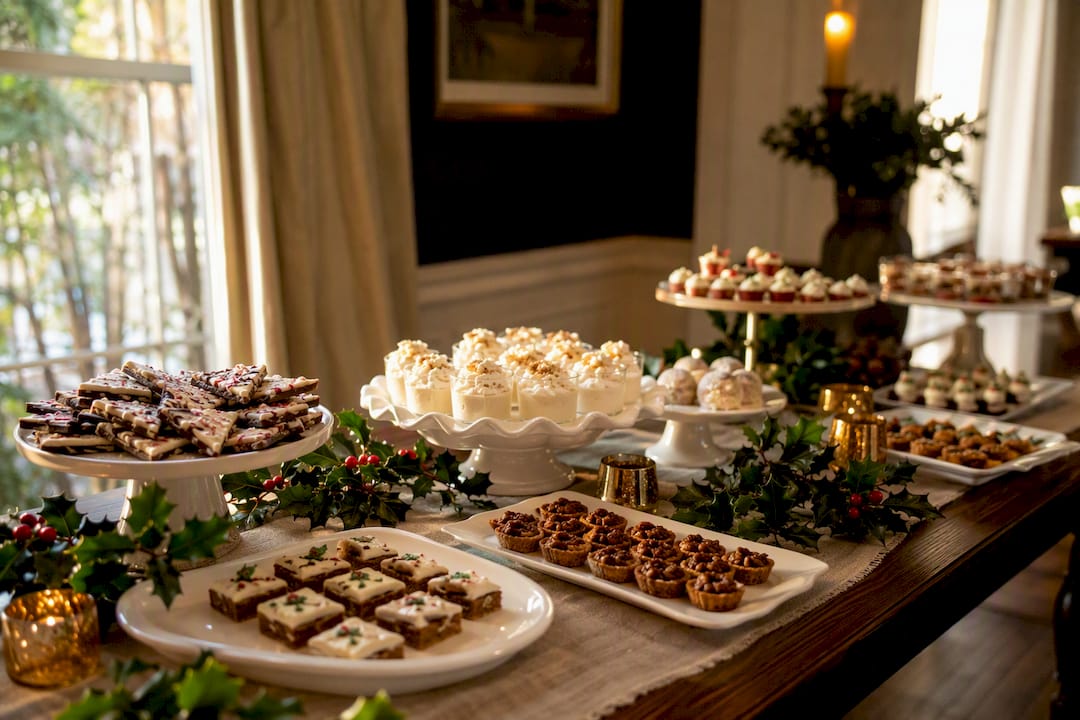
Classic holiday flavors perform reliably: peppermint bark, gingerbread bites, eggnog mousse cups, and a bourbon pecan tart cover both traditional and slightly upscale expectations. For plated dinners, a single showpiece dessert (a yule log or a flourless chocolate torte) fits the formality of the course better than a mixed platter.
Mini desserts work best for receptions and stations because they're easy to eat standing up and don't require a fork-and-plate commitment. Think chocolate peppermint shooters, mini cheesecake bites, or spiced apple hand pies.
Don't skip the dietary consideration here either. A dairy-free chocolate mousse or a gluten-free flourless cake means guests with restrictions aren't stuck watching everyone else enjoy dessert while they wait for a special order. Build at least one allergen-friendly option into the dessert course the same way you would for entrées.
For boxed lunches, individually wrapped cookies or small dessert bars hold up far better in transit than anything with cream filling or delicate layers.
Beverage Ideas: Alcoholic and Non-Alcoholic Options
A well-planned bar does more for the atmosphere of a corporate holiday party than most planners give it credit for. The goal is parity: every non-drinker should have an option that feels as intentional as the cocktail list, not a leftover soda can.
For alcoholic options, a signature holiday cocktail (a spiced old fashioned or a cranberry gin fizz) gives the bar a festive identity without requiring a full open bar. Wine and beer service covers most guests at a lower cost than full liquor, and a hosted bar with a spending cap keeps costs predictable.
Non-alcoholic options need the same care. Spiced cider, sparkling cranberry mocktails, and a hot cocoa bar with toppings give non-drinkers something worth choosing rather than settling for water. Mocktail parity matters more than most planners realize. When the non-alcoholic drink menu looks like an afterthought, it sends a signal about whose comfort the event prioritizes.
Coffee service deserves more thought than a single carafe. A coffee and hot chocolate station with flavored syrups and whipped cream works well for daytime working lunches and doubles as a light dessert substitute.
For working lunches, keep the bar simple: sparkling water, iced tea, and coffee cover most needs without adding staffing complexity. Save the full bar setup for evening receptions and plated dinners where guests expect it.
Matching Your Menu to the Event Theme and Venue
A corporate holiday party menu should reflect the room it's served in, not just the season. A rustic barn venue calls for a different plate than a downtown high-rise conference room, even if the calendar date is the same.
Start with venue restrictions before you fall in love with a menu. Some venues restrict open flames, which rules out chafing dish setups or tableside flambé service. Others cap kitchen access, meaning your caterer needs equipment that can hold and serve food without on-site cooking. Ask about these limits before finalizing dishes, not after.
Theme coordination works best when it's subtle. A "winter wonderland" theme doesn't need every dish dyed blue and white. It works better through presentation, garnish choices, and a signature cocktail name than through forced color matching across the entire menu.
Space matters as much as theme. A packed reception space favors passed apps and stations over a seated dinner that needs table space for place settings. If your venue has limited kitchen access, boxed lunches or a menu built around cold and room-temperature dishes solves logistics problems a hot buffet can't.
For inspiration on seasonal dish variety, Wild Foodz's festive meal guide for event planners offers a useful starting point for planners looking to expand beyond the usual holiday staples.
Planner's Perspective: What Actually Prevents a Bad Event
The events team behind these recommendations has watched the same mistakes repeat: too little mocktail variety, no holdback plan for popular vegetarian dishes, and headcounts locked too late to order accurately. Fix those three things and most other problems solve themselves.
Let Milehighcook Handle Your Corporate Holiday Menu
Planning a corporate holiday party menu usually means juggling three vendors: a caterer for food, a staffing agency for servers, and someone to handle cleanup after everyone's gone home. Milehighcook collapses that into one all-inclusive quote covering groceries, chef fees, service staff, and full cleanup, so nothing shows up as a surprise line item after the event.
Every menu is built by CIA-trained chefs who design around your headcount, budget, and dietary needs from the start rather than bolting on substitutions later. Milehighcook operates across Colorado, Arizona, Utah, and Wyoming, and holds a 4.9-star rating from more than 65 verified reviews, a track record built on consistent execution rather than one-off luck.
If you're planning a holiday event this season, start by requesting a custom corporate catering quote or browse sample private chef menus to see how a fully staffed, turnkey event comes together before you commit to a service style.
Sources
- Holiday Party Planning: The Office Manager's Year‑End Playbook - Cvent Blog
- Food for Thought: Planning Inclusive Menus for Holiday Staff Gatherings - SHRM
- Building Out Your Holiday Party Catering Menu - The Centre
FAQ
What Should a Corporate Christmas Party Menu Include?
A strong menu includes at least two entrées (one meat-based, one vegetarian), 3-4 appetizers or sides, a dessert table with allergen-friendly options, and both alcoholic and non-alcoholic drink choices.
What Are Good Menu Ideas for an Office Party?
For daytime office parties, a working lunch with carved protein, a build-your-own salad or grain bowl bar, and light desserts works well since most employees prefer afternoon celebrations over evening events.
What Menu Works Best for a Large Holiday Party?
For groups over 150, multiple food stations (carving, pasta, a build-your-own bar) scale better than a single buffet line, since they spread guest traffic and reduce wait times.
How Do You Feed 50 Guests on a Tight Budget?
A drop-off working lunch or a station-based buffet with build-your-own formats, like grain bowls or a taco bar, typically runs $16-$35 per person and covers most dietary needs without separate special orders.
How Far in Advance Should You Book Holiday Catering?
Lock your venue and caterer 10-12 weeks out, finalize the menu 6-8 weeks before the event, and confirm final headcount during the last week to avoid peak-season availability problems.