

TL;DR:
- Effective corporate menu curation aligns dishes with event type, guest needs, and operational constraints to ensure smooth events. Culinary research, testing, and data analysis refine menu choices, reduce waste, and enhance quality. Presenting clear, branded menus with inclusive pricing improves client confidence and order success.
Corporate menu curation is the strategic process of selecting dishes, packages, and presentation formats that align with client preferences, dietary needs, operational constraints, and event objectives. Understanding how a corporate menu gets curated separates events that run smoothly from those that leave guests disappointed and coordinators scrambling. The process draws on culinary research, sales data, client communication, and iterative testing. Milehighcook's CIA-trained chefs apply all of these disciplines to every corporate engagement, which is why the brand holds a 4.9-star rating across more than 65 verified reviews. This guide walks event coordinators and corporate administrators through each stage of that process.
What core factors influence how a corporate menu gets curated?
The foundation of any curated corporate menu is a clear picture of who will be eating and why they are gathered. Event type drives nearly every decision that follows. A working lunch for 20 executives calls for different food than a 200-person product launch reception. Coordinators who understand the event context before touching a menu template save significant time during the approval process.

Dietary accommodations are non-negotiable in corporate settings. Gluten-free, vegan, halal, and nut-free requirements must be identified early and labeled clearly on every menu document. Coordinators who treat dietary restrictions at corporate events as an afterthought risk excluding guests and exposing the organization to liability. Clear labeling also reduces the number of questions staff field during service, which speeds up the meal period.
Budget shapes the menu as much as taste does. Planners should build in a 10–15% budget buffer for last-minute headcount changes. Scrambling for extra portions on the day of an event costs more and creates logistical problems that a small financial cushion prevents entirely.
Operational capacity is the factor coordinators most often overlook. Kitchen size, transport distance, holding equipment, and service staff ratios all determine which dishes are feasible. A beautifully designed menu that requires à la minute cooking is useless if the venue has no on-site kitchen.
Key factors to evaluate before finalizing any corporate menu:
- Event type and format: Seated dinner, buffet, boxed lunch, or reception style each demand a different menu structure.
- Guest count and demographics: Age range, cultural backgrounds, and professional context all influence flavor preferences.
- Dietary requirements: Collect restrictions at registration and build them into the menu from the start, not as add-ons.
- Budget per head: Include the buffer and account for service staff, rentals, and cleanup in the total figure.
- Operational feasibility: Confirm kitchen access, transport time, and holding capacity before committing to any dish.
Pro Tip: Use preset menu packages for common event types such as board lunches or all-hands meetings. Office lunch packages reduce decision fatigue for clients and cut your own planning time significantly.
How do culinary research and testing refine corporate menus?
The best corporate menus do not come from a spreadsheet. They come from chefs eating in the world, observing trends, and then testing ideas in a controlled kitchen environment. Effective menu curation often originates from scouting tours to popular restaurants and field chef feedback loops, rather than solely top-down directives. That insight matters because it means the best ideas surface from people closest to the food, not from administrators working from last year's menu.
The refinement process follows a clear sequence:
- Scout for inspiration. Chefs visit trending restaurants and food markets to identify flavors and formats that resonate with current tastes. Denver catering trends, for example, show a consistent move toward locally sourced ingredients and globally influenced small plates.
- Draft candidate dishes. The culinary team selects dishes that fit the event format, dietary requirements, and operational constraints identified in the planning phase.
- Run a test kitchen session. Chefs prepare full portions of each candidate dish and evaluate flavor, texture, temperature retention, and visual presentation. Menu curation is an iterative, multi-day process that includes tastings and team collaboration before final approval.
- Gather cross-functional feedback. Operations staff, event coordinators, and sometimes client representatives taste the dishes and flag any concerns about service logistics or guest preferences.
- Refine and retest. Top-tier catering teams rework dishes overnight and present improved versions the next day. A sauce that breaks during transport or a protein that dries out in a chafing dish gets replaced before it ever reaches a client.
- Finalize with venue conditions in mind. The team confirms that every dish on the final menu performs correctly at the actual venue, accounting for altitude, ambient temperature, and available equipment.
Pro Tip: When coordinating with your chef team, ask specifically how each dish holds after 45 minutes in a chafing dish or transport box. Dishes that degrade quickly should be replaced with more stable options, regardless of how well they perform in the test kitchen.
How is data and technology used in corporate menu planning?
Data removes guesswork from menu planning and replaces it with evidence. Smart menu planning for corporate cafeterias uses 18 months of point-of-sale data to predict demand, reducing food waste by 25–40% by aligning production with actual sales and occupancy. That range represents a significant cost reduction for any organization running recurring corporate dining programs.
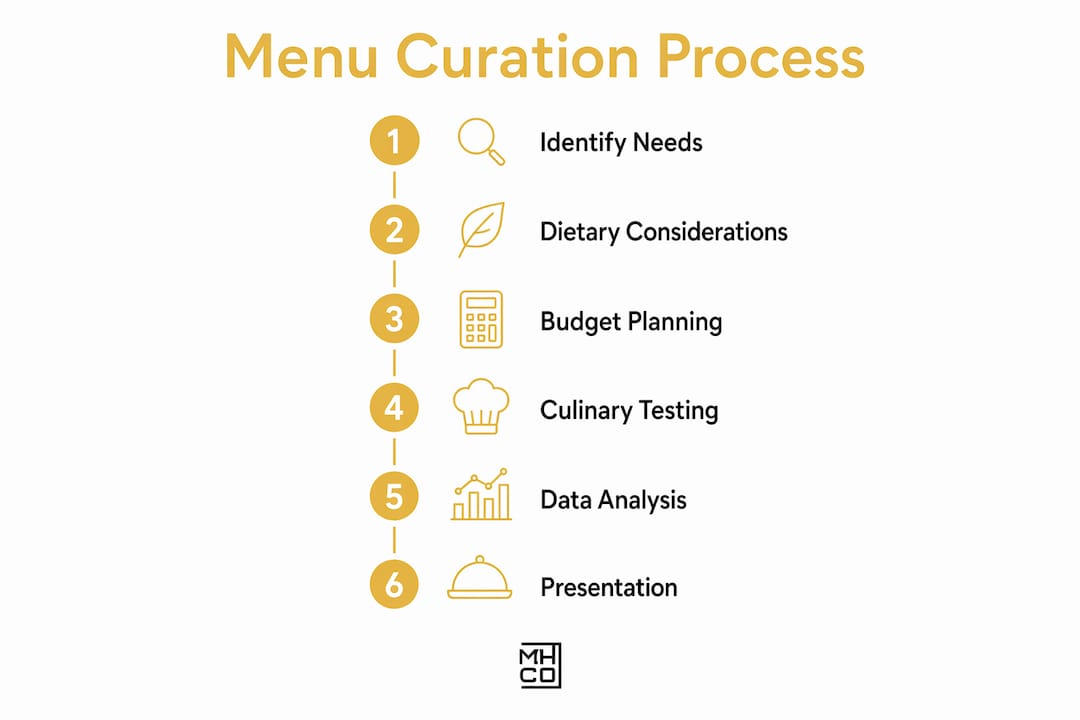
The table below shows how different data inputs translate into specific menu planning decisions.
| Data input | What it reveals | Menu planning action |
|---|---|---|
| Historical sales by item | Which dishes sell consistently vs. which underperform | Remove low performers, protect top sellers |
| Occupancy and attendance records | Expected headcount by day and event type | Adjust production quantities to match demand |
| Dietary restriction frequency | How common specific needs are across the client base | Prioritize those accommodations in every package |
| Food cost and margin by dish | Which items are profitable vs. which erode margin | Rebalance the menu toward higher-margin options |
| Seasonal ingredient pricing | When specific ingredients spike in cost | Rotate menus to use in-season produce and proteins |
Menu rotation strategy also benefits from data. Rotating dishes on a defined cycle, such as every six to eight weeks, keeps the menu fresh for repeat clients while protecting the operational team's ability to execute consistently. Rotating too frequently creates training gaps and increases waste. Rotating too rarely causes repeat clients to disengage.
Portion planning is the third area where data pays off. When production quantities match actual attendance, food waste drops and freshness improves. Both outcomes matter to corporate clients who increasingly view sustainable practices as a factor in vendor selection.
What are the best practices for presenting curated menus to corporate clients?
A curated menu is only as effective as its presentation. By 2026, 75% of catering orders are placed online, which means menus must be self-explanatory with clear pricing and dietary information to convert efficiently. That statistic signals a fundamental shift: the menu document itself now does much of the selling that a sales conversation used to handle.
Effective corporate menu presentation follows these principles:
- Separate catering menus from dine-in offerings. Corporate clients ordering for groups need a dedicated document that reflects group-friendly formats, not a restaurant menu adapted on the fly.
- Use clear category structure. Organize by meal period or format: breakfast, boxed lunches, buffet packages, and reception items. Clear categories with limited choices per section ease client decisions and reduce back-and-forth communication.
- Include full dietary labeling. Mark every item with relevant icons or text labels for gluten-free, vegan, dairy-free, and nut-free status. Clients ordering for large groups cannot individually verify each guest's needs.
- Show all-inclusive pricing. Hidden fees erode trust. Present a per-head price that includes food, service, and cleanup so clients can approve budgets without follow-up questions.
- Offer preset packages for common event types. A "Board Meeting Lunch" package or "All-Hands Breakfast" package removes the cognitive load of building a custom order from scratch.
- Apply consistent branding and professional design. Menus serve as a marketing document representing brand quality. A poorly formatted PDF signals the same lack of care that a poorly plated dish does.
Review your executive catering menu formats periodically to confirm they reflect current offerings and pricing. Outdated menus create confusion and slow the approval process.
Key Takeaways
A curated corporate menu succeeds when client needs, culinary quality, operational feasibility, and clear presentation all align from the start.
| Point | Details |
|---|---|
| Start with event context | Event type, guest count, and dietary needs must be defined before any dish is selected. |
| Build in a budget buffer | A 10–15% buffer for headcount changes prevents costly last-minute scrambles. |
| Test every dish operationally | Confirm each item holds quality through transport and service conditions, not just in the test kitchen. |
| Use data to reduce waste | Historical sales and attendance data can cut food waste by 25–40% in recurring programs. |
| Present menus as sales documents | Clear categories, dietary labels, and all-inclusive pricing convert online orders more efficiently. |
What I've learned from watching corporate menus succeed and fail
The most common mistake I see event coordinators make is treating menu selection as the last step instead of the first. By the time a menu gets finalized two days before an event, the operational team has no room to adapt. The coordinators who get the best results start the menu conversation at the same time they book the venue.
Flexibility matters more than perfection. A menu that looks ideal on paper but cannot survive a 90-minute transport window is a liability. The best culinary teams I have worked with build contingency into every menu, meaning they always have a backup protein or a simpler plating option ready if conditions change on the day.
The other thing I have noticed is that corporate clients rarely push back on food quality. They push back on confusion. When a menu is unclear, when dietary labels are missing, or when pricing requires a follow-up call, the client loses confidence in the entire operation. A clean, well-structured menu document communicates competence before a single dish is served.
Coordinators who treat menu curation as a collaborative process, involving chefs, operations staff, and the client early, consistently produce better events than those who work in silos. The food is almost always secondary to the coordination.
— Stephen
Milehighcook brings expert menu curation to your corporate events
Corporate menu curation requires culinary expertise, operational discipline, and clear client communication working together. Milehighcook's CIA-trained chefs handle all three across 30+ markets in Colorado, Arizona, Utah, and Wyoming.
Every engagement starts with a detailed client consultation to align the menu with your event goals, guest profile, and dietary requirements. Milehighcook's corporate catering services include all-inclusive pricing that covers groceries, chef fees, service staff, and cleanup, so your budget conversation ends at approval, not on the day of the event. Whether you are planning an executive dinner in Denver or a company-wide reception in Salt Lake City, Milehighcook delivers a curated menu built for your specific event.
FAQ
What is corporate menu curation?
Corporate menu curation is the process of selecting, testing, and presenting food offerings that match a company's event goals, guest dietary needs, and operational constraints. It combines culinary research, client input, and data analysis to produce a menu that performs reliably at scale.
How far in advance should a corporate menu be finalized?
A corporate menu should be finalized at least two weeks before the event to allow time for sourcing, staffing, and any client revisions. Last-minute changes increase cost and reduce the quality of execution.
How do dietary restrictions factor into corporate menu design?
Dietary restrictions should be collected at registration and built into the menu from the initial draft, not added as afterthoughts. Clear labeling for gluten-free, vegan, halal, and nut-free items is required on every client-facing menu document.
Why do corporate catering menus use preset packages?
Preset packages reduce decision fatigue for clients ordering for large groups and simplify execution for the catering team. Packages outperform individual item ordering by making the selection process faster and less error-prone.
How does data improve corporate menu planning?
Historical sales data, attendance records, and food cost tracking allow catering teams to forecast demand accurately, reduce waste, and protect profit margins. Data-driven planning can cut food waste by 25–40% in recurring corporate dining programs.