
TL;DR:
- Presenting luxury catering requires personalized proposals that reflect the client's specific event vision and preferences. Successful firms focus on visual storytelling, transparent pricing, and tailored service tiers to build trust and command premium fees. They emphasize discovery meetings and chef-driven menus to create memorable sensory experiences and secure contracts.
Presenting catering options to high-end clients means curating a fully personalized experience where every detail, from menu design to service staffing, reflects the client's specific taste and event vision. Generic pitches fail with upscale clients because discerning buyers recognize templated proposals immediately. The firms that win these contracts, including Paramount Events in Chicago, Bistronomy in Barcelona, and Sirene Hamptons in New York, succeed by treating each event as a one-of-a-kind collaboration. This guide gives event planners and corporate executives a clear framework for positioning luxury catering services in a way that earns trust, commands premium fees, and delivers unforgettable results.
How do you present catering options to high-end clients effectively?
The most effective way to present catering options to high-end clients is to lead with personalization, not product. Upscale clients are not buying food. They are buying confidence that their event will reflect their standards without requiring their direct management.
Start every client conversation with a discovery meeting. Ask about the event's purpose, the guest profile, dietary restrictions, preferred cuisines, and the emotional tone the client wants to create. Jodi Fyfe of Paramount Events emphasizes that personalizing every event through deep client collaboration is the defining trait of high-end catering. That philosophy is not a soft skill. It is a competitive differentiator.

Once you understand the client's vision, frame your presentation around outcomes, not logistics. Show the client what their guests will experience, not how many servers you will deploy. Use high-quality photography, short video walkthroughs of past events, and printed menus with professional typography. Visual storytelling closes luxury catering contracts faster than itemized service lists.
Avoid the most common mistake planners make: presenting a standard menu with a premium price tag. High-end clients notice when a proposal lacks specificity. Every element of your pitch should reference something the client told you in the discovery meeting.
What are the catering service tiers for luxury events?
Luxury catering services operate across a clear spectrum of service tiers, and knowing how to present each tier to the right client is a core competency for event planners.
| Service Tier | What It Includes | Best For |
|---|---|---|
| Drop-off artisanal | Chef-prepared food delivered, no on-site staff | Intimate office lunches, private home gatherings |
| Partial staffing | Delivery plus one or two servers for setup and service | Small corporate dinners, cocktail receptions |
| Hybrid service | On-site chef support combined with drop-off components | Mid-size events needing flexibility |
| Full white-glove | Chefs, servers, sommeliers, full setup and cleanup | Galas, board dinners, estate events |
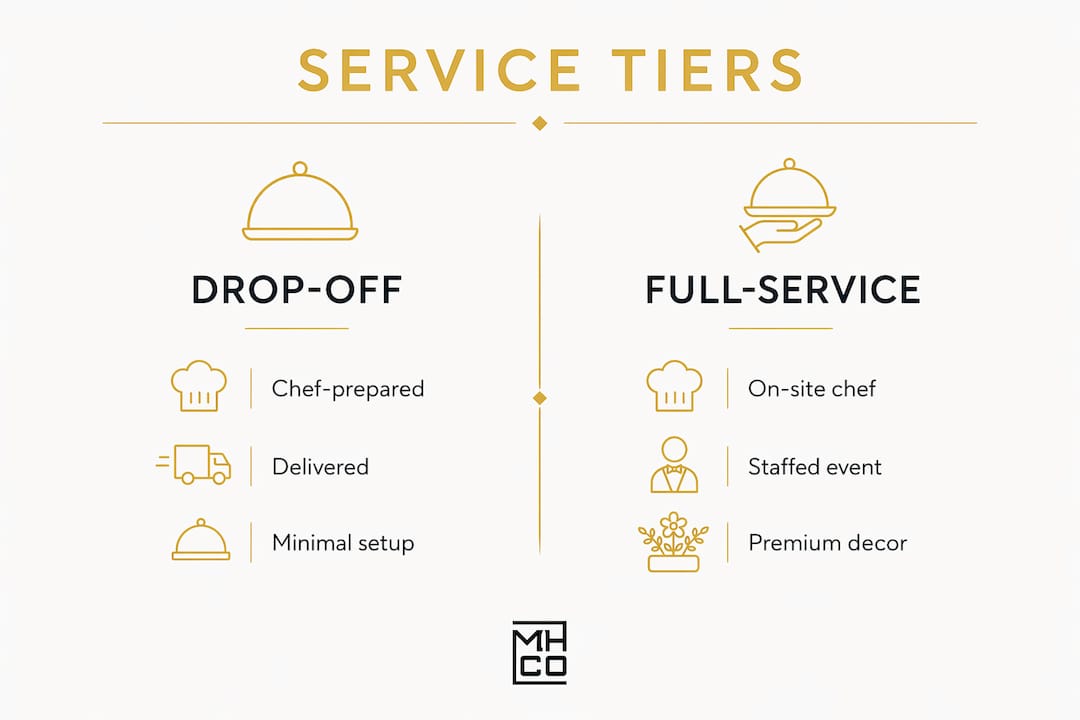
Hybrid catering models are growing in popularity because they give clients the feel of a fully staffed event without the cost of a complete production team. Paramount Events uses this model to serve a wide range of event sizes while maintaining a luxury standard throughout.
Pro Tip: Ask the client directly whether they want guests to notice the service or simply experience it. Clients who want invisible service need full white-glove staffing. Clients who want a relaxed atmosphere often prefer a hybrid or partial model.
Bistronomy specializes in seated gala dinners for groups of 10–30 guests and canapé receptions for up to 60. That model reflects the broader industry shift toward micro-luxury, where smaller guest counts allow for Michelin-standard execution that larger events cannot reliably deliver.
How to design exclusive catering menus for upscale clients
A chef-driven menu is the centerpiece of any luxury catering proposal. The menu signals culinary authority before a single dish is served. Clients at this level expect menus built around seasonal, locally sourced ingredients with clear narrative behind each course.
When presenting exclusive catering menus, include the following elements:
- Chef biography and credentials. Clients want to know who is cooking. A CIA-trained chef with a named culinary background carries immediate credibility.
- Ingredient sourcing notes. Specify the farm, region, or producer for key ingredients. "Colorado lamb from a ranch in Montrose" reads differently than "locally sourced lamb."
- Dietary customization options. High-end guests often include individuals with specific medical, religious, or lifestyle dietary needs. Present these accommodations as a standard feature, not an exception.
- Menu storytelling. Each course should have a one-sentence description that evokes flavor, texture, and occasion. "Seared diver scallop with saffron beurre blanc and micro-herb salad" tells a story. "Scallop dish" does not.
- Seasonal flexibility. Show the client two or three seasonal variations so they understand the menu will evolve with the time of year.
For inspiration on how chef-driven menus translate to real events, the chef-driven event menu guide from Milehighcook breaks down the planning process in detail. Clients who see sample menus with this level of specificity are far more likely to commit than those who receive a generic tasting list.
Fusion cuisine and micro-luxury dining formats are particularly effective for corporate clients who want to impress international guests. A Japanese-Peruvian tasting menu for a board dinner, for example, signals cultural sophistication and culinary investment.
What does the full luxury catering experience include beyond food?
The food is the headline, but the full sensory experience is what clients remember and recommend. Premium rentals like gold tableware, velvet seating, and custom floral arrangements are part of the catering package at the highest service tier. Providers who manage these elements proactively, without requiring client coordination, deliver a measurably better experience.
Logistics management is equally critical. Specialized venue logistics for non-traditional locations such as yachts, private jets, and historic estates require providers who have executed in those environments before. A caterer who has never worked on a yacht will underestimate the space constraints, the temperature challenges, and the timing requirements.
Staff professionalism shapes the guest experience at every touchpoint. Servers who know when to refill a glass without being asked, sommeliers who can discuss a wine's provenance, and event captains who anticipate problems before they surface are all part of what separates luxury catering from standard event food service.
Pro Tip: Before the event, request a briefing with the client's estate manager or executive assistant. These individuals know the client's preferences, pet peeves, and non-negotiables better than anyone. Chef Jimmy Matiz of Matiz Cuisine identifies disciplined coordination with estate managers and flight attendants as a non-negotiable for high-net-worth clients.
Cleanup and venue restoration are often overlooked in catering proposals. Clients at this level expect the venue to be returned to its original condition without any involvement on their part. Make this explicit in your proposal. It removes a significant source of post-event anxiety.
How to strategically pitch and win high-end catering contracts
Winning a luxury catering contract requires a structured presentation strategy, not just a strong menu. The following steps reflect what the most successful firms in high-end event catering do consistently.
- Conduct a discovery meeting before building any proposal. Ask open-ended questions about the event's purpose, the guest list, and the client's past catering experiences. Listen for what frustrated them before.
- Build a custom proposal document. Use the client's name, event date, and specific preferences throughout. A proposal that could have been sent to anyone will be treated like it was sent to no one.
- Include professional photography and video. Clients at this level make decisions visually. Show past events that match the scale and style of what they are planning.
- Present pricing transparently. All-inclusive pricing models, covering groceries, chef fees, service staff, and cleanup, remove the anxiety of unexpected costs. Milehighcook uses this model across all 30-plus markets it serves, which is a direct response to what upscale clients consistently request.
- Follow up with a tasting invitation. A private tasting is the most powerful closing tool in luxury catering. It converts a proposal into an experience.
| Presentation Element | Why It Matters |
|---|---|
| Personalized proposal | Shows the client they were heard, not processed |
| Chef credentials | Establishes culinary authority before the tasting |
| Visual portfolio | Converts abstract promises into concrete expectations |
| Transparent pricing | Removes post-contract anxiety for high-net-worth clients |
| Tasting invitation | Closes the gap between proposal and commitment |
Avoid sending a proposal without a follow-up call scheduled. High-end clients receive multiple pitches. A proactive follow-up within 48 hours signals the level of attentiveness they expect throughout the event itself.
Key Takeaways
Presenting luxury catering options successfully requires personalization, visual storytelling, and transparent service tiers that match the client's specific event vision.
| Point | Details |
|---|---|
| Lead with discovery | Ask detailed questions before building any proposal to reflect the client's actual vision. |
| Match service tier to event | Offer drop-off, hybrid, or full white-glove options based on guest count and client preference. |
| Build chef-driven menus | Include sourcing notes, dietary options, and course descriptions that tell a culinary story. |
| Manage the full experience | Handle rentals, logistics, staffing, and cleanup so clients never have to coordinate details. |
| Close with a tasting | A private tasting converts a proposal into a commitment more reliably than any document. |
Why the pitch matters as much as the plate
The most underrated skill in luxury catering is not cooking. It is listening. I have watched talented culinary teams lose contracts to less skilled competitors because their proposals felt generic. The client did not feel seen.
The shift toward micro-luxury dining is not just a trend. It reflects a deeper client psychology. High-net-worth individuals are moving away from large, impersonal events toward intimate gatherings where every guest feels like the guest of honor. When you present catering options with that psychology in mind, you are not selling food service. You are selling the feeling of being understood.
The planners and executives I respect most treat the discovery meeting as the most important part of the process. They take notes. They reference those notes in the proposal. They call back within 24 hours. That level of attentiveness is what builds client trust in a market where trust is the actual product.
Culinary artistry and flawless service are not competing priorities. The best luxury catering firms, from Bistronomy to Sirene Hamptons to Milehighcook, have figured out that the two reinforce each other. A stunning dish served by an inattentive team leaves a worse impression than a simpler dish served with genuine warmth and precision.
— Stephen
Milehighcook: private chef catering built for upscale events
Event planners and corporate executives who need to present a catering option that genuinely impresses discerning clients have a clear choice in Milehighcook. The brand deploys CIA-trained chefs across 30-plus markets, including Colorado, Arizona, Utah, and Wyoming, with an all-inclusive pricing model that covers groceries, chef fees, service staff, and complete cleanup.
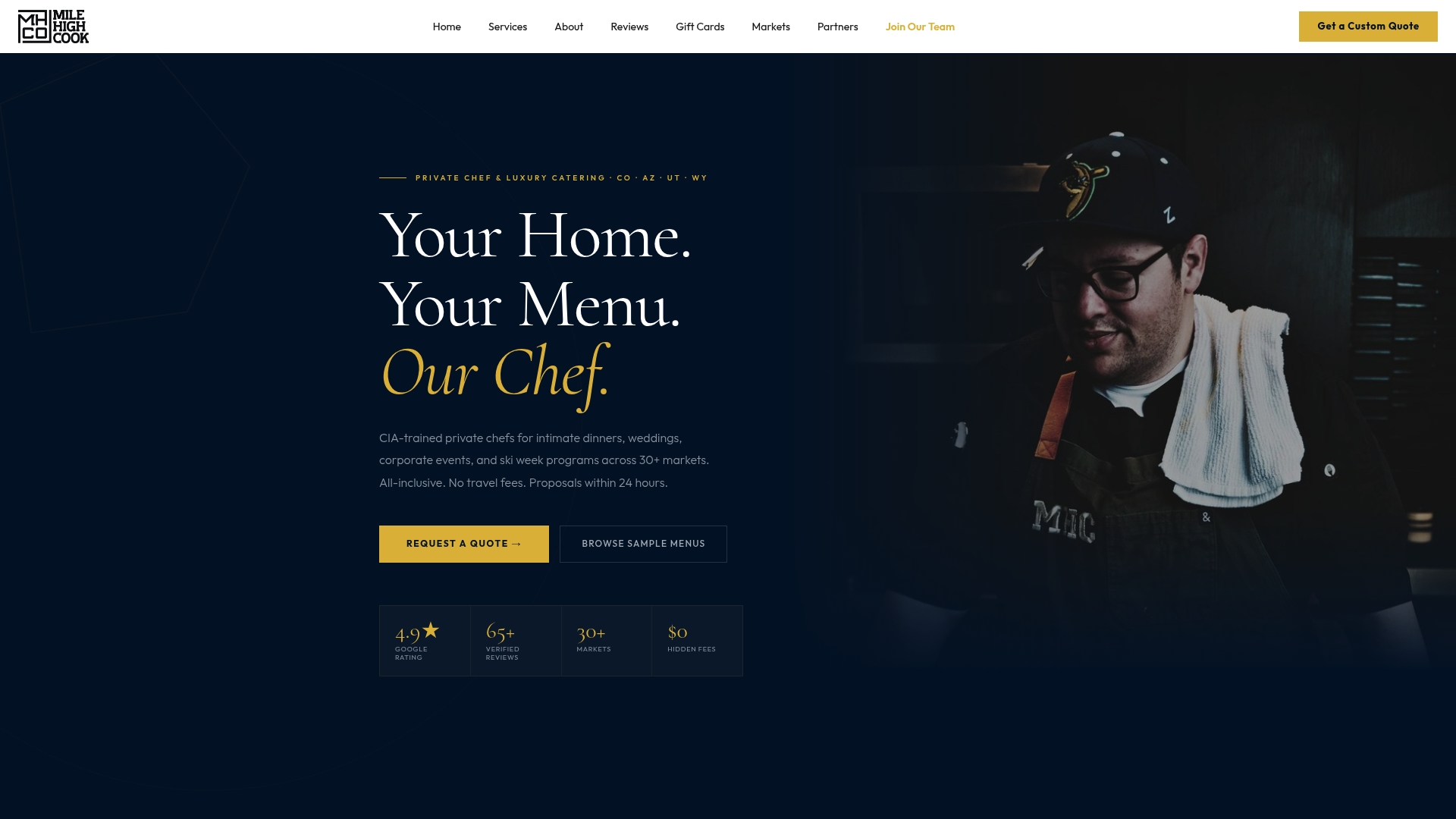
Milehighcook holds a 4.9-star rating from over 65 verified reviews, which reflects consistent execution across intimate dinners and large corporate events alike. Whether you need a private chef service for a board dinner or full-scale catering for a corporate gala, Milehighcook builds every menu around the client's specific preferences. Explore the full range of catering services or browse sample menus to start building your next event proposal.
FAQ
What makes a catering presentation effective for luxury clients?
A luxury catering presentation is effective when it references the client's specific preferences, includes professional visuals, and presents transparent pricing. Generic proposals lose to personalized ones at this market level.
What service tier is best for a corporate board dinner?
Full white-glove service or a hybrid model works best for corporate board dinners. Both options include on-site staff and chef presence, which signals the level of care appropriate for executive guests.
How do exclusive catering menus differ from standard menus?
Exclusive catering menus feature chef-crafted, seasonal dishes with named ingredient sourcing, bespoke dietary accommodations, and course-level storytelling. Standard menus list dishes without context or customization.
Can luxury catering work in non-traditional venues?
Luxury catering providers with experience in specialized venue logistics can execute at yachts, private jets, and historic estates by using temperature-controlled packaging and disciplined pre-event coordination.
How early should planners present catering options to clients?
Planners should present catering options at least 60–90 days before the event date for mid-size gatherings and six months or more in advance for large-scale or destination events. Early presentation allows time for tastings and menu refinement.