
TL;DR:
- Executive catering menu formats include plated service, buffet, drop-off catering, action stations, and grazing tables, each suited for different event objectives and guest sizes. Plated service offers formal elegance for client meetings, while interactive formats like action stations boost engagement at large conferences. Choosing the right format depends on the event's purpose, guest count, and desired experience, with dietary inclusivity essential in all offerings.
Executive catering menu formats define how food is structured, presented, and served to support upscale corporate events with precision and purpose. The right format does more than feed attendees. It sets the tone, controls pacing, and directly affects how productive your event feels. Whether you are planning a client presentation lunch for 8 or a leadership conference for 650, the format you choose shapes the entire experience. Industry leaders like Chef Bill Blackburn and Ritz Charles have built their corporate catering reputations on matching format to function. This guide breaks down every major format so you can make the right call before you book.
1. What are the primary executive catering menu formats?
Corporate catering is categorized by meeting objective. Client presentations use plated service for groups of 4–12, leadership strategy sessions favor buffet or plated formats for 6–20 guests, and working lunches rely on drop-off catering for groups of 5–25 or more. Each format carries a different service model, staffing requirement, and guest experience.
The five core formats used in upscale business events are:
- Plated service: Individual courses delivered to seated guests by service staff. Best for formal client meetings and high-stakes presentations where control and elegance matter.
- Buffet: Self-serve stations with a curated spread. Works well for leadership retreats and internal strategy sessions where interaction between guests is encouraged.
- Drop-off catering: Pre-packaged meals or platters delivered and set up with minimal staff. The go-to format for efficient working lunches.
- Action stations: Live cooking or carving stations where chefs prepare food in front of guests. Ideal for conventions, networking events, and large conferences.
- Grazing tables: Artfully arranged spreads of charcuterie, cheeses, fruits, and small bites. Popular for pre-meeting receptions and cocktail hours.
Catering firms like Ritz Charles manage events ranging from 650 to 6,342 guests, which shows how format selection scales with event size. A grazing table that works beautifully for 30 executives becomes logistically impossible at 3,000 without a complete structural rethink.
2. How do plated service and buffet formats compare for executive meetings?
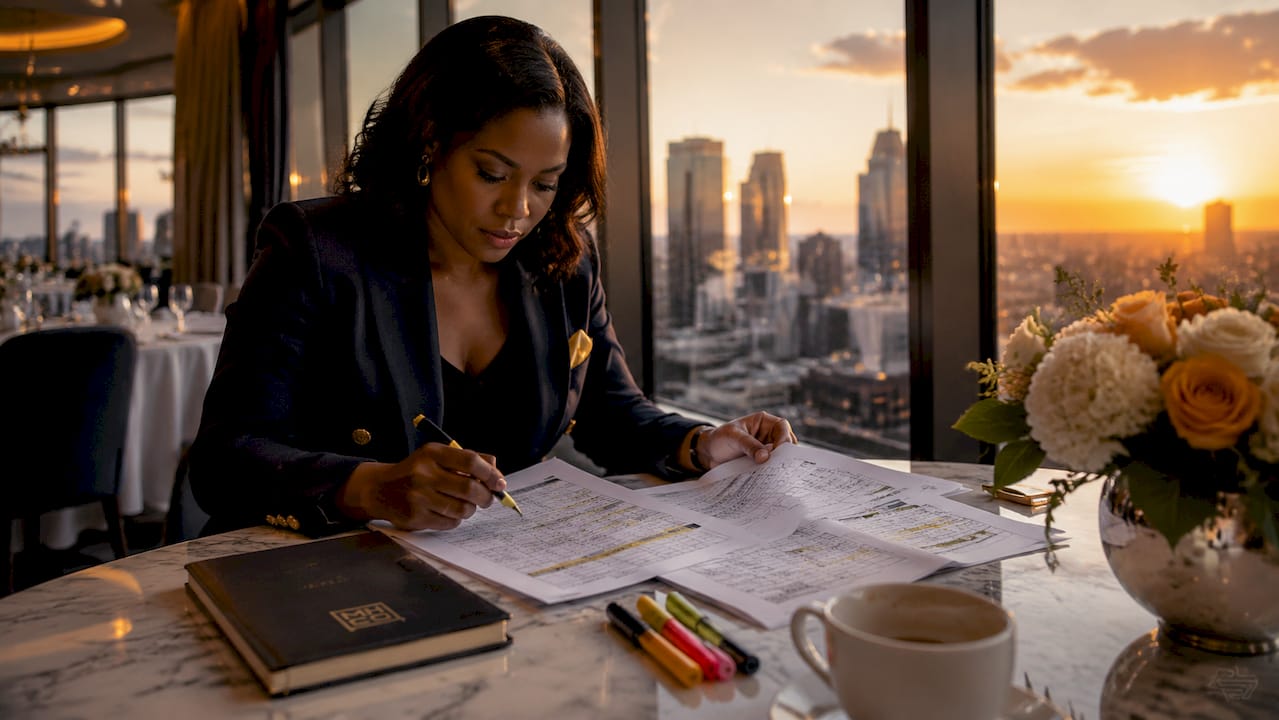
Plated service is the gold standard for formal dining menu formats in high-stakes corporate settings. Each course arrives at the table on schedule, the presentation is consistent, and the service team controls the pace of the meal. Plated service must be timed discreetly to avoid disrupting decision-making during client presentations. That level of discretion is what separates professional executive catering from standard event catering.
Buffet formats offer a different kind of value. They give guests autonomy, encourage movement, and work naturally in settings where conversation and relationship-building are the primary goals. For a leadership offsite or an internal strategy session, a buffet creates a more relaxed atmosphere without sacrificing quality.
| Format | Best for | Guest count | Formality level | Key advantage |
|---|---|---|---|---|
| Plated service | Client lunches, board meetings | 4–20 | High | Controlled pacing, elegant presentation |
| Buffet | Strategy sessions, internal meetings | 6–50 | Medium | Guest autonomy, variety |
| Drop-off | Working lunches, fast meetings | 5–25+ | Low to medium | Efficiency, minimal staffing |
| Action stations | Conferences, networking events | 50–500+ | Medium to high | Engagement, entertainment value |
| Grazing tables | Receptions, cocktail hours | 15–100 | Medium | Visual impact, social atmosphere |
Pro Tip: When running a client presentation lunch, brief your service team on the meeting agenda. A skilled server knows to hold the next course if a critical negotiation is in progress.
Dietary accommodations belong in both formats by default. Vegetarian, vegan, and gluten-free options should be standard inclusions, not afterthoughts. Failing to include them signals poor planning to your guests.
3. What innovative formats enhance engagement at corporate events?
The traditional buffet is officially considered outdated by many corporate catering professionals. Modern corporate catering favors experiential, interactive food service over static spreads that guests walk past without a second glance. The shift is not just aesthetic. Interactive formats generate conversation, create memorable moments, and give attendees a reason to move around the room.
The formats driving this shift include:
- Live action stations: A chef carves prime rib, assembles tacos, or plates risotto in real time. Guests watch, ask questions, and engage with the food in a way a chafing dish never allows.
- Street food style stations: Multiple themed stations (Asian, Mediterranean, American BBQ) let guests build their own plates. This format works exceptionally well for large networking breakouts.
- Bowl food: Individual portions served in small bowls, designed for standing events. Guests can eat without a table, which keeps networking momentum going.
- Interactive dessert stations: Partners like Mike's Mini Donuts bring live dessert experiences to corporate events, turning a standard sweet course into a talking point.
"The best corporate catering formats give guests something to do, not just something to eat. When food becomes an experience, it reinforces the energy of the event itself."
Themed menus tied to your event's location or industry add another layer of intentionality. A tech conference in Denver might feature Colorado-sourced proteins and Rocky Mountain produce. That specificity signals effort and earns attention.
4. Which formats work best for working lunches and fast-paced meetings?
Drop-off catering is the most efficient business event catering option for working lunches. Drop-off catering with minimal staff optimizes efficiency for fast-paced groups of 5–25 or more, with full setup instructions so the food is ready when the meeting resumes. No servers circling the table. No interruptions. Just food that is ready when the team is.
Menu design matters as much as format in these settings. Replacing heavy pastries with lean proteins and complex carbs avoids the post-lunch productivity slump that derails afternoon sessions. A grilled chicken grain bowl outperforms a cream-sauce pasta every time when cognitive output is the goal.
Here is a practical setup sequence for a working lunch drop-off:
- Order individual boxed meals or labeled platters to eliminate shared serving utensils and speed up distribution.
- Place dietary labels on every item. Clear dish labeling reduces bottlenecks and keeps the break on schedule.
- Set up a dedicated food station away from the main meeting table to prevent crowding.
- Include beverages, napkins, and utensils in the drop-off package so nothing is missing mid-meeting.
- Confirm dietary requirements 48 hours in advance and build them into the standard order, not as a separate add-on.
Pro Tip: For working lunches over 15 people, request individually labeled boxes by name or dietary preference. It eliminates the "who ordered the vegan option?" delay that eats into meeting time.
Dietary inclusivity is a key standard in 2026, not an optional upgrade. Every working lunch menu should include at least one vegetarian, one vegan, and one gluten-free option as defaults.
5. How to choose the right format based on event type and size
Choosing among corporate catering menu styles starts with three questions: What is the meeting objective? How many guests are attending? How much disruption can the event tolerate?
Client presentation lunches demand plated service. The format signals respect for the client's time and reinforces the professionalism of your organization. Leadership strategy sessions benefit from buffet or family-style service, where the relaxed format mirrors the collaborative intent of the meeting. Large conferences and conventions require action stations or multiple buffet lines to move hundreds of guests through a meal break without creating a 20-minute queue.
Catering platter options like light, balanced, full, and corporate platters provide scalability across guest counts and budgets. That tiered approach lets planners match the menu investment to the event's stakes without overbuilding for a routine internal meeting.
| Event type | Recommended format | Guest count | Key consideration |
|---|---|---|---|
| Client presentation lunch | Plated service | 4–12 | Discreet pacing, high formality |
| Leadership strategy session | Buffet or family style | 6–20 | Collaborative atmosphere |
| Working lunch | Drop-off or boxed meals | 5–25+ | Speed, minimal disruption |
| Large conference | Action stations or buffet lines | 50–6,000+ | Flow management, variety |
| Networking reception | Grazing tables or bowl food | 15–100 | Movement, social energy |
The 2026 corporate catering guide from Milehighcook covers how these formats are being applied across industries right now, with specific examples from Colorado, Arizona, Utah, and Wyoming markets.
Key takeaways
The most effective executive catering menu format is the one matched precisely to your event's objective, guest count, and required service level.
| Point | Details |
|---|---|
| Match format to meeting type | Plated service suits client lunches; drop-off works best for working sessions. |
| Prioritize dietary inclusivity | Build vegan, vegetarian, and gluten-free options into every menu by default. |
| Use interactive formats for engagement | Action stations and bowl food outperform static buffets at networking events. |
| Label everything clearly | Clear dish labels prevent bottlenecks and keep timed meeting breaks on schedule. |
| Scale format to guest count | Drop-off works for 5–25 guests; action stations handle 50 to thousands efficiently. |
What I have learned planning executive catering across markets
The biggest mistake I see corporate planners make is choosing a format based on budget first and event objective second. A drop-off lunch at a client pitch signals the wrong priorities, no matter how good the food tastes. Conversely, a full plated service for an internal brainstorm adds cost and formality that actually slows the room down.
The shift toward experiential formats is real, and it is not just a trend. When a live action station gives two executives something to watch and talk about while they wait, that is a networking moment the event organizer created intentionally. Static buffets do not do that. They just feed people.
The detail most planners underestimate is service timing. In a 90-minute client lunch, the difference between a well-timed plated service and a chaotic one is whether the service team was briefed on the meeting agenda. I have seen deals stall because a server interrupted a critical moment to clear plates. That is a process failure, not a food failure.
For high-stakes events, the format you choose is only as good as the team executing it. CIA-trained chefs and experienced service staff read the room in ways that a drop-off box never can. That human layer is where the real value lives in executive catering service.
— Stephen
How Milehighcook handles every executive catering format
Milehighcook brings CIA-trained chefs and experienced service staff to corporate events across Colorado, Arizona, Utah, and Wyoming. Whether your next event calls for a plated client lunch in Denver or an action station setup for a 200-person conference in Salt Lake City, Milehighcook builds the menu around your objectives, not a template.
Every engagement includes groceries, chef fees, service staff, and complete cleanup in one all-inclusive price. No surprise invoices after the event. Milehighcook holds a 4.9-star rating from over 65 verified reviews, and its corporate catering services cover the full range of formats discussed in this guide. Browse sample menus to see how gourmet catering menu ideas translate into real event programs, or contact the team to build a custom format for your next meeting.
FAQ
What are the main executive catering menu formats?
The five primary formats are plated service, buffet, drop-off catering, action stations, and grazing tables. Each suits a different event type, guest count, and formality level.
When should you use plated service vs. a buffet?
Plated service is best for formal client lunches and board meetings where pacing and presentation matter. Buffets work better for internal strategy sessions where a relaxed, collaborative atmosphere is the goal.
What should every corporate catering menu include?
Every corporate catering menu should include at least one vegetarian, one vegan, and one gluten-free option as standard. Dietary inclusivity by default prevents guest marginalization and reflects professional event planning.
How do action stations improve corporate events?
Action stations create live, interactive food experiences that generate conversation and keep guests engaged. They are particularly effective at large conferences and networking breakouts where static buffets would create long, unproductive lines.
What is the best format for a fast-paced working lunch?
Drop-off catering with individually labeled boxed meals is the most efficient option. It requires minimal staff, eliminates serving delays, and keeps the meeting break on schedule.