
TL;DR:
- Private chefs offer fully personalized in-home dining experiences, handling every detail from shopping to cleanup.
- Restaurants provide fixed menus and larger group settings, often at a comparable or higher total cost due to wine markups and gratuity.
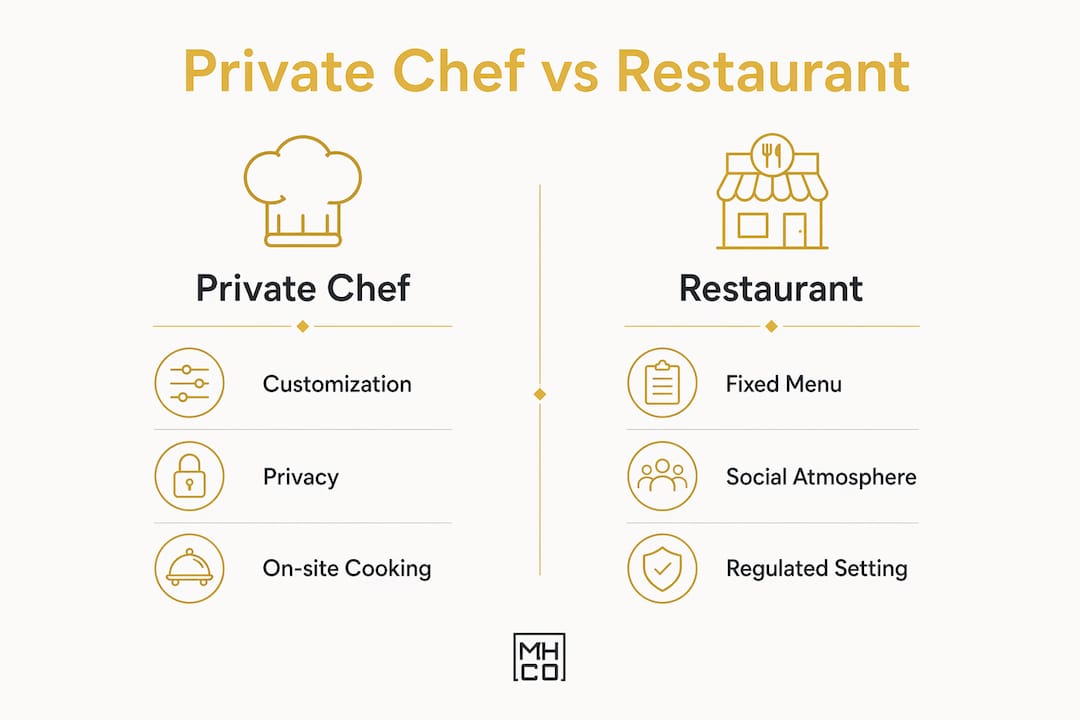
A private chef creates fully customized meals exclusively for you in your own space, while a restaurant chef prepares food for dozens of guests simultaneously within a fixed menu and structured kitchen team. Understanding the private chef vs restaurant explained distinction matters most when you are planning a milestone dinner, anniversary, or intimate celebration where the experience itself is the gift. The two models differ not just in price but in personalization, atmosphere, legal structure, and the kind of memory they create. This guide breaks down every dimension so you can choose with confidence.
What does a private chef experience involve compared to a restaurant?
The defining feature of a private chef experience is real-time adaptability. A restaurant chef works within a fixed menu designed to serve 50 to 200 covers per night. A private chef designs the entire meal around your preferences, dietary needs, and even the emotional tone of the occasion. That difference shapes everything from the first course to the final bite.
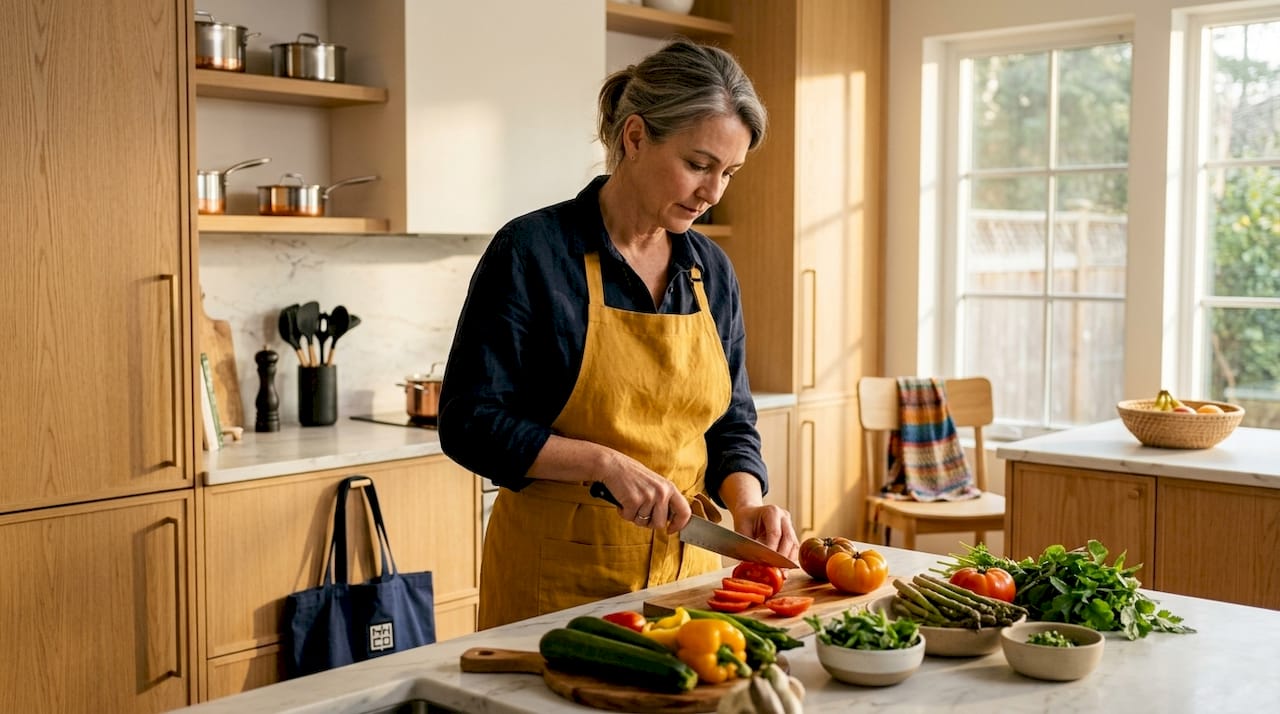
Customization goes deeper than most people expect. Menus tailored to dietary needs such as gluten-free, vegan, or keto are standard practice for private chefs, not an accommodation. Every guest at the table eats from a cohesive, intentional menu rather than a patchwork of substitutions. For couples celebrating an anniversary or families with mixed dietary needs, this matters enormously.
The service model is also fundamentally different. A private chef handles shopping, cooking, service, and cleanup, leaving you free to be fully present with your guests. At a restaurant, you manage your own arrival, wait for a table, navigate a noisy room, and flag down servers. The private dining model removes every logistical friction point. For a romantic dinner or a milestone birthday, that freedom is the product. You can learn more about how an in-home experience unfolds from arrival to cleanup.
Consider these scenarios where private chefs outperform restaurants on experience:
- A couple celebrating a 10th anniversary wants a menu built around the dishes from their first trip to Italy.
- A family with a guest who has a severe nut allergy needs every course to be genuinely safe, not just "nut-free on request."
- A small group of eight wants a multi-course tasting menu with wine pairings at their own pace, not the restaurant's.
- A proposal dinner requires total privacy, specific timing, and a setting the restaurant cannot guarantee.
Pro Tip: Before your first consultation with a private chef, write down three to five specific preferences or memories connected to food. Chefs like those at Milehighcook use that kind of detail to build menus that feel personal rather than generic.
How do costs compare between a private chef and a restaurant?
The cost of hiring a private chef ranges from $50 to $200 per hour for individual sessions, or $1,500 to $5,000 or more per week for ongoing arrangements. Those numbers reflect chef experience, location, and the scope of service. For a one-time special occasion dinner for two to eight people, the per-person cost often lands closer to a high-end restaurant than most people assume.
The comparison becomes more nuanced when you factor in what restaurants charge beyond the food. Restaurant wine markups of 200 to 300% are standard practice. A bottle that retails for $30 appears on a restaurant wine list at $90 to $100. A private chef allows you to serve that same bottle at retail price, which can shift the total cost comparison significantly for a group that enjoys wine with dinner.
Here is a practical cost comparison for a dinner for six people:
| Cost factor | Private chef | Restaurant |
|---|---|---|
| Food and preparation | Included in chef fee | Menu prices per person |
| Wine and beverages | Retail price | 200 to 300% markup |
| Service and gratuity | Included or flat fee | 18 to 22% added to bill |
| Parking and transportation | None | Variable |
| Cleanup | Included | Not applicable |
| Customization | Full | Limited or extra charge |
For a party of six at a fine dining restaurant, the total bill including wine, tax, and gratuity can easily reach $150 to $250 per person. A private chef dinner for the same group, with full service and cleanup, can fall within a comparable or lower per-person range depending on the chef and menu. The private chef cost guide from Milehighcook breaks this down in detail for 2026 pricing.
Pro Tip: When comparing costs, calculate the total spend including wine, tip, parking, and transportation for the restaurant option. Most people underestimate the restaurant total by 30 to 40% before they add those line items.
What are the legal and licensing differences between private chefs and restaurants?
Restaurants operate under a well-understood regulatory framework: commercial kitchen certification, health department inspections, food handler licenses, and liquor licenses. Private chefs operate under a more variable set of rules that depend heavily on where and how food is prepared.
Food preparation location determines licensing requirements. A private chef who cooks on-site in a client's home typically faces fewer licensing requirements than one who prepares food off-site in a commercial kitchen and transports it. Many states have cottage food laws that allow limited food preparation in residential kitchens, but those laws vary widely in what they permit.
Here is a summary of the key legal differences:
| Requirement | Private chef (on-site) | Private chef (off-site) | Restaurant |
|---|---|---|---|
| City business license | Sometimes required | Usually required | Always required |
| General liability insurance | Recommended | Required | Required |
| Food handler certification | Required in most states | Required | Required |
| Liquor license | Not applicable | Not applicable | Required for alcohol service |
| Liquor liability insurance | Required if serving alcohol | Required if serving alcohol | Required |
| Health department inspection | Rarely required | Sometimes required | Always required |
Liquor liability insurance is a separate requirement from a liquor license and applies whenever alcohol is served at a private event. This is a detail many clients overlook when comparing private dining to restaurant dining. A reputable private chef service handles all of this on your behalf, which is one reason working with an established provider like Milehighcook carries less risk than hiring an individual chef without verifying their coverage.
The practical implication for clients is straightforward: ask any private chef you hire to confirm their licensing and insurance before the event. Established services make this information available upfront.
What occasions are best suited for a private chef versus a restaurant?
Private chefs are the preferred choice for milestone events such as birthdays, anniversaries, proposals, and intimate gatherings where customization and privacy define the experience. Restaurants are better suited for larger groups, spontaneous outings, and occasions where social energy and a public setting add to the appeal.
The decision comes down to five practical factors:
- Group size. Private chefs work best for two to twenty guests. Restaurants handle larger groups more efficiently and often have private dining rooms for parties of 20 or more.
- Customization needs. If anyone at the table has serious dietary restrictions, or if you want a menu built around a theme or memory, a private chef delivers what a restaurant cannot.
- Privacy. Proposals, grief dinners, family reunions, and sensitive celebrations benefit from a setting where no strangers are present and the pacing is entirely yours.
- Pacing and control. A private chef moves at your speed. Restaurants operate on their own timeline, especially on busy Friday and Saturday nights.
- Budget flexibility. Restaurants offer more predictable, lower entry-level pricing for casual occasions. Private chefs represent a higher floor but a more controlled ceiling once you account for wine and service.
Restaurants remain the right choice for casual birthday dinners with a large friend group, business lunches where the neutral setting matters, or any occasion where the energy of a busy dining room is part of the appeal. The role of a personal chef for dinner events is most powerful when the occasion calls for something that cannot be replicated in a public space.
Key takeaways
Choosing between a private chef and a restaurant comes down to customization, privacy, and total value. Private chefs deliver a fundamentally different product, not just a different setting.
| Point | Details |
|---|---|
| Customization defines the difference | Private chefs build menus around your preferences and dietary needs; restaurants offer fixed options. |
| Total cost is closer than it appears | Wine markups, gratuity, and transportation often make restaurants more expensive than a private chef dinner. |
| Legal compliance matters | Always confirm a private chef's licensing and liability insurance before booking any event. |
| Occasion type should drive the choice | Private chefs excel for intimate, milestone events; restaurants suit larger or more casual gatherings. |
| All-inclusive models reduce surprises | Services like Milehighcook bundle groceries, chef fees, and cleanup into one price, eliminating hidden costs. |
Why private chefs create something restaurants simply cannot replicate
I have spent years watching people choose restaurants for their most important occasions out of habit rather than intention. The restaurant is familiar. The reservation feels like a plan. But I have also seen what happens when someone experiences a private chef dinner for the first time at a real milestone moment, and the contrast is striking.
What a private chef actually delivers is authorship. The meal tells your story, not the restaurant's brand story. I have seen chefs at Milehighcook recreate a dish from a client's grandmother's kitchen for a 50th birthday dinner, and I have watched a couple taste a menu built around the city where they got engaged. Those moments do not happen at a restaurant because the restaurant is not listening for them.
The honest counterpoint is that restaurants offer something real too: the hum of a room, the theater of a busy kitchen, the pleasure of being served in a space designed for exactly that purpose. For a casual celebration or a night out with friends, that energy is the point. But for the occasions that actually matter, the ones you will describe to people years later, a private chef removes every variable that is not about you and your guests.
The private chef vs personal chef comparison also trips people up. A personal chef typically works for a single household on a recurring basis, preparing weekly meals. A private chef is hired for specific events or occasions. Both offer customization, but the event-focused private chef model is what most couples and individuals are actually looking for when planning a special dinner.
My honest recommendation: if you are spending more than $100 per person on a restaurant dinner for a milestone occasion, price out a private chef first. The numbers are closer than you think, and the experience is not comparable.
— Stephen
How Milehighcook brings this experience to your table
Milehighcook offers private chef services across 30-plus markets including Colorado, Arizona, Utah, and Wyoming, with CIA-trained chefs and an all-inclusive pricing model that covers groceries, chef fees, service staff, and complete cleanup. There are no surprise line items at the end of the night. Every menu is built around your preferences, dietary needs, and the specific occasion you are celebrating. With a 4.9-star rating from over 65 verified reviews, Milehighcook delivers a consistent standard that marketplace models cannot guarantee. Whether you are planning an anniversary dinner in Denver or an intimate birthday celebration in Salt Lake City, book your private chef and experience the difference firsthand.
FAQ
What is the main difference between a private chef and a restaurant chef?
A private chef works exclusively for one client or group, building a fully customized menu for a specific occasion. A restaurant chef prepares food at scale for many guests within a fixed menu and structured kitchen team.
Is hiring a private chef more expensive than going to a fine dining restaurant?
Not always. Private chef hourly rates range from $50 to $200, but when you add restaurant wine markups of 200 to 300%, gratuity, and transportation, the total per-person cost is often comparable or lower for a private chef dinner.
Do private chefs handle dietary restrictions better than restaurants?
Private chefs build menus specifically around each guest's dietary needs, including gluten-free, vegan, and keto requirements. Restaurants accommodate restrictions on request, but the menu is not designed around them.
What licenses does a private chef need?
Licensing requirements vary by state and depend on whether food is prepared on-site or off-site. Most private chefs need a food handler certification, general liability insurance, and in some cases a city business license.
When should I choose a restaurant over a private chef?
Restaurants are the better choice for larger groups, spontaneous outings, or occasions where the social energy of a public dining room adds to the experience. Private chefs are better suited for intimate, milestone events where customization and privacy define the occasion.