
TL;DR:
- Private dining transforms meals into immersive experiences through storytelling and sensory design. Chefs use techniques like multisensory plating and environmental artistry to engage all five senses, creating memorable encounters. Personal and customized menus, combined with carefully crafted environments, elevate private dinners into unique, meaningful events.
Private dining is defined by its ability to transform a meal into a fully personal, immersive experience through storytelling, sensory design, and chef-driven creativity. The best unique cooking style examples for private dining go far beyond plating technique. They combine narrative menus, artisanal methods, and theatrical environments to create something guests remember for years. Chefs like Eddie Shepherd and Sensorium Milano's creative team have proven that the most powerful private meals engage all five senses, not just taste. If you want to create or experience something genuinely different, this guide covers the styles worth knowing.
1. What are standout artisan and sensory cooking styles for private dining?
Artisan and sensory cooking styles are the most distinctive category of unique culinary experiences in private settings. They replace conventional cooking methods with techniques that engage guests on a deeper, more emotional level.
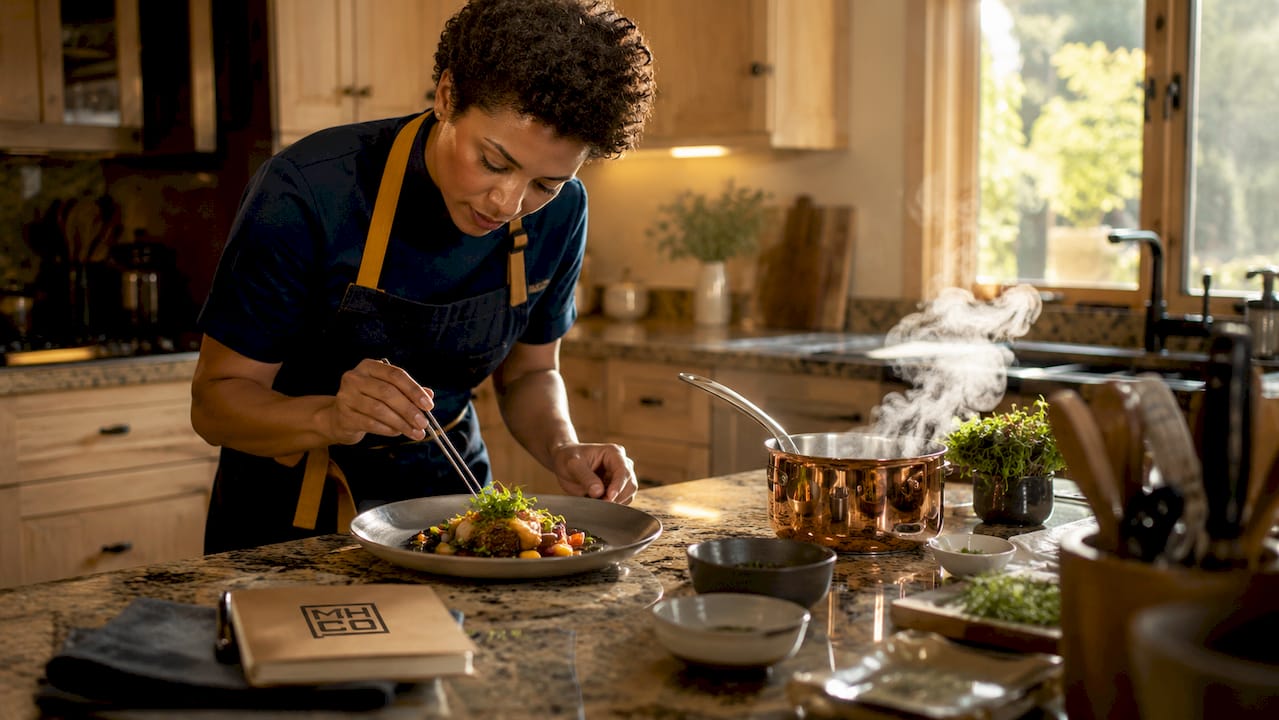
Eddie Shepherd's plant-based landscape distillation is one of the clearest examples. He captures the flavor of a specific environment, like a forest floor or a coastal cliff, without applying heat. The result is a dish that tastes like a place, not just an ingredient. That kind of specificity is only possible in a private setting where the chef controls every variable.
Sensorium Milano's multisensory dining takes a different approach. Their concept runs across nine acts, each engineered with light, scent, and sound to guide guests through a dream-like sequence. The experience is designed as an artistic performance that connects with guests' subconscious. Taste is just one layer of the meal.
Lava-heated cooking represents the extreme end of environmental artisanship. In Guatemala, chefs cook pizza on active volcanic lava fields, using the earth itself as the heat source. The setting becomes inseparable from the food.
Key artisan techniques worth knowing for private dining:
- Non-thermal distillation: Captures volatile flavor compounds from plants, soil, or botanicals without heat degradation
- Fermentation-forward menus: Uses time as the primary cooking tool, building complexity through controlled aging
- Live-fire and elemental cooking: Uses wood, lava, or open flame to introduce terroir directly into the dish
- Multisensory plating: Incorporates scent diffusers, soundscapes, or temperature contrast to amplify each course
Pro Tip: Blending one science-based technique, like distillation or fermentation, with one visually theatrical element creates the strongest impression in a private setting. Guests remember the combination far longer than either element alone.
2. How do narrative and biographical menus enhance private dining?
Narrative menus are defined as multi-course sequences where each dish tells a chapter of a larger personal or cultural story. This approach replaces traditional decor and ambient music as the primary source of atmosphere. The food itself carries the meaning.
Chef Phiri's work is the clearest modern example. His 14-course tasting menu transforms everyday Zambian staples into a sophisticated cultural narrative. Each course educates guests about an ingredient's history, its role in community life, and its modern reinterpretation. That structure turns dinner into a form of cultural memory.
Eddie Shepherd's regional plant-based menus follow a similar logic. He builds courses around specific British landscapes, using distillation and foraging to connect each plate to a physical place. Guests don't just eat the food. They experience the geography behind it.
The chef's personal interaction is what makes biographical menus work. In a restaurant, a server reads the specials. In private dining, the chef explains why a dish exists, what it means, and who inspired it. That conversation changes how guests perceive every bite.
Storytelling elements chefs commonly use in narrative menus:
- Origin stories: The chef's childhood, hometown, or cultural background shapes the menu's arc
- Ingredient provenance: Each course traces a single ingredient from source to plate
- Seasonal chapters: The menu moves through seasons or landscapes as a structural device
- Guest personalization: The chef incorporates the guest's own story, like an anniversary or family tradition, into specific courses
- Printed course notes: Short written descriptions give guests context without interrupting the experience
Explore how private chef menus are built around personal stories and guest preferences to see this approach in practice.
3. What role do immersive environments and theatrical service play in private dining?
Immersive environments are the physical and sensory architecture that surrounds a private meal. The setting is not decoration. It is a functional part of the experience that shapes how guests feel, remember, and talk about the evening.
The 90D immersive dinner party in Kuala Lumpur is a precise example. Transitions between courses are cued by light changes and sound shifts, not by servers announcing the next dish. Every guest moves through the experience at the same pace, creating a unified emotional arc. The choreography is as deliberate as a theater production.
Atlanta's living room supper clubs take a different approach. They strip away restaurant formality entirely and replace it with the intimacy of a private home. The setting signals to guests that the rules are different here. That shift in expectation changes how people engage with the food and with each other.
| Environment type | Key feature | Best suited for |
|---|---|---|
| Multi-room dining | Each course served in a different space | Narrative or chapter-based menus |
| Living room supper club | Home setting replacing restaurant formality | Intimate groups of 6–10 guests |
| Raw industrial space | Minimal decor, maximum sensory focus | Artisan and sensory-forward menus |
| Outdoor or elemental | Nature as the backdrop and cooking tool | Seasonal and terroir-driven menus |
| Theatrical stage setup | Choreographed lighting and sound transitions | Multisensory or performance-based dining |
Immersive in-home dining success depends on rigorous synchronization of courses and sensory cues. Timing is the most underestimated element. A course arriving two minutes late breaks the emotional rhythm the chef has built.
Pro Tip: If you are planning a theatrical private dinner at home, rehearse the full sequence once before guests arrive. Walk through every transition, including when lights shift, when music changes, and when each course leaves the kitchen. One dry run eliminates 90% of timing errors.
4. How are modern chefs redefining private dining through exclusivity and customization?
Exclusivity in private dining is defined by intentional limits. Most high-end private dining experiences cap attendance at 8–12 guests, which allows the chef to treat the kitchen as a precision lab rather than a production line. That constraint is a feature, not a limitation.
Chef David Figueroa, who moved from Michelin-starred kitchens to private dining, describes the shift directly. Private dining removes rigid food costs and time pressures that define restaurant service. Without those constraints, the chef can focus entirely on ingredient quality, guest narrative, and the kind of precision that a 60-cover restaurant night makes impossible.
Chef Deng's mobile private dining team in Chongqing represents the customization extreme. His traveling team adapts menus to each property's unique layout, the client's personal story, and the emotional tone the guest wants to set. There is no fixed menu. Every dinner is built from scratch.
Premium private dining also justifies its pricing through specialized infrastructure. Private aging rooms and multi-room dining environments require significant investment. Pre-payment policies and phone-free rules signal to guests that this experience demands their full attention. That structure is part of the value.
Key benefits of the modern exclusive private dining model:
- Precision cooking: Small guest counts allow the chef to execute each plate at the highest level
- Full customization: Menus, settings, and pacing are built around the specific group
- No operational compromise: No table turns, no kitchen rush, no menu constraints
- Deeper guest connection: The chef interacts directly with every guest throughout the evening
- Premium ingredient access: Budget freed from overhead goes directly into product quality
5. What are unique cooking style ideas for your own private chef dinner?
Creative private chef dinner ideas do not require a professional kitchen or a large budget. The most memorable home dining experiences share three qualities: a clear concept, intentional atmosphere, and at least one element the guest has never encountered before.
Here are practical styles you can apply at home or discuss with a private chef:
- Biographical tasting menu: Build each course around a chapter of your own story. A childhood dish, a travel memory, and a family recipe can form a three-course arc that guests find genuinely moving.
- Single-ingredient exploration: Choose one ingredient, like a specific mushroom variety or a regional grain, and express it across five courses using different techniques. Raw, fermented, roasted, pureed, and dehydrated versions of the same ingredient teach guests something real.
- Seasonal forager's menu: Source every ingredient from a local farmers market or forager the week of the dinner. The constraint forces creativity and the story writes itself.
- Multisensory course design: Add one non-taste element to each course. A scented candle that matches the dish's primary herb, a curated playlist that shifts with each course, or a textured serving vessel that changes how the food feels in the hand.
- Interactive finishing station: Let guests complete one element of a dish themselves, like grinding a spice blend or pouring a warm sauce over a composed plate. Participation creates ownership and memory.
- Themed geographic journey: Structure the menu as a trip through a specific region or country, with each course representing a different city or landscape. Pair local music and a printed "itinerary" for each guest.
- Budget-friendly artisan touch: Fermentation requires almost no equipment. A house-made kimchi, a quick-pickled vegetable, or a cold-brew vinegar dressing adds genuine artisanal depth to any home dinner without elaborate setup.
Pro Tip: For a home event, pick one signature technique and build the entire menu around it. Trying to incorporate five unique elements at once dilutes the impact of each. One strong concept, executed well, is always more memorable than five half-realized ideas.
Milehighcook's CIA-trained private chefs specialize in exactly this kind of concept-driven menu building, tailored to your space and your story.
Key takeaways
The most memorable private dining experiences are built on a single strong concept, executed with precision, sensory intentionality, and genuine chef-guest connection.
| Point | Details |
|---|---|
| Artisan techniques create distinction | Methods like non-thermal distillation and live-fire cooking deliver flavors no restaurant menu can replicate. |
| Narrative menus replace decor | A biographical or cultural menu structure gives guests context that transforms how they experience every course. |
| Environment is part of the dish | Lighting, sound, and spatial design are functional tools, not optional extras, in immersive private dining. |
| Small guest counts enable precision | Limiting attendance to 8–12 guests allows chefs to customize every element without operational compromise. |
| One strong concept beats many weak ones | The most effective home private dinners commit fully to a single theme or technique rather than mixing several. |
Why sensory storytelling is the real differentiator in private dining
I have sat through a lot of private dinners. Some had extraordinary food. Some had beautiful settings. The ones I still think about years later had both, but more importantly, they had a clear point of view. The chef knew exactly what they wanted me to feel by the end of the evening, and every decision, from the first amuse-bouche to the lighting at dessert, served that intention.
The mistake I see most often, even from talented home cooks, is treating the menu and the atmosphere as separate projects. They are not. The food is the story. The room is the stage. When those two things are designed together, something shifts in how guests experience the meal. They stop eating and start paying attention.
What surprised me most, after experiencing everything from Sensorium Milano-style multisensory concepts to intimate supper clubs in private homes, is how little the budget matters compared to the clarity of the concept. A $40 dinner built around a single fermented ingredient, served with a handwritten note explaining its origin, lands harder than a $200 tasting menu with no narrative thread.
If you are a home cook thinking about hosting something memorable, start with one question: what do I want my guests to understand or feel by the time they leave? Answer that first. Then build the menu.
— Stephen
Bring a unique cooking style to your next private event with Milehighcook
Milehighcook's CIA-trained chefs bring exactly this kind of concept-driven, narrative-focused cooking to private homes across Colorado, Arizona, Utah, Wyoming, and 30+ markets nationwide. Every dinner is built around your story, your space, and your guests. The all-inclusive pricing covers groceries, chef fees, service staff, and full cleanup, so you focus on the experience, not the logistics. With a 4.9-star rating from over 65 verified reviews, Milehighcook delivers the kind of private chef experience that turns a dinner into a memory. Ready to create something unforgettable? See why hiring a private chef is the most direct path to a truly distinctive private dining experience.
FAQ
What are unique cooking style examples for private dining?
Unique cooking style examples for private dining include biographical tasting menus, non-thermal distillation, multisensory course design, and live-fire or elemental cooking. These approaches combine technique with storytelling to create experiences that go beyond standard restaurant meals.
How much does an immersive private dining experience cost?
Immersive private dining experiences typically cost between $148 and $843 per person, depending on the concept, guest count, and infrastructure involved. Smaller, more exclusive settings with specialized equipment sit at the higher end of that range.
What makes a private chef dinner feel truly exclusive?
Exclusivity comes from limiting the guest count to 8–12 people, building a fully customized menu, and removing the operational constraints of restaurant service. When a chef focuses entirely on one group, the quality of attention and precision cooking rises significantly.
Can home cooks create immersive private dining experiences?
Yes. Effective home private dining relies on a single clear concept, intentional atmosphere through lighting and sound, and at least one technique or ingredient the guest has not encountered before. Budget matters far less than the clarity and commitment of the concept.
What is a narrative or biographical tasting menu?
A narrative tasting menu is a multi-course sequence where each dish represents a chapter of a personal, cultural, or geographic story. Chef Phiri's 14-course Zambian tasting menu is a widely cited example, using indigenous ingredients to educate guests through elevated culinary storytelling.