

TL;DR:
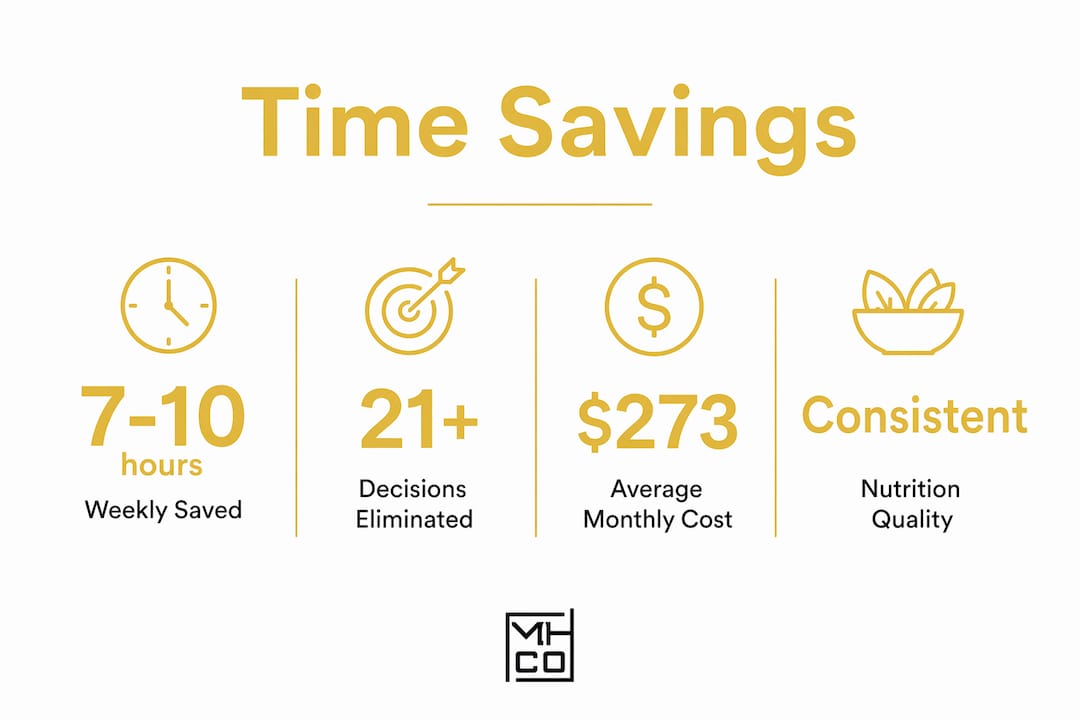
- Professional meal prep saves busy people 7 to 10 hours weekly by eliminating shopping, cooking, and cleanup. It also reduces mental load by removing over 21 weekly food decisions, freeing mental energy for other priorities. Outsourcing meal prep is especially cost-effective for those earning $50 or more per hour.
Professional meal prep is the practice of preparing ready-to-eat meals or meal components ahead of time to eliminate daily cooking, shopping, and cleanup tasks. For busy professionals and families, why professional meal prep saves time comes down to one core fact: the average person spends 10.5 hours per week on food-related logistics. That is not just cooking. It includes planning, shopping, prepping ingredients, and scrubbing pots. Professional meal prep cuts through all of it at once.
Why professional meal prep saves time every single week
The 10.5-hour weekly figure is not just cooking time. It includes what researchers call the logistics tax: planning meals, writing grocery lists, driving to the store, prepping ingredients, cooking, and cleaning up afterward. Each task feels small on its own. Together, they consume a full workday every week.

Professional meal prep targets every layer of that time drain at once. When meals arrive ready to eat or ready to heat, the shopping trip disappears. The prep work disappears. The cleanup disappears. That is why professional meal prep can reclaim 7–10 hours per week for the average household.
There is also a second hidden drain called the cooking tax. The cooking tax refers to the underestimated labor baked into every home-cooked meal: the 15 minutes to decide what to make, the 20 minutes to gather and chop ingredients, and the 30 minutes to clean up after. DIY batch cooking reduces it. Professional meal prep eliminates it entirely.
"The most efficient time-saver is professional meal delivery, because it removes the cooking tax completely, unlike DIY batch cooking which still requires labor."
Here is where the time goes each week without professional meal prep:
- Grocery shopping and planning: 2–3 hours
- Active cooking time: 3–4 hours
- Kitchen cleanup: 1–2 hours
- Daily meal decisions: 1–2 hours
Reclaiming even half of that time gives busy professionals and families back their evenings, their weekends, and their mental energy.
What are the advantages of professional meal prep vs. DIY batch cooking?
DIY batch cooking is a real improvement over cooking from scratch every night. Spending a few hours on Sunday prepping grains, proteins, and vegetables does reduce weeknight stress. But it does not eliminate the time cost. You still shop, still cook, and still clean a kitchen full of sheet pans and cutting boards.
Professional meal prep removes all three. A CIA-trained chef handles sourcing, cooking, and cleanup. You receive portioned, ready-to-eat meals without touching a pan. For professionals who value their time at $50 or more per hour, outsourcing meal prep delivers a net positive return on investment when measured against hours reclaimed.
| Factor | DIY batch cooking | Professional meal prep |
|---|---|---|
| Shopping time | You handle it | Eliminated |
| Cooking labor | 2–4 hours weekly | Eliminated |
| Cleanup | Full kitchen cleanup | Eliminated |
| Decision fatigue | Reduced | Fully removed |
| Portion control | Manual | Built in |
| Consistency | Varies by week | Consistent every time |
The mental load difference is significant. With DIY prep, you still decide what to cook, check what ingredients you have, and adjust for dietary needs. With professional meal prep, those decisions are made for you before the week starts.
Pro Tip: If you are not ready to fully outsource, start by having a professional handle just dinners. You will immediately notice how much mental space opens up on weekday evenings.
How does professional meal prep improve weekly planning and mental bandwidth?
Decision fatigue is real and measurable. Professional meal prep services eliminate 21 or more nutritional decisions per week. That matters because every food decision, from "what should I make tonight" to "do we have enough chicken," pulls from the same mental reserve you use for work, parenting, and everything else.
Meal predictability is the underrated benefit here. When you know exactly what you are eating on Tuesday night, you do not spend Tuesday afternoon distracted by it. You stay focused on what actually needs your attention.
The benefits of meal prep for mental bandwidth include:
- No daily "what's for dinner" stress
- Consistent portion sizes that remove guesswork
- Predictable grocery spending with no impulse purchases
- More time and energy for family activities and work priorities
"Meal planning forces an intentional thought process, resulting in more nutrient-dense diets compared to last-minute decisions."
Families especially benefit from this predictability. When meals are planned and prepped, children eat more consistently, parents argue less about dinner, and the entire household runs on a calmer schedule. That is not a small thing. It is the difference between a chaotic evening and a productive one.
What financial and nutritional benefits do professional meal prep services offer?
The financial case for professional meal planning is stronger than most people expect. Frequent home cooks spend approximately $273 per month on food compared to $330 for those who cook less and rely more on takeout. That $57 monthly gap adds up to nearly $700 per year. Professional meal prep keeps you in the home-cooking cost range while removing the labor entirely.
Nutrition expert Mia Syn notes that meal planning improves diet quality by replacing impulsive, convenience-driven choices with intentional, nutrient-rich meals. When a CIA-trained chef designs your weekly menu, every meal is built around balance, not whatever was fastest to grab.
| Benefit category | DIY cooking | Professional meal prep |
|---|---|---|
| Monthly food cost | ~$273 | Comparable, with no waste |
| Food waste | Moderate to high | Minimal, portioned precisely |
| Nutritional quality | Varies by effort | Consistently high |
| Impulse spending | Common | Eliminated |
| Time cost factored in | High | Low |
Food waste is another hidden cost that professional meal prep addresses directly. When ingredients are purchased and portioned for specific meals, nothing sits forgotten in the back of the refrigerator. That alone saves the average household a meaningful amount each month, since food waste is one of the largest untracked budget leaks in American households.
What are practical tips for busy people to integrate meal prep efficiently?
Efficient meal preparation does not require a complete lifestyle overhaul. The most effective approach is to start small and build from there.
-
Prep one or two items ahead. Registered dietitian Gantina Setiawati confirms that even partial prep reduces daily stress and improves portion awareness. Cook a batch of grains or roast a tray of vegetables on Sunday and you have a foundation for three weeknight meals.
-
Assign fixed days for shopping and prep. Treating meal prep like a scheduled appointment prevents it from getting pushed aside. Most families find that saturday morning shopping and sunday afternoon prep creates the smoothest weekly rhythm.
-
Use a weekly meal template. Decide on categories rather than specific meals. Monday is fish, Tuesday is chicken, Wednesday is vegetarian. This cuts planning time without removing variety.
-
Batch cook versatile components. Proteins, grains, and roasted vegetables can combine in multiple ways across the week. One cooking session produces five different meals.
-
Consider professional meal prep services for full time recovery. For families and professionals who want the benefits without any of the labor, a personal chef meal prep service handles everything from sourcing to cleanup.
Pro Tip: Invest in quality storage containers with clear lids. Seeing your prepped meals in the refrigerator makes you far more likely to use them and far less likely to order takeout.
The goal is not perfection. The goal is reducing the number of daily decisions and tasks that drain your time and energy. Even one or two changes from this list will produce a noticeable difference within the first week.
Key takeaways
Professional meal prep saves the most time by eliminating the logistics tax, the cooking tax, and 21 or more weekly nutritional decisions that drain mental energy and hours from busy schedules.
| Point | Details |
|---|---|
| Time savings are significant | Professional meal prep reclaims 7–10 hours per week by removing shopping, cooking, and cleanup. |
| Logistics tax is the real drain | Planning, shopping, and cleanup account for most weekly food time, not cooking alone. |
| Mental load drops sharply | Eliminating 21+ weekly food decisions frees mental energy for work and family. |
| Financial ROI is positive | Home-style food costs plus zero labor beats frequent takeout spending every time. |
| Start small for fast results | Prepping even one or two components ahead reduces stress and builds a sustainable habit. |
Why I think most people underestimate what meal prep actually costs them
I have talked with hundreds of busy professionals about their weekly routines, and almost none of them accurately track how much time food logistics actually takes. They say "I cook at home most nights" as if that settles the question. But when you walk through the actual week, the shopping trip, the 20 minutes deciding what to make, the cleanup that runs past 9 p.m., the picture changes fast.
The cooking tax is the most underestimated part. People count the 30 minutes they spend at the stove. They do not count the 15 minutes of deciding, the 10 minutes of gathering ingredients, or the 25 minutes of cleanup. That is a full hour per meal, not 30 minutes. Multiply that across a week and you are looking at a part-time job you did not sign up for.
What I find most compelling about professional meal prep is not the food itself. It is the mental clarity that comes with it. When dinner is handled, your brain stops running that background process. You stop doing the mental math at 4 p.m. about what is in the refrigerator. That freed-up bandwidth shows up in your work, your patience with your kids, and your ability to actually rest in the evenings.
For families in particular, I think the in-home meal preparation model deserves more attention than it gets. It is not a luxury for the few. For anyone who values their time honestly, it is often the most rational choice on the table.
— Stephen
Milehighcook: professional meal prep that gives your time back
Busy professionals and families across Colorado, Arizona, Utah, and Wyoming have found a better way to handle weekly meals.

Milehighcook's private chef services connect you with CIA-trained chefs who handle every part of the meal process, from grocery sourcing to full kitchen cleanup. The all-inclusive pricing covers groceries, chef fees, service staff, and cleanup, so there are no surprise costs. With a 4.9-star rating from over 65 verified reviews across 30+ markets, Milehighcook delivers a consistent, high-quality experience whether you need weekly meal prep or a special dinner. If you are ready to reclaim your evenings, explore private chef options in your area and see what your week looks like without the cooking tax.
FAQ
How much time does professional meal prep save per week?
Professional meal prep can save 7–10 hours per week by eliminating shopping, cooking, and cleanup tasks. The average person currently spends 10.5 hours weekly on food-related logistics.
What is the difference between meal prep and meal planning?
Meal planning is deciding what you will eat each week. Meal prep is the physical act of preparing those meals or components in advance, which is where the actual time savings occur.
Is professional meal prep worth the cost for busy families?
For professionals earning $50 or more per hour, outsourcing meal prep typically yields a positive financial return when the value of reclaimed time is factored against the service cost.
How does meal prep reduce decision fatigue?
Professional meal prep eliminates 21 or more nutritional decisions per week, freeing mental energy that would otherwise go toward daily food choices and last-minute planning.
Can partial meal prep still save meaningful time?
Prepping even one or two components ahead, such as a batch of grains or roasted vegetables, reduces daily stress and improves portion awareness, according to registered dietitian Gantina Setiawati.