

TL;DR:
- Hiring a private chef provides a personalized, full-service dining experience that differs from traditional catering.
- Effective planning, clear communication, and early booking are essential to ensure a successful upscale reception.
Hiring a private chef for an upscale reception means engaging a culinary professional who delivers a full-service, personalized dining experience from menu design through kitchen cleanup. This is not traditional catering. A private chef acts as your culinary director, sourcing ingredients, crafting courses around your guests' preferences, and managing every plate that leaves the kitchen. Private chef pricing scales with guest count: smaller groups of 2–6 guests typically pay $125–$200 per person, while receptions of 15–25 guests run $75–$125 per person. That pricing structure reflects the real operational differences between an intimate dinner and a full reception.
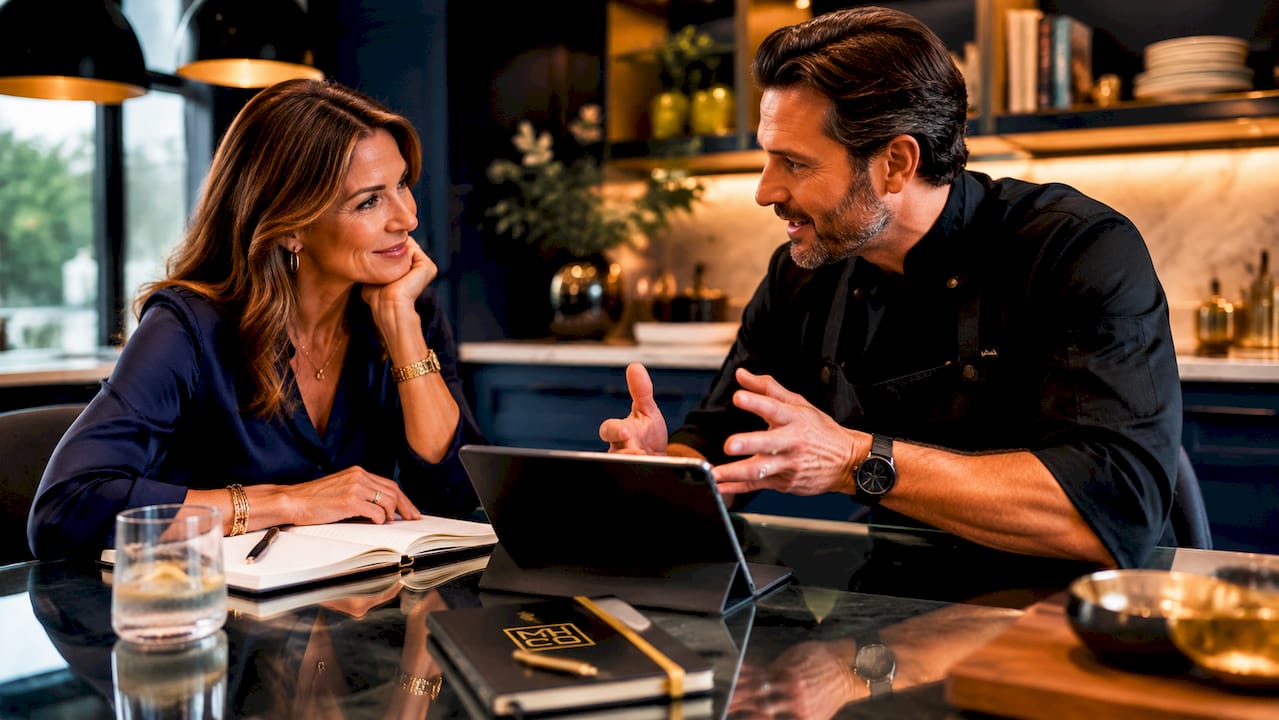
What to consider before you hire a private chef for an upscale reception
The most common planning mistake is treating a private chef booking like ordering a catering tray. These are two entirely different engagements, and the groundwork you lay before the first call determines whether your event succeeds.
Start with these five questions before you contact any chef:
- What is your guest count, and does your venue have a functional kitchen?
- What is your total food and beverage budget, including gratuity and extras?
- Do any guests have dietary restrictions, allergies, or cultural food preferences?
- What is your event style: plated dinner, stations, cocktail reception, or a hybrid?
- What is your event date, and how much lead time do you have?
Lead time matters more than most clients realize. Booking 7–10 days ahead works for small events of under 12 guests, but large receptions require 3–4 weeks minimum to allow for menu development and staff coordination. Last-minute requests may be accommodated, but availability is never guaranteed.
Budget clarity is equally critical. Full private chef costs include the chef fee, ingredients, cooking, service, and cleanup. Gratuity and optional wine pairings are often separate line items. Clients who skip this conversation early frequently experience sticker shock at the contract stage.
Pro Tip: Ask every chef candidate for a sample contract before your first consultation. The contract structure tells you more about their professionalism than any portfolio photo.
Venue suitability is a detail that gets overlooked. A private chef working a 20-person reception needs adequate prep space, working burners, and refrigeration. If your venue lacks a proper kitchen, discuss this upfront. Some chefs bring portable equipment, but that changes the menu options and the cost.
How to select and book the right gourmet chef for your event
Finding the right chef is a structured process, not a gut-feel decision. Follow these steps to move from research to signed contract with confidence.
-
Verify credentials and specialties. Look for formal culinary training, such as CIA (Culinary Institute of America) certification, and ask for references from comparable events. A chef who excels at intimate dinner parties may not have the brigade management skills needed for a 30-person reception.
-
Review menu customization options. Personalized menu design should account for your guests' dietary needs, cultural preferences, and the event's overall tone. A chef who offers only fixed menus is a red flag for upscale receptions.
-
Compare pricing structures and inclusions. Some chefs quote a flat fee. Others charge per person. Understand exactly what is included: groceries, service staff, equipment rental, and cleanup. An all-inclusive quote is easier to budget against than a base fee with add-ons.
-
Schedule a tasting session. For receptions above 15 guests, a tasting is not optional. It confirms the chef's execution quality and gives you a chance to refine the menu before the event.
-
Review the contract carefully. Confirm deposit amounts, cancellation terms, and what happens if the chef becomes unavailable. Reputable chefs carry liability insurance. Ask for proof.
Here is how key service elements typically compare across chef tiers:
| Service Element | Standard Private Chef | High-End Private Chef |
|---|---|---|
| Menu customization | Limited to set options | Fully bespoke per event |
| Staffing | Chef only | Chef plus service team |
| Ingredient sourcing | Standard suppliers | Local, artisan, or specialty |
| Cleanup included | Varies | Yes, full kitchen cleanup |
| Tasting session | Rarely included | Standard for larger events |
Private chef pricing structures vary significantly between these tiers. The difference is not just food quality. It is the entire operational experience your guests receive.
Pro Tip: Request a written menu proposal before signing any contract. Vague descriptions like "seasonal protein" are a warning sign. A confident chef gives you specific dishes, preparation methods, and sourcing notes.
Private chefs function as culinary consultants and operational planners, not just cooks. The best ones will push back on menu choices that won't hold well during service. That pushback is a sign of expertise, not inflexibility.
How does a private chef manage the event day?
The event day workflow for a private chef is more structured than most clients expect. Understanding it helps you set realistic expectations and avoid interfering with the kitchen's rhythm.
A full-service private chef lifecycle covers consultation, menu design, ingredient sourcing, in-home cooking, plating, and complete kitchen cleanup. Menus typically span 4–6 courses, each timed to the event's flow. The chef arrives hours before guests to begin prep, stage equipment, and coordinate with any service staff.
Key event day responsibilities include:
- Arriving 2–4 hours early for full mise en place and kitchen setup
- Coordinating service timing with event staff, photographers, or venue managers
- Plating each course to order or in pre-staged batches depending on guest count
- Monitoring food temperature and holding conditions throughout service
- Adapting to last-minute dietary requests or guest count changes
Last-minute changes are common at receptions. A skilled chef keeps flexible ingredients on hand and builds contingency time into the service schedule. This is where experience separates a good chef from a great one.
Menu engineering is the discipline that keeps food quality consistent across a multi-hour reception. Braised meats and roasted proteins hold temperature and texture far better than fried items during extended service windows. A chef who designs around holding quality is protecting your guests' experience, not cutting corners.
| Event Phase | Chef's Primary Focus |
|---|---|
| Pre-event prep | Ingredient staging, mise en place, team briefing |
| First course service | Timing coordination, plating precision |
| Main course service | Temperature management, portion consistency |
| Post-service | Kitchen cleanup, leftover handling, final walkthrough |
Event chefs operate as calm leaders and planners throughout this process. The culinary output is only as good as the operational structure behind it.
What are the most common mistakes when hiring a private chef?
Most problems with private chef receptions trace back to a small set of avoidable errors. Knowing them in advance puts you in a much stronger position.
-
Understaffing for guest count. A single chef cannot effectively serve more than 20–25 guests without a brigade. Events above that threshold need a team. Insufficient staffing leads directly to inconsistent quality and service delays.
-
Booking too late. Waiting until two weeks before a 40-person reception is a real risk. Premium chefs book out weeks in advance, especially during peak seasons like late spring and the holiday quarter.
-
Underestimating total costs. The chef fee is not the full picture. Separate gratuities and extras can add 20–30% to the base quote. Build a buffer into your budget from the start.
-
Choosing the wrong menu for the format. Fried appetizers that go soggy after 20 minutes are a poor choice for a cocktail reception. Dishes that hold well, like braises, roasted proteins, and composed salads, are the professional standard for extended service.
-
Skipping the logistics conversation. Failing to discuss kitchen access, parking for the chef's vehicle, and service timing with your venue coordinator creates friction on event day. Confirm every logistical detail in writing before the event.
Pro Tip: Build a shared event brief document that includes your venue layout, guest count, dietary restrictions, and service timeline. Send it to your chef at least one week before the event. It eliminates the most common day-of surprises.
The role of a chef in upscale receptions extends well beyond cooking. Treating the engagement as a true partnership, with clear communication and shared documentation, is what separates a good event from a memorable one.
Key takeaways
Hiring a private chef for an upscale reception requires early planning, clear budget alignment, and a chef whose operational skills match your event's scale.
| Point | Details |
|---|---|
| Book with enough lead time | Small events need 7–10 days; large receptions require 3–4 weeks minimum. |
| Verify full-service inclusions | Confirm groceries, staffing, and cleanup are included before signing any contract. |
| Match staffing to guest count | Events over 20–25 guests require a chef brigade, not a solo cook. |
| Prioritize menu engineering | Choose dishes that hold well, like braises and roasted proteins, over items that degrade quickly. |
| Communicate logistics in writing | Share a detailed event brief with your chef at least one week before the event. |
Why i think most people underestimate the chef's role
I have watched a lot of upscale receptions go sideways, and the cause is almost never the food itself. It is the gap between what the client imagined and what they actually communicated to the chef.
People spend weeks choosing flowers and table linens, then send a chef a three-sentence email about a 30-person dinner. The chef is expected to fill in the blanks. Sometimes they do. Often, the result is technically correct but emotionally flat. The food is fine. The experience is forgettable.
The private chefs who consistently deliver exceptional receptions are the ones who push clients to be specific. What feeling do you want guests to have after the first course? What does this event say about you as a host? Those are not soft questions. They are the inputs that drive every menu decision.
My honest advice: treat the chef consultation like a creative brief, not a vendor call. Come with a clear vision of the experience you want to create. The chef's job is to translate that vision into food. Your job is to give them enough to work with.
The other thing I have seen underestimated is the value of an all-inclusive pricing model. Clients who negotiate a low base fee and then get surprised by staffing charges, gratuity, and equipment rentals end up paying more and feeling worse about the experience. Clarity upfront is worth more than a lower headline number.
— Stephen
Plan your reception with milehighcook's cia-trained chef team
Milehighcook brings CIA-trained private chefs to upscale receptions across Colorado, Arizona, Utah, and Wyoming. Every engagement includes custom menu design, professional service staff, ingredient sourcing, and complete cleanup, with no hidden fees.
Whether you are planning a corporate reception in Denver or a private celebration in Salt Lake City, Milehighcook's private chef services are built for clients who expect a consistent, high standard from the first consultation through the final plate. The brand holds a 4.9-star rating from over 65 verified reviews across 30+ markets. Browse sample reception menus or reach out directly to discuss your event date, guest count, and culinary vision.
FAQ
What does it cost to hire a private chef for a reception?
Private chef pricing runs $75–$200 per person depending on guest count, with smaller groups paying more per head. Total costs include the chef fee, ingredients, service staff, and cleanup, with gratuity often added separately.
How far in advance should i book a private chef for an event?
Book 7–10 days ahead for small gatherings and 3–4 weeks ahead for larger receptions. Peak seasons like late spring and the holiday quarter require even more lead time.
How many guests can one private chef handle?
A single chef can manage up to 20–25 guests effectively. Events above that threshold require a full brigade to maintain food quality and service timing.
What is included in a full-service private chef engagement?
Full-service private chefs handle consultation, menu design, ingredient sourcing, cooking, plating, and complete kitchen cleanup. Clients have no operational role during the event.
What menu style works best for an upscale reception?
Plated multi-course dinners work well for seated receptions, while stations and passed appetizers suit cocktail formats. In either case, choose dishes that hold temperature well, such as braised meats and roasted proteins, to maintain quality throughout service.