
TL;DR:
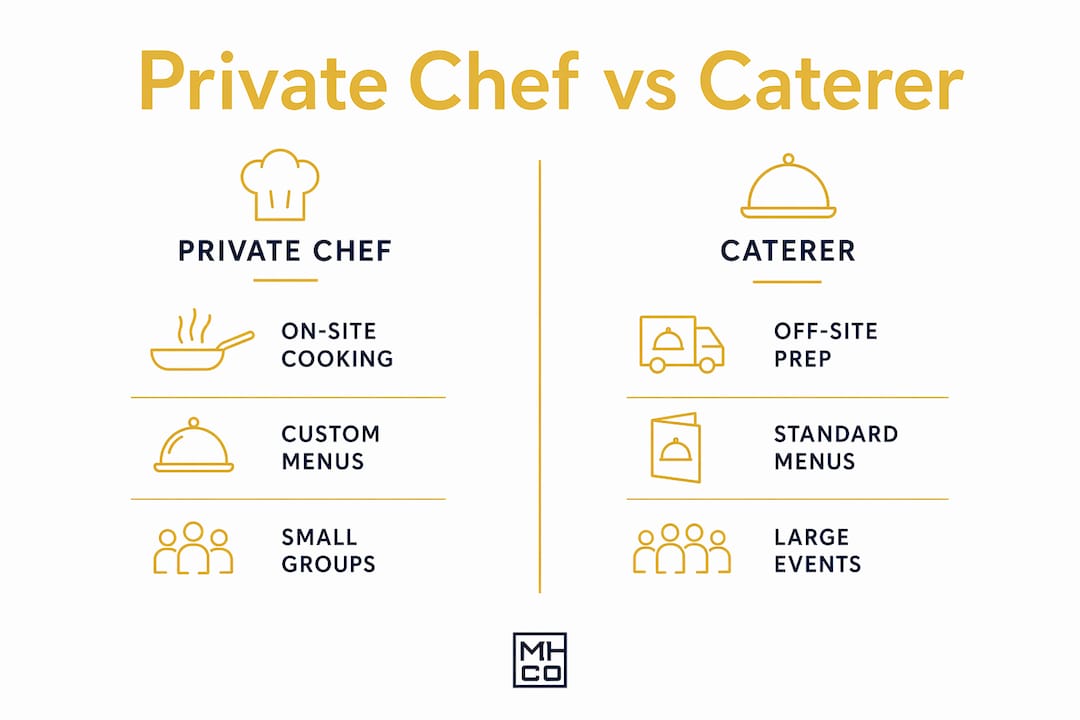
- Private chefs cook on-site and customize menus for small groups, providing a personalized dining experience. Caterers prepare food off-site for large events, focusing on efficiency and volume. The choice depends on guest count, event size, and desired level of interaction.
A private chef is a culinary professional who cooks customized meals on-site for individuals or small groups, while a caterer prepares food off-site in a commercial kitchen and delivers it for larger events. Understanding how private chef differs from caterer is the deciding factor in whether your event feels like a restaurant-quality dinner or an efficient group meal. For intimate gatherings, anniversary dinners, or corporate retreats where the food is the centerpiece, that distinction matters enormously. Services like Milehighcook and ChefCollin have built entire businesses around this gap, and event planners who ignore it often end up with the wrong service for the occasion.
How do private chefs and caterers differ in food preparation and service?
Private chefs cook fresh on-site in the client's kitchen or a venue kitchen, preparing each course as the meal progresses. Caterers prepare food off-site in licensed commercial kitchens, transport it in insulated hot boxes, and finish plating or warming on arrival. That logistical gap directly affects flavor, aroma, and presentation. A seared scallop plated tableside tastes different from one that traveled 45 minutes in a transport container.
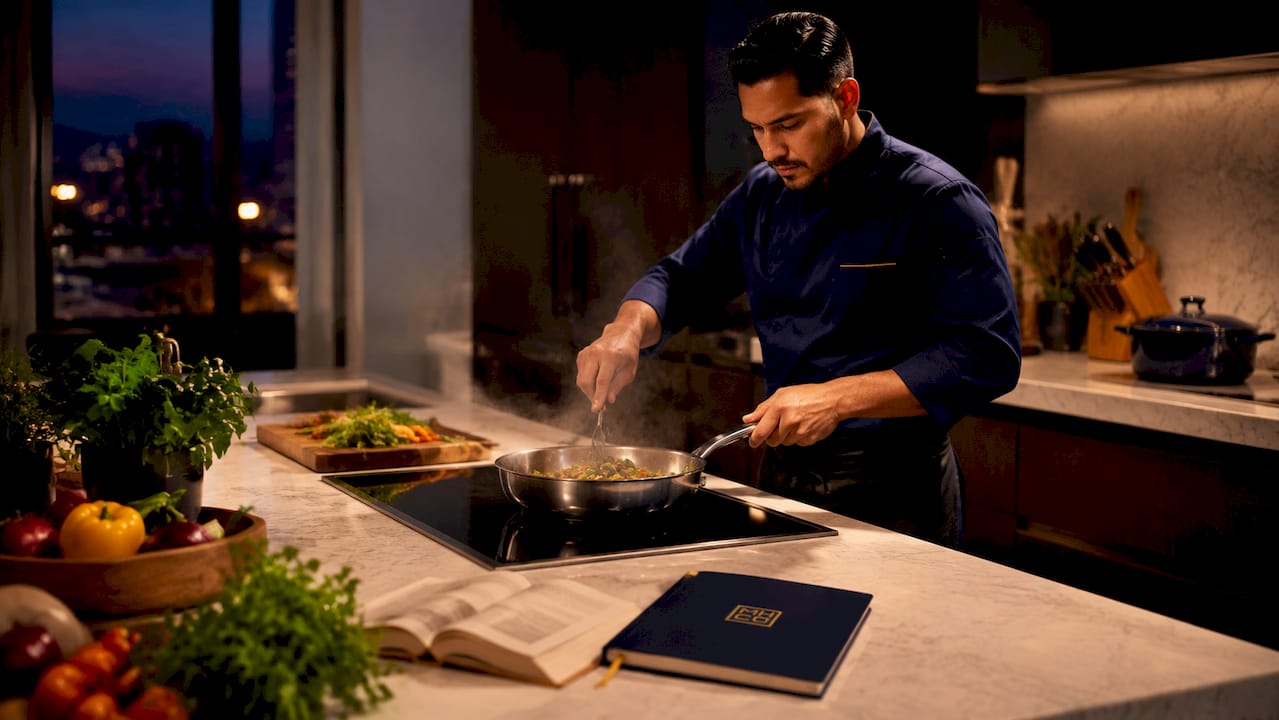
Service style follows the same divide. Private chefs typically deliver a plated, multi-course experience with pacing between courses. Caterers offer buffet, family-style, or tray-passed appetizers, formats built for speed and volume. The on-site cooking model also creates a sensory layer that catering cannot replicate: the smell of a sauce reducing, the sound of a sear, the visual of a chef at work in your kitchen.
| Factor | Private Chef | Caterer |
|---|---|---|
| Food preparation location | Client's kitchen, on-site | Licensed commercial kitchen, off-site |
| Service format | Plated, multi-course | Buffet, family-style, tray-passed |
| Food freshness | Cooked to order | Prepared ahead, transported |
| Guest interaction | High, chef often visible | Low, staff focused on logistics |
| Ideal group size | 2–30 guests | 50+ guests |
Pro Tip: Ask your private chef to walk you through the menu before the event. Knowing what to expect course by course lets you time conversation and activities around the meal.
What menu customization do private chefs offer versus caterers?
Private chefs design fully custom menus built around your preferences, dietary restrictions, and seasonal ingredients. A guest with a tree nut allergy, a preference for Japanese flavors, and a request for a pescatarian menu is a standard brief for a private chef. That same request sent to a catering company typically results in a modified version of a set package, with limited substitutions and occasional gaps in allergy accommodation.
Catering menus are designed for scale, not specificity. A caterer serving 200 guests cannot realistically build 12 individual dietary profiles into one service. Private chefs, working with groups of 2–30, can and do. Milehighcook's CIA-trained chefs source groceries specifically for each event, which means the menu reflects what is fresh and available, not what was ordered in bulk last week.
Key customization advantages private chefs hold over caterers:
- Allergy accommodation: Private chefs handle cross-contamination risks more carefully in a controlled kitchen environment.
- Dietary frameworks: Keto, vegan, gluten-free, and low-FODMAP menus are built from scratch, not adapted from a standard template.
- Seasonal sourcing: Chefs shop for the event, so ingredients are chosen at peak quality.
- Flavor preferences: Guests can request specific cuisines, spice levels, or cooking techniques.
- Menu evolution: A private chef can adjust a dish mid-event based on guest feedback. A caterer cannot.
Pro Tip: Send your private chef a written list of every dietary restriction and preference at least one week before the event. The more specific you are, the more precisely the menu can be built around your group.
For what event sizes is a private chef better than a caterer?
Private chefs work best for events feeding 2–30 guests where freshness and personalization are the priority. Caterers are the right call for crowds of 100 or more, where logistics and speed define success. The crossover zone of 30–50 guests depends on the venue kitchen, the complexity of the menu, and the host's budget.
Cost models differ significantly between the two options. Private chefs typically charge a chef fee plus the cost of groceries, with some services like Milehighcook bundling groceries, service staff, and cleanup into one all-inclusive price. Caterers price per person, which becomes more economical as guest count rises. For a dinner of 10 guests, a private chef almost always delivers better value per experience. For a wedding of 180 guests, catering is the only practical option.
Event planners should evaluate these factors before choosing:
- Guest count: Under 30 guests favors a private chef. Over 100 guests favors a caterer.
- Budget structure: Flat fee plus groceries versus per-person pricing. Calculate both for your guest count.
- Venue kitchen access: Private chefs need a functional kitchen with adequate equipment. Caterers need loading access and holding space.
- Desired atmosphere: Intimate and interactive versus efficient and scalable.
- Dietary complexity: Multiple restrictions across a small group favor a private chef.
- Event type: Anniversary dinners, birthday celebrations, and corporate retreats under 30 people align with private chef service. Weddings, galas, and large conferences align with catering.
Hosts seeking a luxury dining experience at home consistently prefer private chefs for their ability to replicate restaurant-quality meals with personalized service. That preference is not about budget. It is about what the meal is meant to accomplish.
How does the guest experience differ between a private chef and a caterer?
Private chef service creates an intimate and interactive atmosphere where guests often watch cooking happen in real time and courses arrive with intention and pacing. The chef becomes part of the event. Guests ask questions, learn about ingredients, and experience the meal as a narrative rather than a transaction. That level of engagement is impossible to replicate with a buffet line.
Catering emphasizes speed and convenience, which is exactly what large events require. A corporate luncheon for 150 people needs food on tables within 20 minutes of service start. A catering team delivers that. A private chef cannot. The right choice depends entirely on what the event is designed to accomplish.
Differences in guest experience worth noting:
- Pacing: Private chefs control the rhythm of the meal. Catering moves at the pace of the crowd.
- Storytelling: Private chefs often explain dishes, sourcing, and technique. Catering staff focus on logistics.
- Ambiance: The smell and sound of live cooking adds atmosphere that pre-prepared food cannot.
- Personalization: Guests at a private chef dinner feel seen. Guests at a catered event feel served.
Pro Tip: If you want guests to interact with the chef, tell the chef before the event. Some clients prefer the chef to stay in the kitchen. Others want the chef to present each course at the table. Setting that expectation in advance shapes the entire experience.
What logistical factors affect the choice between a private chef and a caterer?
Private chef success depends on the client's kitchen having adequate equipment, counter space, and food safety standards. A chef arriving to a vacation rental with one small burner and no sheet pans cannot execute a six-course dinner. Caterers face different constraints: venue access for delivery vehicles, holding equipment for temperature maintenance, and enough floor space for service stations.
Timing and staff coordination also differ. A private chef typically works alone or with one assistant for groups under 20. A catering team for 100 guests may include a lead chef, sous chef, and four to six service staff. Parking, load-in windows, and kitchen handoff protocols all require coordination with the venue. Event planners managing large venues need to account for all of these variables before signing a contract.
| Logistical Factor | Private Chef | Caterer |
|---|---|---|
| Kitchen requirement | Fully equipped client kitchen | Venue access for delivery and holding |
| Staff needed | 1–2 for groups under 20 | 5+ for groups over 100 |
| Transport | Chef travels with personal kit | Hot boxes, transport vehicles required |
| Food safety | On-site handling, fresh prep | Temperature maintenance during transport |
| Setup time | 1–2 hours before service | 2–4 hours for large events |
Key Takeaways
A private chef delivers personalized, on-site cooking for small groups, while a caterer provides efficient, off-site prepared food service for large events.
| Point | Details |
|---|---|
| Food preparation location | Private chefs cook on-site; caterers prepare food off-site and transport it. |
| Menu customization | Private chefs build fully custom menus; caterers offer set packages with limited changes. |
| Ideal event size | Private chefs suit 2–30 guests; caterers are built for 100 or more. |
| Guest experience | Private chef service is interactive and intimate; catering prioritizes speed and scale. |
| Logistical needs | Private chefs need a functional kitchen; caterers need venue access and holding equipment. |
What I have learned from watching clients choose between these two options
After watching dozens of events unfold, the single biggest mistake I see is hosts choosing a caterer for a small dinner because it feels safer or more familiar. They get food delivered, guests eat, and the evening is fine. But fine is not what they were hoping for. The private chef experience, when it fits the event size, creates something a catered meal simply cannot: a shared moment built around the act of cooking.
The reverse mistake is equally common. A planner books a private chef for 80 guests because the client wants a "personalized feel." The chef is overwhelmed, courses arrive unevenly, and the experience suffers. Scale is not a preference. It is a hard constraint.
My honest recommendation is to treat the guest count as the first filter, not the last. Under 30 guests, start with a private chef and work backward from there. Over 60 guests, start with catering services and ask how much personalization the caterer can layer in. The middle range of 30–60 guests is where the conversation gets interesting, and where a service like Milehighcook, which covers both private chef and catering formats, gives you the most flexibility.
The trend toward personalized dining experiences is real and growing. Clients are no longer satisfied with food that is simply adequate. They want the meal to be part of the memory. That shift is why the private chef model keeps gaining ground, especially for events under 30 guests where the economics and the experience both work in its favor.
— Stephen
Milehighcook: private chef and catering services for every event size
Whether you are planning an intimate dinner for eight or a corporate event for 150, Milehighcook has a service built for it.
Milehighcook's private chef services are staffed by CIA-trained chefs who handle menu planning, grocery sourcing, cooking, and cleanup under one all-inclusive price. For larger events, Milehighcook's corporate catering in Denver and across Colorado, Arizona, Utah, and Wyoming delivers the same standard of quality at scale. With a 4.9-star rating from over 65 verified reviews and coverage across 30+ markets, Milehighcook is the direct line between what you want the evening to feel like and what actually happens at the table.
FAQ
What is the main difference between a private chef and a caterer?
A private chef cooks fresh on-site in the client's kitchen for small groups, while a caterer prepares food off-site and delivers it for larger events using buffet or set-menu formats.
How many guests is a private chef appropriate for?
Private chefs work best for groups of 2–30 guests. For events exceeding 100 guests, catering is the more practical and cost-effective option.
Can a private chef handle dietary restrictions better than a caterer?
Private chefs provide more precise dietary accommodation than caterers, building menus from scratch around allergies, intolerances, and dietary frameworks rather than modifying a standard package.
Is hiring a private chef more expensive than catering?
Cost depends on guest count. Private chefs charge a flat fee plus groceries, which is often more economical for small groups. Catering's per-person pricing becomes more competitive as guest count rises above 50.
What kitchen setup does a private chef need?
Private chefs require a functional kitchen with adequate burners, oven space, counter space, and standard equipment. Milehighcook chefs assess venue kitchens in advance to confirm the setup supports the planned menu.