

TL;DR:
- In-home fine dining offers a personalized, restaurant-quality culinary experience with a professional chef preparing and serving multi-course meals in your home. It emphasizes customization, seamless service, and ambiance control, allowing hosts to relax and enjoy their guests fully. This format provides a stress-free, intimate alternative to restaurants and catering, making special occasions truly memorable.
In-home fine dining is a bespoke culinary experience where a professional chef prepares and serves a multi-course, restaurant-quality meal inside your own home. Unlike ordering takeout or booking a restaurant table, this format puts a trained chef in your kitchen, handling everything from menu design and grocery shopping to cooking, plating, and cleanup. The result is a fully personalized gourmet event built around your guests, your preferences, and your space. Whether you are planning an anniversary dinner, a milestone birthday, or a corporate gathering, the in-home dining experience delivers hospitality that no restaurant can replicate.
What is in-home fine dining and how does it work?
In-home fine dining is defined as a professional chef-prepared multi-course meal served at your home, where the chef manages every element of the event from start to finish. This is not catering dropped off at your door. The chef arrives, sets up, cooks in real time, plates each course with precision, serves your guests, and restores your kitchen before leaving. The experience is closer to having a private restaurant inside your home than anything else available.
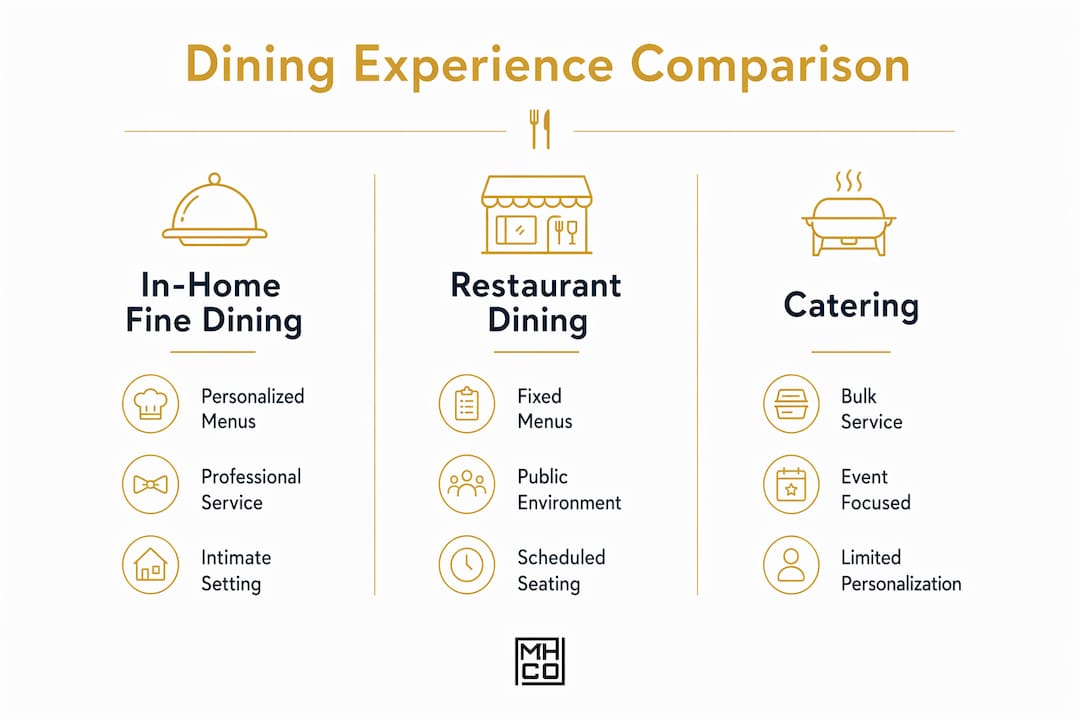
The core concept of what is gourmet dining at home rests on three pillars: personalization, professional execution, and atmosphere control. You choose the cuisine, the number of courses, the dietary accommodations, and the pace of the evening. The chef brings the skill, the ingredients, and the service. You bring the guests and the occasion.
In-home fine dining is increasingly preferred for the experiential and hospitality aspect rather than just food quality alone. That shift matters. People are not simply paying for a meal. They are paying for an evening that feels curated, unhurried, and entirely their own.
What does a typical in-home fine dining experience include?
A standard in-home dining experience follows a clear sequence that transforms your home into a functioning fine dining venue. Here is how a typical event unfolds:
- Menu consultation. Weeks before the event, you and the chef discuss cuisine preferences, dietary restrictions, allergies, and the tone of the occasion. Menus are fully customizable for dietary needs including vegetarian, vegan, gluten-free, and allergy-sensitive options.
- Grocery sourcing. The chef handles all ingredient shopping, selecting quality produce, proteins, and specialty items aligned with the agreed menu.
- Chef arrival and setup. Chefs typically arrive 1 to 2 hours early to prep, organize the kitchen, and begin cooking before guests arrive.
- Multi-course service. Most private chef dinners are structured as a 4-course dinner covering appetizer, starter, main, and dessert. Pacing between courses is adjusted to match the energy and flow of your gathering.
- Table service. The chef or accompanying service staff delivers each course plated to restaurant standards. Service styles can vary between individually plated, family-style, or a curated tasting format.
- Kitchen cleanup. Once the meal concludes, the chef cleans and restores your kitchen. You wake up the next morning with no dishes, no mess, and no regrets.
A complete private chef dinner typically lasts about 2 to 3 hours of dining, not counting the chef's prep time. That pacing gives guests space to enjoy conversation between courses without the pressure of a restaurant turning the table.
Pro Tip: Before your event, walk the chef through your kitchen layout, including where you keep serving dishes, linens, and trash bags. Ten minutes of orientation saves significant time during service.
How does in-home fine dining differ from catering and restaurant dining?
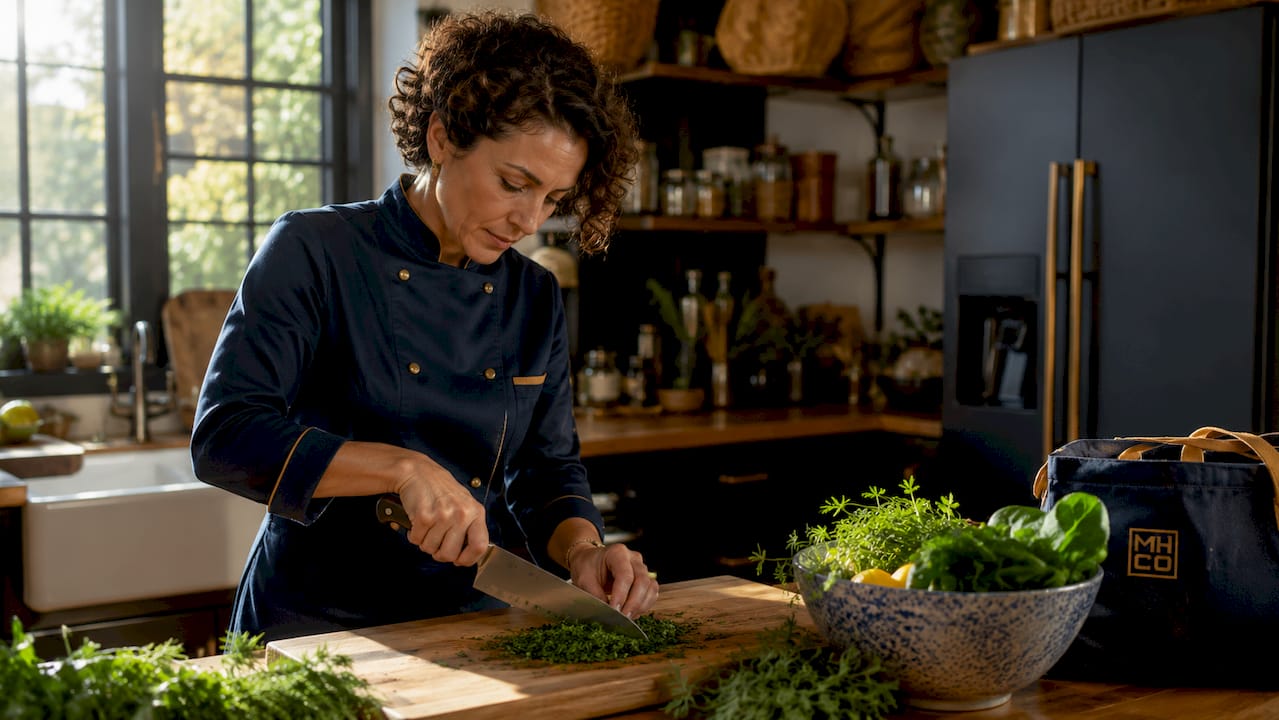
This is where most people have misconceptions. In-home fine dining, catering, and restaurant dining are three distinct formats with different priorities, service models, and outcomes.
In-home fine dining is closer to hospitality at home than catering, focusing on personalized service and guest experience rather than volume logistics. A caterer is optimized to feed many people efficiently. A private chef is optimized to make your specific evening exceptional.
| Feature | In-home fine dining | Restaurant dining | Catering |
|---|---|---|---|
| Menu personalization | Fully custom per guest | Fixed menu options | Pre-set packages |
| Chef presence | Throughout the event | Kitchen only | Delivery or setup only |
| Atmosphere control | Complete | None | Partial |
| Dining duration | Flexible, unhurried | Table turn pressure | Event window only |
| Dietary accommodation | Individual level | Limited flexibility | Group-level options |
| Cleanup included | Yes | N/A | Rarely |
The differences go beyond logistics. When you dine at a restaurant, you adapt to their schedule, their noise level, their seating arrangement, and their menu. With fine dining at home, the entire experience adapts to you. There is no fixed reservation window, no neighboring table overhearing your conversation, and no rushing through dessert because the next party is waiting.
Catering fills a different need entirely. It works well for large-scale events where volume and efficiency matter more than intimacy. But for a dinner party of 6 or a romantic dinner for 2, catering cannot deliver the attentiveness or the live culinary theater that a private chef provides.
Key distinctions worth remembering:
- Private chefs engage guests directly, explaining dishes and adapting pacing in real time
- Restaurants control ambiance; in-home dining lets you set the music, lighting, and table design
- Catering is transactional; in-home fine dining is relational
- No crowds, no parking, no waiting for a table at your own home
What are the benefits of hosting an in-home fine dining event?
The benefits of in-home dining extend well beyond the food itself. Hosts are encouraged to relax and enjoy their guests while the chef manages all cooking, serving, and cleanup. That single shift, from host-as-cook to host-as-guest, changes the entire dynamic of the evening.
Here are the advantages that matter most to people who have experienced this format:
- Zero hosting stress. You are not disappearing into the kitchen every 20 minutes. You are present with your guests for the entire evening.
- Menus built around your table. Whether one guest is gluten-free and another keeps kosher, the chef designs the menu to accommodate everyone without compromise.
- Flexible timing. Events range from intimate dinners for 2 to larger private gatherings, and the schedule bends to your evening rather than a restaurant's operational needs.
- Privacy and comfort. Your home, your rules. No strangers at adjacent tables, no background noise you did not choose, no dress code you did not set.
- Chef interaction. Professional private chefs unlock interactive opportunities rarely found in restaurants, including direct conversation about the dishes, ingredients, and techniques being used.
- Memorable celebrations. A birthday dinner at a restaurant is forgettable. A birthday dinner where a CIA-trained chef prepares a custom tasting menu in your dining room is not.
Pro Tip: Ask your chef to include one dish that reflects a personal connection, a favorite childhood ingredient, a cuisine from a meaningful trip, or a flavor profile tied to the occasion. That single detail transforms a great dinner into a story your guests will retell.
How to prepare your home and guests for a successful event
Preparation is what separates a smooth in-home dining experience from a chaotic one. The chef handles the culinary side, but your role as host involves setting the stage. Here is what to address before the evening begins:
- Communicate kitchen details early. Let the chef know your oven type, available cookware, counter space, and any equipment limitations. A well-planned in-home culinary experience starts with clear communication between host and chef.
- Set the ambiance deliberately. Choose your table linens, candles, and centerpieces in advance. Select a playlist that matches the tone of the evening, whether that is jazz for a formal dinner or acoustic for something more relaxed.
- Confirm dietary details in writing. Send the chef a confirmed guest list with all allergies and preferences at least 48 hours before the event. Verbal confirmations get forgotten.
- Plan guest arrival around service timing. Ask guests to arrive 15 to 20 minutes before the first course is scheduled. Late arrivals disrupt the chef's carefully timed sequence.
- Clear the kitchen of clutter. The chef needs counter space and access to your stovetop, oven, and sink. A clean, organized kitchen speeds up prep and reduces stress for everyone.
- Brief your guests on the format. Many guests have never experienced a private chef dinner. A quick heads-up that courses will be served sequentially and that the chef may interact with them sets the right expectations and adds to the excitement.
The atmosphere you create before the chef arrives is the frame around the culinary art they will deliver. Invest in it.
What should you consider when choosing an in-home fine dining service?
Choosing the right private chef or home dining service determines whether your event is extraordinary or merely adequate. Not all services are equal, and the differences matter significantly at this price point.
Chef credentials come first. Look for formal culinary training, such as a degree from the Culinary Institute of America, and verifiable experience in fine dining environments. A chef who has worked in a Michelin-starred kitchen or a high-end hotel restaurant brings a different skill set than someone who cooks for private clients casually.
Pricing for in-home private chefs generally includes labor, grocery shopping, cooking, plating, and kitchen cleanup. Understand exactly what is covered before booking. Some services charge separately for groceries, travel, or service staff, which can push costs well above the quoted rate. An all-inclusive pricing model eliminates that uncertainty. Review the private chef pricing structure before committing to any service.
Key questions to ask before booking:
- What cuisines and dietary accommodations does the chef specialize in?
- Is the pricing all-inclusive or are groceries and service staff billed separately?
- Can you review sample menus or past event menus?
- What is the cancellation and rescheduling policy?
- Does the service carry liability insurance?
Pro Tip: Read verified reviews specifically for events similar in size and occasion to yours. A chef who excels at corporate dinners for 20 may not be the right fit for an intimate anniversary dinner for 4, and vice versa.
Key takeaways
In-home fine dining delivers a fully personalized, professional culinary event inside your home, combining custom menus, live chef service, and complete cleanup into a single stress-free experience.
| Point | Details |
|---|---|
| Core definition | A professional chef prepares, serves, and cleans up a multi-course meal in your home. |
| Distinct from catering | In-home fine dining prioritizes personalized hospitality over volume and logistics. |
| Stress-free hosting | Hosts enjoy the evening as guests while the chef manages all culinary responsibilities. |
| Full customization | Menus adapt to individual dietary needs, cuisine preferences, and event tone. |
| Choosing a service | Verify chef credentials, all-inclusive pricing, and reviews before booking. |
Why I think in-home fine dining is underused for the occasions that matter most
Most people still default to booking a restaurant for milestone celebrations. I understand the instinct. Restaurants feel safe, familiar, and low-effort to organize. But after seeing hundreds of private chef dinners executed well, I am convinced that the restaurant default is a missed opportunity for the events that actually matter.
The difference is not just the food. It is the quality of presence. When a host is not cooking, they are fully in the room. Conversations go deeper. Toasts feel more personal. The evening has a shape and a pace that a restaurant table simply cannot provide. Chefs focus on making the host's evening effortless, turning the entire culinary event into a personal luxury experience at home. That is not marketing language. That is what actually happens when the format is executed correctly.
The trend toward in-home fine dining is also being driven by something deeper than convenience. People want experiences that feel curated and intentional, not generic. A restaurant anniversary dinner is something you did. A private chef dinner designed around your relationship, your food memories, and your guests is something that happened to you. That distinction is worth paying attention to.
My honest advice: use in-home fine dining for the events where the people in the room deserve your full attention. You will not regret it.
— Stephen
Experience in-home fine dining with Milehighcook
Milehighcook brings CIA-trained private chefs directly to your home across 30+ markets, including Colorado, Arizona, Utah, and Wyoming. Every event includes personalized menu planning, professional grocery sourcing, full table service, and complete kitchen cleanup under a single all-inclusive price. There are no surprise charges and no quality variations between bookings. The brand holds a 4.9-star rating across more than 65 verified reviews, reflecting consistent delivery at the highest culinary standard. Whether you are planning an intimate dinner for two in Denver or a corporate gathering in Salt Lake City, explore private chef services and browse sample menus to start building your event.
FAQ
What is in-home fine dining exactly?
In-home fine dining is a professional culinary service where a trained chef comes to your home, prepares a multi-course meal, serves your guests, and cleans up afterward. It combines restaurant-quality food with the privacy and comfort of your own space.
How much does a private chef dinner at home cost?
Private chef pricing typically covers labor, grocery shopping, cooking, plating, and cleanup, making the total cost comparable to a high-end restaurant dinner when all factors are considered. All-inclusive services eliminate the risk of unexpected add-on charges.
How many guests can an in-home fine dining event accommodate?
In-home fine dining events range from intimate dinners for 2 to larger private gatherings supported by a small chef team, making the format suitable for anniversaries, birthdays, and corporate dinners alike.
How far in advance should I book a private chef?
Most private chef services recommend booking at least one to two weeks in advance to allow time for menu consultation, grocery sourcing, and event planning. For peak dates like holidays or weekends, booking four or more weeks ahead is advisable.
Can the chef accommodate dietary restrictions and allergies?
Yes. Menus for in-home fine dining are fully customizable for dietary needs including vegetarian, vegan, gluten-free, and allergy-sensitive preferences. Communicate all restrictions to the chef during the initial consultation to give them adequate preparation time.