

TL;DR:
- Personal chefs schedule recurring visits based on household needs, with weekly sessions serving most families. Proper planning, menu approval, and communication tools help ensure smooth scheduling and successful sessions. Booking early and clarifying logistics prevent common friction points and maximize the benefits of personal chef services.
A personal chef schedules visits as recurring, multi-hour cooking sessions designed to deliver customized meals directly to your home. Unlike restaurant catering or meal delivery, this service builds around your household's calendar, dietary needs, and lifestyle. Understanding how the scheduling process works helps you get more from every visit and avoid the friction that catches first-time clients off guard. Whether you're exploring how to hire a personal chef or refining an existing arrangement, the logistics matter as much as the food.
How personal chef schedules visits: frequency, timing, and what to expect
Personal chef service planning starts with one core decision: how often do you need visits? Weekly visits are the standard recommendation, saving clients five or more hours each week. Biweekly or monthly visits work well for smaller households or clients who want to test the service before committing to a regular cadence.

The right frequency depends on three factors: household size, meal complexity, and how much of your weekly cooking you want replaced. A family of four eating at home most nights benefits most from weekly service. A couple who dines out several times a week may find biweekly visits more than sufficient.
Personal chef sessions typically last 3–6 hours and produce anywhere from 5 to 20 meals per visit. That range reflects real differences in scope. A client requesting simple weeknight proteins and sides lands at the lower end. A household with complex dietary restrictions, multiple family members, and varied cuisine preferences pushes toward the upper end.
Here is how visit frequency typically maps to household needs:
- Weekly visits: Best for families, busy professionals, or anyone replacing most home cooking. Maximizes freshness and variety.
- Biweekly visits: Suited to couples or smaller households who supplement with occasional dining out or simple self-cooking.
- Monthly visits: Common for special occasions, batch cooking for freezer storage, or clients testing the service for the first time.
- Event-based visits: Separate from the recurring meal-prep cycle entirely. These require their own scheduling and are not interchangeable with regular cook days.
Pro Tip: Lock in your preferred visit day before your first session. Prime slots fill quickly, and securing a fixed weekly day from the start creates a reliable rhythm for both you and your chef.
How do chefs coordinate menus, shopping, and kitchen use?
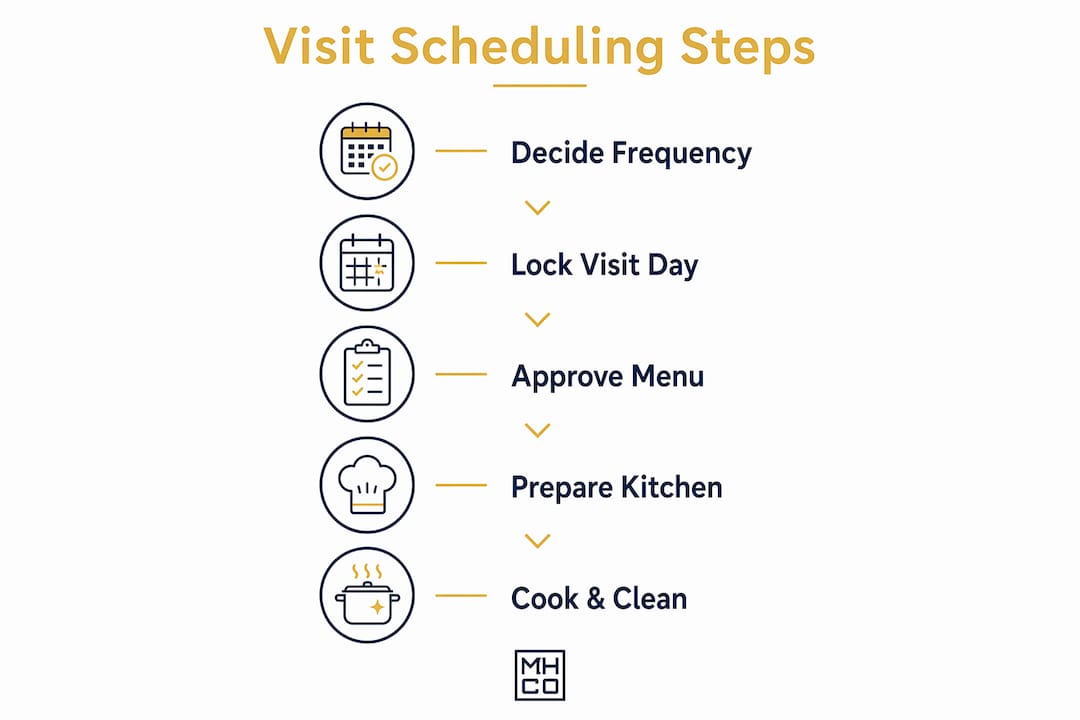
The practical flow of a personal chef visit follows a consistent pattern, even when menus change week to week. Menu planning happens before the chef arrives. Most professional chefs send proposed menus for client review and approval, typically through email or a dedicated client portal. You confirm, request changes, or flag dietary concerns before the cook day begins.
Grocery shopping arrangements vary by agreement. Some chefs shop on your behalf and bill groceries separately. Others ask clients to purchase items from a provided list. Milehighcook's all-inclusive pricing model covers groceries as part of the total fee, which eliminates the back-and-forth over receipts and reimbursements that frustrates clients under other arrangements.
Once the chef arrives, the visit follows a structured sequence:
- Shopping or ingredient verification: Confirming all items are on hand before cooking begins.
- Mise en place and cooking: Preparing, cooking, and portioning meals according to the approved menu.
- Labeling and storage: Packaging meals with clear labels showing contents, date, and reheating instructions.
- Kitchen cleanup: Leaving the kitchen in the same condition it was found, or better.
Chefs prefer secure kitchen access and a tidy working environment. You do not need to deep-clean before a visit, but clearing counters and making sure the chef can move freely speeds up the session. Most chefs bring their own knives and specialty tools. If your chef relies on quality kitchen equipment, having a well-stocked kitchen helps, but it is not a requirement.
Pro Tip: Approve your menu at least 48 hours before the visit. Last-minute changes disrupt shopping logistics and can shorten your cook time.
What tools do professional chefs use to manage scheduling?
Scheduling conflicts and menu miscommunications are the two most common friction points in personal chef service. Dedicated CRM and scheduling software with client portals prevents both. Manual communication through texts and emails creates gaps: messages get missed, approvals get delayed, and chefs arrive without confirmed menus.
Professional chefs who manage multiple clients rely on structured systems. Here is how a well-organized chef handles the scheduling workflow:
- Client portal setup: Each client gets a login to review menus, confirm visit dates, and track meal history.
- Menu approval cycle: The chef submits a proposed menu 3–5 days before the visit. The client approves or requests changes through the portal.
- Calendar blocking: Cook days are locked in as recurring calendar events, not open-ended requests.
- Digital scheduling buffers: Chefs build travel time between clients into their schedules to avoid late arrivals.
- Automated reminders: The system sends confirmation messages to both parties before each visit.
"The menu approval loop is one of the most common sources of friction in personal chef relationships. Professional portals lock in menus and eliminate the communication chaos that derails otherwise good arrangements."
Clear service agreements covering cancellation policies, grocery billing, and pricing transparency are non-negotiable. Clients often assume all costs are included when they are not. A written agreement removes that ambiguity before it becomes a dispute.
Recurring visits vs. one-off events: what is the scheduling difference?
Recurring personal chef service and one-off event catering operate on entirely different scheduling tracks. Treating them as interchangeable is one of the most common mistakes new clients make. Understanding the distinction protects your calendar and sets realistic expectations.
| Factor | Recurring meal-prep visits | One-off events or catering |
|---|---|---|
| Booking structure | Fixed weekly or biweekly slot | Separate booking, booked independently |
| Advance notice needed | Secure slot early; ongoing once confirmed | Typically 2–4 weeks minimum for events |
| Session focus | Weekly meal prep, portioning, storage | Single event execution, service staff |
| Relationship type | Long-term, ongoing partnership | Single engagement |
| Scheduling flexibility | Stable, predictable cadence | Variable, event-dependent |
Recurring slots are booked as "cook days" on the chef's calendar. These are longer blocks reserved in advance and held as permanent weekly appointments. A chef with a full client roster cannot simply add a new recurring client on short notice. Clients who want consistent access to a specific chef should book their slot before the schedule fills.
One-off catering or event cooking sits outside this structure entirely. If you want your personal chef to handle a dinner party or corporate event, that requires a separate conversation and a separate booking. Private chef events and regular visits serve different purposes and are priced and scheduled accordingly.
The practical advice is straightforward: if you want weekly meal prep, secure your recurring slot first. If you also want event coverage, plan that separately and book it well in advance. Expecting ad hoc availability from a chef who runs a structured weekly schedule leads to disappointment.
Key Takeaways
A personal chef schedules visits as fixed recurring cook days, not flexible drop-in appointments, and clients who book early and communicate clearly get the most from every session.
| Point | Details |
|---|---|
| Visit frequency options | Weekly visits save the most time; biweekly or monthly suits smaller households or first-time clients. |
| Session duration and output | Each visit lasts 3–6 hours and produces 5–20 meals, depending on complexity and household size. |
| Menu approval timing | Approve menus at least 48 hours before the visit to avoid shopping delays and shortened cook time. |
| Scheduling tools matter | Client portals and CRM software prevent menu errors and scheduling conflicts better than texts or emails. |
| Recurring vs. event bookings | Ongoing meal-prep slots and one-off events require separate scheduling and should never be conflated. |
What I have learned from watching clients get this right and wrong
The clients who get the most from personal chef service share one habit: they treat the cook day like a standing meeting. They do not reschedule casually, they approve menus on time, and they give the chef clear kitchen access without hovering. The clients who struggle tend to treat visits as flexible, on-demand sessions. That mindset creates friction for everyone.
The detail most clients overlook is the grocery billing arrangement. I have seen otherwise smooth relationships sour over a $40 grocery receipt that nobody clarified upfront. Read the service agreement before you sign it. Ask specifically how groceries are billed, what the cancellation window is, and whether the chef brings their own equipment. Those three questions prevent the majority of disputes I have seen.
Client portals are worth insisting on. If a chef manages your schedule through a mix of texts, emails, and verbal confirmations, errors will happen. A dedicated portal for menu approvals and scheduling keeps everything in one place and creates a record both parties can reference. It is a small detail that separates professional operations from informal ones.
Finally, you do not need to be home during the visit. Chefs work best independently with uninterrupted kitchen access. Provide a garage code or key, leave a tidy kitchen, and let the professional do their job. The meals will be better for it.
— Stephen
Why Milehighcook makes personal chef scheduling straightforward
Milehighcook brings CIA-trained chefs to your home across 30+ markets, including Colorado, Arizona, Utah, and Wyoming. Every engagement uses an all-inclusive pricing model covering groceries, chef fees, service staff, and cleanup, so there are no surprise costs after the visit.
Milehighcook's private chef services are built around consistent, recurring visits with clear communication protocols. The team holds a 4.9-star rating from over 65 verified reviews, which reflects the reliability clients depend on when scheduling regular cook days. Whether you need weekly meal prep or a one-time private dinner, Milehighcook matches you with a chef whose schedule and style fit your household. Contact the team to secure your preferred visit day before the calendar fills.
FAQ
How often does a personal chef typically visit?
Weekly visits are the standard for most households, though biweekly and monthly options exist for smaller households or clients testing the service.
How long does a personal chef visit last?
Most sessions run 3–6 hours and cover shopping verification, cooking, portioning, labeling, and full kitchen cleanup.
Do I need to be home when the chef visits?
No. Chefs prefer to work independently with secure kitchen access, such as a garage code or key, and an uncluttered workspace.
How far in advance should I book a recurring personal chef slot?
Book your recurring slot early since prime weekly days fill quickly on a chef's calendar. Waiting until the last minute often means settling for a less convenient time.
What should a personal chef service agreement include?
A solid agreement covers cancellation policies, grocery billing, pricing structure, and kitchen access expectations to prevent disputes before they start.