
TL;DR:
- A personal chef consultation checklist ensures your household's dietary restrictions, preferences, and logistics are thoroughly addressed beforehand. It helps prevent safety issues, clarifies service scope, and streamlines the cooking process, leading to a better culinary experience. Preparing and sharing this information early maximizes efficiency, safety, and satisfaction during your private chef service.
A personal chef consultation checklist is a focused set of questions designed to capture your household's unique needs, preferences, and logistics before a private chef service begins. Without one, even the most talented chef is guessing. The checklist covers five core areas: household details, dietary restrictions, menu preferences, service logistics, and kitchen readiness. Tools like Traqly's digital intake forms help organize this information before the first call. Milehighcook, which serves 30+ markets across Colorado, Arizona, Utah, and Wyoming with CIA-trained chefs, builds every engagement around a thorough client intake process. Getting yours right before the consultation saves time and produces better food.
1. your personal chef consultation checklist: start here
The personal chef consultation checklist begins with the most fundamental data point: who is eating. Effective intake forms ask about household size per person, allergies, intolerances, dietary protocols, and foods off-limits for personal or religious reasons. That information is the foundation every menu decision rests on.
Gather the following before your first call:
- Number of household members and their ages (children have different portion and texture needs than adults)
- Individual allergies listed by person, not just by household (one member's tree nut allergy is not the same as a household preference)
- Intolerances such as lactose, gluten, or FODMAP sensitivities that cause discomfort but are not life-threatening
- Dietary protocols in use: keto, vegan, paleo, Whole30, Mediterranean, or any medically prescribed diet
- Off-limit foods for religious reasons (halal, kosher, Hindu vegetarian) or ethical reasons (no factory-farmed meat)
- Favorite cuisines and ingredients per person, even if they overlap
The most important distinction you can make is between a preference and a hard constraint. Separating preferences from hard constraints per household member greatly reduces guesswork and eliminates cross-contact risks during meal prep. A child who dislikes mushrooms is a preference. A spouse with a shellfish allergy is a constraint that affects every menu decision.
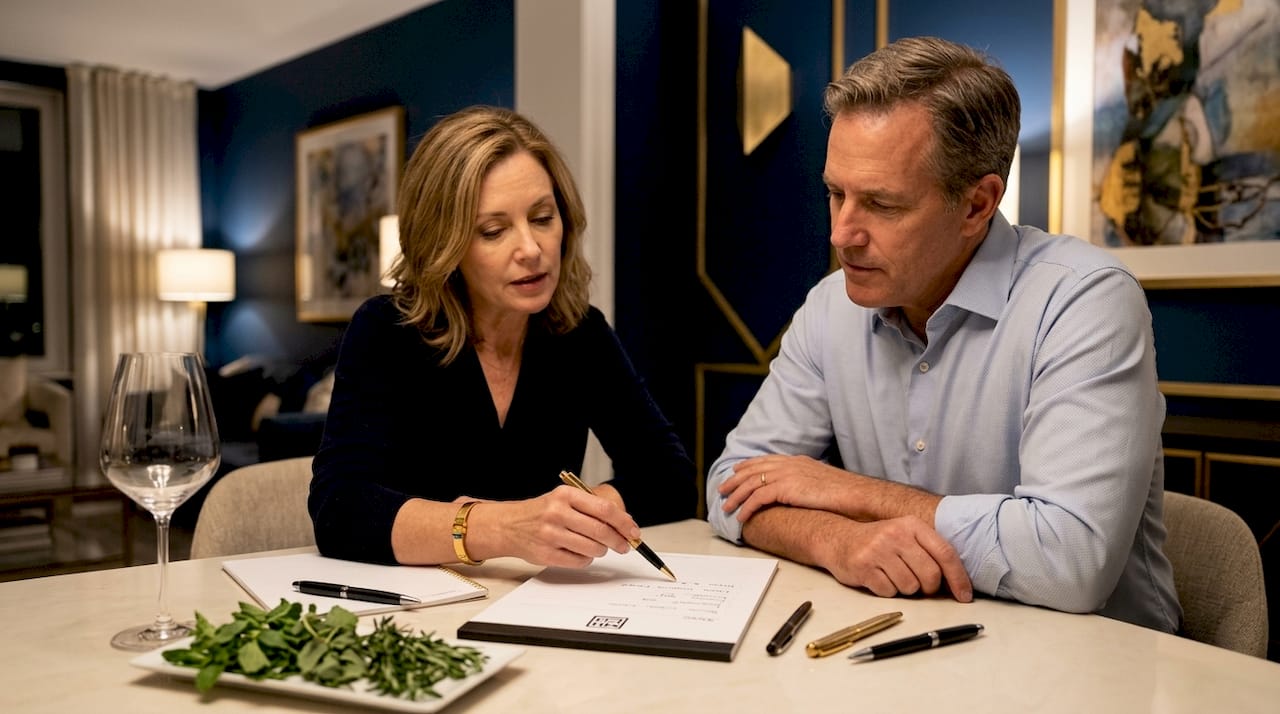
Pro Tip: Create two columns on a notepad before your consultation: "Would prefer not" on the left and "Absolutely cannot have" on the right. Bring both lists to the call. Your chef will use them very differently.
2. menu preferences and event themes
Communicating food preferences goes well beyond listing allergies. Your chef needs to know what excites you at the table, not just what to avoid. Baseline food preferences such as favorite cuisines, preferred proteins, and disliked ingredients are collected specifically for menu matching.
Before your private chef consultation, prepare answers to these questions:
- Favorite proteins: chicken, salmon, grass-fed beef, lamb, tofu, or legumes
- Preferred vegetables and grains: roasted root vegetables, leafy greens, quinoa, wild rice, or pasta
- Cuisine styles you love: Italian, Japanese, Mexican, French bistro, Southern American, or Middle Eastern
- Comfort foods and go-to meals your household requests most often
- Strongly disliked ingredients that are not allergies but would ruin a meal (cilantro, blue cheese, liver)
- Event theme if applicable: a Mediterranean dinner party, a holiday feast, a birthday tasting menu, or a casual Sunday meal prep session
Event themes directly shape the number of courses, plating style, and ingredient sourcing. A five-course anniversary dinner requires a different consultation than weekly family meal prep. Confirming the number of courses and meal timing during the consultation prevents scope confusion later. You can browse sample menu options to get a clearer sense of what a customized menu looks like before your call.
Pro Tip: Tell your chef which season you are in and what is available at your local farmers market. Seasonal ingredient preferences give the chef creative room and often produce the best results.
3. logistics and service details to clarify
Logistics are where most consultations fall short. Clients often arrive at the first call without a clear picture of what they actually want the chef to handle. Setting expectations upfront about what the chef will manage avoids confusion and improves satisfaction across the entire engagement.
The table below shows the three most common service types and the logistics each one requires you to clarify:
| Service Type | Meals Per Week | Grocery Shopping | Typical Budget Conversation |
|---|---|---|---|
| Weekly meal prep | 10–20 meals | Chef handles shopping | Weekly flat rate including groceries |
| Private dinner service | Per event | Chef sources ingredients | Per-event quote covering all costs |
| Event catering | Single event | Chef handles all sourcing | Full event quote with staffing |
Beyond service type, confirm these logistics during your consultation:
- Preferred cooking days and time windows that work for your household schedule
- Whether you want the chef to have a key or require someone home during visits
- Kitchen equipment available: stand mixer, Instant Pot, high-BTU range, or limited apartment setup
- Your preferred communication method between visits: text, email, or a client portal like Traqly
- Budget range stated as a weekly figure or per-event figure, not a vague "reasonable" amount
Understanding private chef pricing structures before the consultation helps you enter that budget conversation with confidence rather than uncertainty.
4. what happens during the first consultation and cooking day
Most personal chef consultations begin with a phone or email intake before an in-home visit that focuses on kitchen assessment. Knowing the sequence helps you prepare the right information at the right stage.
Here is what the typical flow looks like:
- Phone or email intake: The chef collects your checklist data, confirms service type, and identifies any immediate constraints or preferences
- In-home kitchen assessment: The chef evaluates stove type, counter space, fridge and freezer capacity, cookware, and pantry organization
- Menu proposal: The chef drafts a menu based on your checklist, which you review and approve before any shopping begins
- Ingredient sourcing: After menu approval, the chef handles all grocery shopping and specialty sourcing
- Cooking day arrival: For event-based services, chefs typically arrive 1–2 hours before dinner to set up and begin prep
- Service and cleanup: Plating, service, and full cleanup are included in the scope
For event-based experiences, menu planning and final dietary confirmations are locked in days before the event, not the morning of. Guest count, timing, and any last-minute restriction changes must be communicated early. Waiting until the day of the event creates sourcing problems that no chef can fully solve.
Clear written agreements that confirm what is included, such as menu planning, grocery shopping, cooking, plating, and cleanup, prevent last-minute surprises and make quoting accurate. Ask for this document before the first cooking day.
5. how to prepare your home and kitchen
Kitchen readiness is the most overlooked part of the client side of a personal chef engagement. Clients should prepare the kitchen by clearing prep areas, organizing storage space, and having suitable food containers and equipment available. The chef's efficiency on cooking day depends heavily on what they find when they arrive.
Before your chef's first visit, work through this list:
- Clear counter space in the primary prep zone. A chef working in a cluttered kitchen slows down and produces less.
- Organize your fridge and freezer to create dedicated space for prepped meals and raw ingredients
- Stock food storage containers in multiple sizes. Glass containers with locking lids work best for meal prep.
- Confirm which equipment is available and in working order: sheet pans, a Dutch oven, a sharp knife set, and a cutting board large enough for proteins
- Decide on your interaction preference. Some clients want to watch and ask questions. Others prefer to leave the kitchen entirely. Tell your chef in advance.
- Secure pets and plan for children during cooking hours. Safety in a working kitchen requires clear pathways and no unexpected movement.
Counter space and organized fridge storage are the two friction points that most frequently disrupt a cooking day. Addressing them before the chef arrives is the single highest-return preparation you can do.
Pro Tip: Walk through your kitchen the evening before a chef visit as if you were a stranger seeing it for the first time. Note every surface that is not clear and every drawer that does not open easily. Fix those before 9 a.m. the next day.
Key takeaways
A thorough personal chef consultation checklist covering dietary constraints, menu preferences, logistics, and kitchen readiness is the single most effective way to guarantee a personalized and safe culinary experience.
| Point | Details |
|---|---|
| Separate constraints from preferences | List hard allergies and ethical restrictions apart from dislikes to protect safety and guide menu design. |
| Confirm logistics before day one | Clarify service type, cooking schedule, grocery responsibility, and budget during the consultation call. |
| Lock event details days ahead | Finalize guest count, timing, and dietary restrictions before the event, not the morning of. |
| Prepare your kitchen in advance | Clear counter space and organize fridge storage before every chef visit to avoid friction on cooking day. |
| Use written agreements | Confirm scope in writing, including what is covered in pricing, to prevent misunderstandings. |
Why the checklist matters more than the menu
I have seen clients arrive at consultations with a beautifully curated list of favorite restaurants and zero information about their household's actual constraints. The menu conversation goes well. Then the chef discovers on cooking day that one family member has a severe tree nut allergy that was never mentioned. That is not a minor oversight. It is a safety failure that a good checklist prevents entirely.
The insight most people miss is that the checklist is not about the chef. It is about you. A chef can build a great menu from almost any set of preferences. What they cannot do is invent information you did not provide. The clients who get the most out of personal chef services are the ones who treat the intake process as seriously as they treat the meal itself.
Logistics surprises are the second most common friction point I observe. A client who has not thought about whether they want the chef to have a key, or whether their kitchen has a working second burner, creates delays that compress the cooking window and affect the final product. These are not hard questions. They just require five minutes of thought before the call.
My honest recommendation: spend 20 minutes with your household before the consultation. Write down every constraint, every preference, and every logistical reality of your home. Bring that document to the call. Your chef will produce better food, faster, and with far less back-and-forth.
— Stephen
How Milehighcook turns your checklist into an exceptional meal
Milehighcook builds every engagement around the kind of thorough client intake this article describes. CIA-trained chefs across Colorado, Arizona, Utah, and Wyoming use your checklist data to design menus that reflect your household's real preferences, not a generic template.
The all-inclusive pricing model covers groceries, chef fees, service staff, and complete cleanup, so the budget conversation during your consultation is straightforward. No hidden costs appear after the meal. Milehighcook's in-home private chef services are backed by a 4.9-star rating from over 65 verified reviews, which reflects what happens when consultation checklists are taken seriously from the first call forward. Book a consultation and bring your checklist. The food will show the difference.
FAQ
What does a personal chef consultation checklist include?
A personal chef consultation checklist covers household size, individual dietary restrictions and allergies, cuisine preferences, service logistics, budget range, and kitchen readiness. It gives the chef everything needed to build a safe and personalized menu before the first cooking day.
How far in advance should i prepare my checklist?
Prepare your checklist at least a few days before the consultation call so you have time to gather input from every household member. For event-based services, finalize guest dietary details several days before the event date.
What is the difference between a preference and a dietary restriction?
A preference is a food you dislike but can safely eat. A restriction is a food you cannot eat due to allergy, intolerance, religious rule, or ethical commitment. Distinguishing the two protects safety and helps the chef prioritize correctly during menu planning.
Do i need to clean my kitchen before the chef arrives?
Yes. Clearing counter space and organizing fridge and freezer storage directly affects how efficiently your chef can work. A cluttered prep area slows cooking and reduces the quality of the final meal.
What should i ask about pricing during the consultation?
Ask for a written breakdown that confirms what is included: menu planning, grocery shopping, cooking, plating, and cleanup. Review what private chef contracts typically cover so you can ask informed questions and avoid unexpected charges.