
TL;DR:
- Effective corporate catering requires early planning, clear role definitions, and written logistics. Chefs act as co-producers, managing timing, pacing, and guest experience to enhance event success.
Chef-driven corporate catering is defined as a full-service culinary program where a professional chef designs, prepares, and executes customized menus aligned with your company's event goals. To coordinate a corporate chef catering event successfully, you need to manage three parallel tracks: culinary planning, logistics coordination, and guest experience design. Most planners underestimate how early this process must start. The standard window to request a catering proposal is 2–3 weeks before the event, and that timeline exists for good reason. Site inspections, menu consultations, staffing decisions, and dietary accommodations all require lead time that rushed bookings cannot recover.
What are the key prerequisites for a corporate chef catering event?
The foundation of any well-run corporate catering event is advance preparation. Catering proposals take approximately 3 business days to develop, and logistics teams typically arrive 120 minutes before service begins. That means your planning clock starts well before the event date.
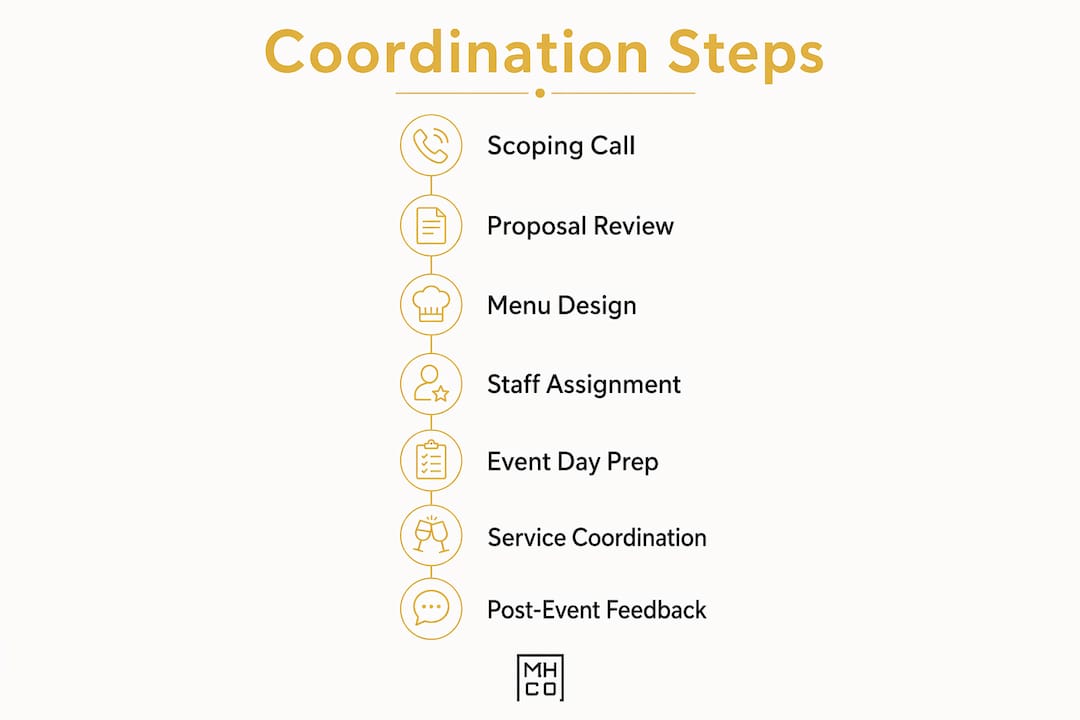
The first step is a scoping call. Effective chef-driven catering starts with a 20-minute call focused on event format, attendee demographics, and business goals. This call produces a tailored proposal covering menus, service plans, and logistics timelines. Without it, chefs are guessing at your priorities.
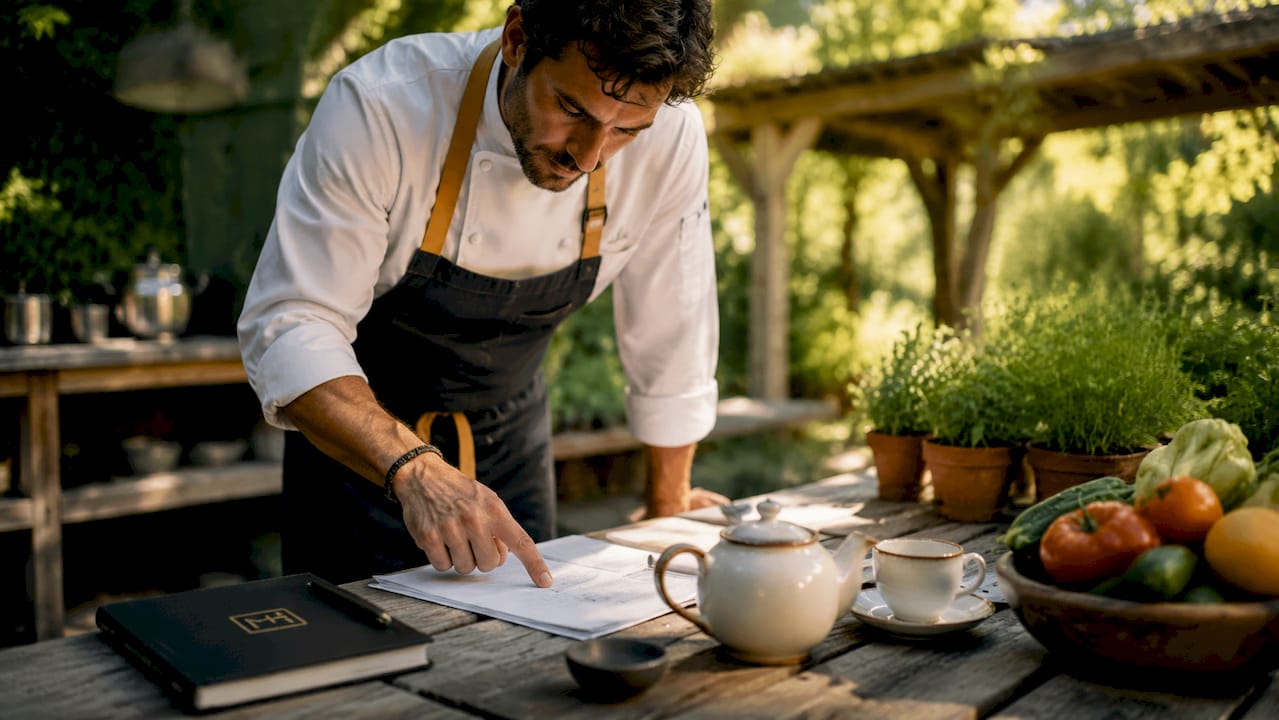
A site inspection follows the scoping call. The chef or logistics lead needs to assess kitchen access, power availability, loading dock access, and service flow. Events held in non-traditional venues, such as rooftop terraces or conference centers without commercial kitchens, require extra planning time. Skipping this step is the single most common cause of day-of operational failures.
| Task | Recommended Lead Time |
|---|---|
| Initial scoping call | 3+ weeks before event |
| Proposal submission | 2–3 weeks before event |
| Site inspection | 2 weeks before event |
| Menu finalization | 10 days before event |
| Staffing confirmation | 1 week before event |
| Logistics team arrival | 120 minutes before service |
- Confirm venue access hours before finalizing any timeline
- Get dietary headcounts in writing at least 10 days out
- Request a written logistics plan from the catering team
Pro Tip: Ask your catering contact to send the proposal with a line-item breakdown of staffing, groceries, and cleanup. All-inclusive pricing models eliminate surprise invoices after the event.
How do different service levels and chef roles affect coordination?
Corporate catering services fall into three distinct tiers, and each one changes how you plan. Understanding the difference before you book prevents mismatched expectations on event day.
Drop-off catering typically requires 48 hours' notice and carries a 15-meal minimum order. It works for internal team lunches and casual working sessions. Full-service catering covers receptions, multi-day conferences, and client-facing events that require staffing, setup, and active service. Bespoke chef staffing sits above both, placing a dedicated culinary team on-site for the duration of the event with full menu customization.
Chef roles vary just as much as service tiers. A private chef handles intimate events of 10–30 guests, managing every course personally. An executive chef oversees larger programs and delegates execution to a kitchen team. An Executive Banquet Chef specializes in high-volume production, managing multiple simultaneous service points across ballrooms or multi-room venues with consistent quality standards.
| Service Type | Best For | Chef Role | Notice Required |
|---|---|---|---|
| Drop-off | Team lunches, casual meetings | None on-site | 48 hours |
| Full-service | Receptions, conferences | Executive Chef | 2–3 weeks |
| Bespoke staffing | Client events, brand activations | Private or Banquet Chef | 3+ weeks |
- Choose full-service for any event where guests interact with the food program
- Bespoke staffing is the right call when brand impression is the primary goal
- Confirm whether the chef role includes menu design or execution only
Pro Tip: For events over 100 guests, ask specifically whether an Executive Banquet Chef is assigned. A general executive chef may not have the high-volume event production experience your event requires.
For a deeper look at how service tiers work in practice, the executive catering service guide from Milehighcook breaks down coordination demands by tier.
What are the essential steps to design an inclusive corporate event menu?
Menu design is where culinary planning and brand strategy intersect. A chef who tells the story behind dishes transforms food from sustenance into a branding asset, directly affecting company prestige and event memorability. Your menu should reflect your company's values, not just your guests' preferences.
Dietary inclusivity is a baseline expectation in 2026. Professional chef-driven catering includes vegan, gluten-free, keto, halal, and kosher options by default, without added surcharges. The key is communicating these requirements during the scoping call, not the week before the event. Late dietary disclosures force last-minute substitutions that compromise dish quality.
A chef-driven event menu built around your business objectives does more than feed guests. It creates conversation, reinforces your brand identity, and gives attendees a reason to stay engaged. For a product launch, a chef might design a menu that mirrors the product's origin story. For a client appreciation dinner, the menu might reflect the client's regional culture.
- Share your event theme and business objective with the chef before menu drafts begin
- Collect dietary restrictions from all attendees via your registration process
- Request a written menu narrative explaining the culinary concept
- Confirm that dietary accommodations are included in the base price, not added as line items
- Review the menu for allergen conflicts at least 7 days before the event
How to manage event day logistics and service coordination
Event day execution depends entirely on what happens in the 72 hours before service. Pre-service architecture begins at least 72 hours before large events, centralizing batch assembly and standardizing dish quality across multiple service points. Written reheating protocols ensure uniform execution regardless of how many stations are running simultaneously.
Here is the operational sequence that separates well-run events from chaotic ones:
- 72 hours out: Confirm final headcount, dietary breakdown, and service timeline with the chef team.
- 48 hours out: Complete all batch preparation, pre-portioning, and cold storage logistics.
- Day of, 120 minutes before service: Logistics team arrives for setup, station preparation, and equipment checks.
- 30 minutes before service: Chef conducts a final walkthrough with all service staff, confirming timing cues and station assignments.
- During service: Chef monitors pace and adjusts service rhythm to match the event's energy.
- Post-service: Staff handles breakdown and cleanup; chef confirms all dietary accommodations were executed correctly.
Chefs in corporate events act as energy managers, adjusting service pace to maintain event momentum and prevent lulls between sessions. A service style mismatch between the chef and the event format is a primary cause of momentum loss. This is why the scoping call must include a discussion of event flow, not just food preferences.
Pro Tip: Build a 15-minute buffer between the scheduled start of service and the first course. This absorbs late arrivals and gives the chef team time to confirm every station is ready before guests approach.
What are the most common mistakes in corporate catering coordination?
The most expensive mistakes in corporate catering coordination are preventable. They share a common cause: decisions made too late in the planning process.
- Late booking: Requesting catering services less than two weeks out compresses every downstream task. Proposals become generic, site inspections get skipped, and staffing quality drops.
- Misidentifying the chef role: Booking a private chef for a 200-person gala creates a quality and capacity mismatch. Confirm the chef's event production experience before signing any agreement.
- Incomplete dietary communication: Collecting dietary restrictions after menu finalization forces substitutions. This degrades dish quality and creates liability if allergens are missed.
- Skipping the site inspection: Venues without commercial kitchens require equipment rentals, generator access, and extended setup time. Discovering this on event day is not recoverable.
- No written service plan: Verbal agreements about timing and staffing levels fail under pressure. Every catering engagement should include a written logistics document.
Custom chef recruitment and bespoke staffing reduce operational risk and improve event quality. The investment in the right chef for the right event format pays back in guest experience and brand impression. Cutting corners on chef selection is the one decision that cannot be fixed on event day.
For a full overview of how corporate catering programs unfold from first contact to final cleanup, the 2026 corporate event catering guide from Milehighcook covers every stage in detail.
Key takeaways
Coordinating a corporate chef catering event requires early planning, clear chef role alignment, and written logistics agreements to deliver consistent quality at any event scale.
| Point | Details |
|---|---|
| Start planning early | Request proposals 2–3 weeks out to allow site inspection, menu design, and staffing confirmation. |
| Match chef role to event scale | Executive Banquet Chefs handle high-volume multi-point events; private chefs suit intimate settings. |
| Build dietary inclusivity upfront | Collect all dietary restrictions before menu finalization to avoid last-minute substitutions. |
| Use pre-service architecture | Begin batch preparation 72 hours out and confirm written reheating protocols for consistent execution. |
| Get everything in writing | A written service plan covering timing, staffing, and dietary accommodations prevents day-of failures. |
Why I think most planners underestimate the chef's role
The standard view treats the chef as a vendor. You place an order, the food arrives, and the event proceeds. That framing misses the most valuable thing a skilled chef brings to a corporate event.
Chefs synchronize timing, pacing, and guest experience dynamically throughout the event. They read the room. When a keynote runs long, a good chef holds the first course without being asked. When networking energy peaks, they accelerate service to keep momentum. No catering coordinator sitting off-site can do that.
The planners who get the most from their catering investment treat the chef as a co-producer of the event experience. They share the run-of-show document. They brief the chef on the business objective, not just the menu. They ask the chef to walk the room before guests arrive. That 20-minute pre-event conversation changes the quality of execution more than any line item in the contract.
The shift I have seen in corporate events over the past several years is that food has moved from background to foreground. Guests remember what they ate. They remember whether the service felt attentive or rushed. They do not remember the slide deck. Planners who recognize this early build catering into the event design from day one, not as an afterthought after the venue is booked.
— Stephen
How Milehighcook supports corporate chef catering coordination
Milehighcook works with corporate event planners across Colorado, Arizona, Utah, and Wyoming to deliver chef-driven catering programs that run without surprises. Every engagement is handled by CIA-trained private chefs who manage menu design, dietary accommodations, staffing, and full cleanup under one all-inclusive price. There are no add-on fees for dietary options or service staff.
Milehighcook holds a 4.9-star rating from over 65 verified reviews, covering events from intimate executive dinners to large corporate receptions. The team covers 30+ markets and brings the same standard of culinary execution to every event, regardless of size. If you are planning a corporate event and want a catering partner who treats food as part of the event strategy, explore Milehighcook's catering services or request a proposal through the website.
FAQ
How far in advance should I book a corporate chef catering event?
Book at least 2–3 weeks before your event date. This window allows the catering team to complete a site inspection, develop a custom proposal, and confirm staffing.
What is the difference between a private chef and an Executive Banquet Chef?
A private chef handles intimate events with personalized service, while an Executive Banquet Chef manages high-volume production across multiple simultaneous service points in large venues.
Are dietary accommodations included in corporate catering pricing?
Professional chef-driven catering services include vegan, gluten-free, keto, halal, and kosher options without added surcharges. Confirm this in writing during the proposal stage.
What does pre-service architecture mean in corporate catering?
Pre-service architecture refers to the centralized batch preparation and written reheating protocols completed 72 hours before a large event to ensure consistent dish quality across all service stations.
How does a chef affect the flow and energy of a corporate event?
Chefs act as energy managers during corporate events, adjusting service pace to match the event's rhythm and prevent momentum loss between sessions or speakers.