
Write a one-page household culinary profile and book a paid trial meal before you sign anything. That single step, done before the first real service, is what separates families who love their private chef from families who churn through three chefs in a year.
Two things matter most in that profile:
- Safety first. Every allergy, medical restriction, and severe intolerance needs to be flagged in writing, not mentioned in passing during a kitchen tour.
- Clarity drives fit. A chef who receives a clear brief, favorite dishes, dislikes, portion sizes, schedule, can usually adapt a menu within one or two trial services rather than months of guesswork.
Vetted, all-inclusive providers like Milehighcook build this exact process into onboarding: a household profile, a paid tasting, and reference checks before the family commits to ongoing service. That structure removes most of the friction families hit when they try to brief a chef informally over a phone call.
Key Takeaways
A well-briefed personal chef relationship depends on a written household culinary profile, a paid trial meal, and clear service boundaries maintained through regular check-ins.
| Point | Details |
|---|---|
| Build the profile first | Draft a one-page household culinary profile covering allergies, dislikes, favorites, and schedule before the first call. |
| Separate allergy from preference | Insist on demonstrated cross-contact protocols for true allergies, not just menu substitutions for dislikes. |
| Run a paid trial | Test fit with one scoped dinner service, with the full family present, before committing to a retainer. |
| Get billing in writing | Clarify whether groceries are billed separately or included, and put the full scope in a written agreement. |
| Choose a vetted provider | Milehighcook's CIA-trained chefs and all-inclusive pricing across 30+ markets reduce onboarding friction for family-specific briefs. |
Table of Contents
- What to Include When You Brief a Personal Chef on Family Preferences
- How Do Chefs Handle Mixed Preferences and Allergies?
- Which Service Model and Price Range Fits Your Family?
- How Should You Screen a Chef Before Hiring Them?
- How Do You Keep Preferences From Drifting Over Time?
- Why a Vetted, All-Inclusive Provider Simplifies Family Briefing
- What the Research Actually Supports About Briefing a Chef
- Get Started With a Personal Chef Who Fits Your Family
- Sources
- FAQ
What to Include When You Brief a Personal Chef on Family Preferences
A good household culinary profile takes twenty minutes to draft and saves weeks of trial and error. Chefs who specialize in household work say the biggest source of early mismatches isn't skill, it's a missing or vague brief. Hiring guides for private chefs consistently point to a clearly defined scope of what the chef will cook and when as the single most useful thing a family can hand over before the first meeting.
Build your profile around these fields:
- Allergies and medical diets — list every allergen, severity, and any prescribed restrictions (celiac, renal, low-sodium, and so on).
- Firm dislikes — texture issues, smells that turn a kid off dinner, ingredients nobody in the house will eat regardless of preparation.
- Favorite dishes — three to five meals the family already loves, so the chef has a baseline to build from.
- Portion sizes and appetites — who eats light, who eats big, and whether leftovers matter.
- Kids' school lunches and snacks — separate from dinner service if the chef is also prepping weekday meals.
- Weekly schedule — which nights need dinner, whether lunches are included, and any standing guest nights.
- Kitchen logistics — appliance quirks, pantry stock preferences, and where groceries get stored.
Format matters as much as content. A single shared document, Google Doc, a note in your phone, or the client-facing consultation checklist many chef services provide, works better than an email thread that gets buried. Send the profile before the consultation call so the chef arrives with ideas already sketched out, and save taste-specific feedback (too spicy, not enough garlic) for the trial meal itself, where it's easier to calibrate in real time.
Pro Tip: Keep the profile to one page. If it runs longer, you're probably listing every meal you've ever eaten instead of the patterns that actually repeat week to week.

Families using a consultation checklist built for this exact purpose tend to skip the awkward back-and-forth entirely.
How Do Chefs Handle Mixed Preferences and Allergies?
Preference and allergy are not the same problem, and a good chef treats them differently in the kitchen. A preference, say, one kid hates mushrooms, gets solved with substitution. A true allergy requires cross-contact controls: dedicated cutting boards, separate prep zones, and ingredient labeling that never touches the allergen. Specialist household-chef guides are blunt about this distinction, and recommend insisting on demonstrated allergy protocols rather than taking a chef's word for it when the stakes involve anaphylaxis.
For the everyday mismatches, most chefs lean on a handful of tactics:
- Component plates — protein, starch, and vegetable served separately so each family member builds their own plate.
- Split sauces — one base dish, two or three sauce or seasoning options on the side.
- Kid-friendly variants — the same protein prepared two ways (grilled versus breaded) from a shared mise en place.
- Batch prep with swaps — a big-batch grain or protein base that gets dressed differently for adults and kids.
One working private chef, writing about feeding her own family, described relying on a short list of versatile "flavor MVPs," garlic, citrus, a good chili crisp, that let her adapt one base recipe into several finished dishes without doubling her prep time. That's the same trick a private chef uses at your stove: fewer moving parts, more flexible endpoints.
Seasonal produce plays into this too. Chefs who rotate menus around what's actually in season, using something like the USDA's seasonal produce guide, keep weekly meals from feeling repetitive even when the family's core preferences stay fixed. And when a household has broader health goals, weight management, more vegetables, less added sugar, most chefs will build menus around basic principles similar to Mayo Clinic's nutrition guidance: variety, portion awareness, and whole foods over processed shortcuts.

Which Service Model and Price Range Fits Your Family?
Three service models cover most families, and picking the wrong one is the fastest way to overpay or feel underserved.
- Full-time (live-in or live-out). Best for large households, frequent entertaining, or families with complex medical diets that need daily oversight. Expect a weekly or monthly retainer rather than a per-meal charge.
- Part-time or retainer. A chef comes two to four times a week, batch-cooking meals for the days in between. This fits most dual-income families who want dinner solved without daily chef visits.
- Ad-hoc or event-based. One-off bookings for dinner parties, holidays, or a trial run before committing to anything ongoing. This is the lowest-commitment entry point and the easiest way to test fit.
Pricing shapes vary by model. Ad-hoc bookings usually run per person or per event; retainers run weekly with a set number of meals included. The detail that trips up most first-time clients isn't the chef's rate, it's grocery handling. Some chefs charge you separately for ingredients and hand you receipts; others fold groceries, service staff, and cleanup into one all-inclusive number. Ask this directly before you sign anything, because "the chef's fee" and "the total cost of dinner" are often two very different figures.
Watch for these red flags during that conversation:
- Vague or undisclosed grocery markup instead of a clear billing method.
- No written scope of work, meaning no agreed list of what's included, how many meals, which nights.
- Reluctance or refusal to do a paid trial before a longer commitment.
A written agreement covering scope, schedule, and confidentiality protects both sides, and household staffing specialists recommend building in a review period, often around 90 days, to formally revisit whether the arrangement is working. If you're weighing this against a meal-delivery subscription, the trade-offs around freshness, customization, and time saved are worth comparing directly.
How Should You Screen a Chef Before Hiring Them?
Skip the resume-only hire. A short, structured screening process, interview plus paid trial, tells you more in two weeks than three rounds of phone calls ever will.
Cover these points in the interview:
- Formal culinary training and any specialized certifications (CIA-trained chefs, for instance, bring a documented technical foundation).
- Prior household or private-family experience, not just restaurant background.
- How they've handled a serious allergy in a past household, specifically.
- Two or three sample menus built around a fictional version of your own preferences.
- Preferred communication style and realistic availability against your schedule.
Then run a paid trial before any longer commitment. Structure it as a single dinner service, scoped in advance: which dishes, how many diners, what dietary needs to accommodate. Have the actual family present, not just one parent, because a picky eight-year-old's reaction tells you more about long-term fit than an adult's polite feedback. Watch how the chef handles timing, how clean the kitchen is afterward, and whether they respond to a small request (less salt, more sauce) without getting defensive.
Pro Tip: Ask for two references from households with similar dietary complexity to yours, not just any two references. A chef who's great with adventurous adult palates isn't automatically great with a nut-allergy household.
Reference checks matter more in allergy-sensitive homes. Ask past clients directly how the chef handled cross-contact risk, not just whether the food tasted good. Guides on hiring for high-complexity households consistently flag the paid trial as the step that prevents the costliest mismatches, expensive ones, both in money and in trust.
How Do You Keep Preferences From Drifting Over Time?
Preferences change. Kids outgrow picky phases, someone starts a new diet, a doctor adds a restriction. The chefs who stay long-term aren't necessarily the most talented, they're the ones working with families who've built a simple feedback rhythm.
Set a standing menu check-in, weekly for full-time or retainer arrangements, biweekly for lighter schedules. Keep feedback specific and low-drama: "the kids didn't touch the broccoli, try roasting it instead of steaming" lands better than "the vegetables were off." Specific, kind, and actionable beats vague every time, and it's the same format industry guides on household chef management recommend for keeping the relationship stable past the first few months.
Boundaries need to be explicit too:
- Kitchen access hours and whether the chef needs the space cleared beforehand.
- Whether kids are present during prep, and any safety rules around that.
- How leftovers get labeled and stored so nothing gets tossed by mistake.
- A heads-up window, ideally 48 hours, for guest dinners or last-minute menu changes.
Handled this way, on-the-fly changes stay manageable instead of becoming a source of friction between family and chef.
Why a Vetted, All-Inclusive Provider Simplifies Family Briefing
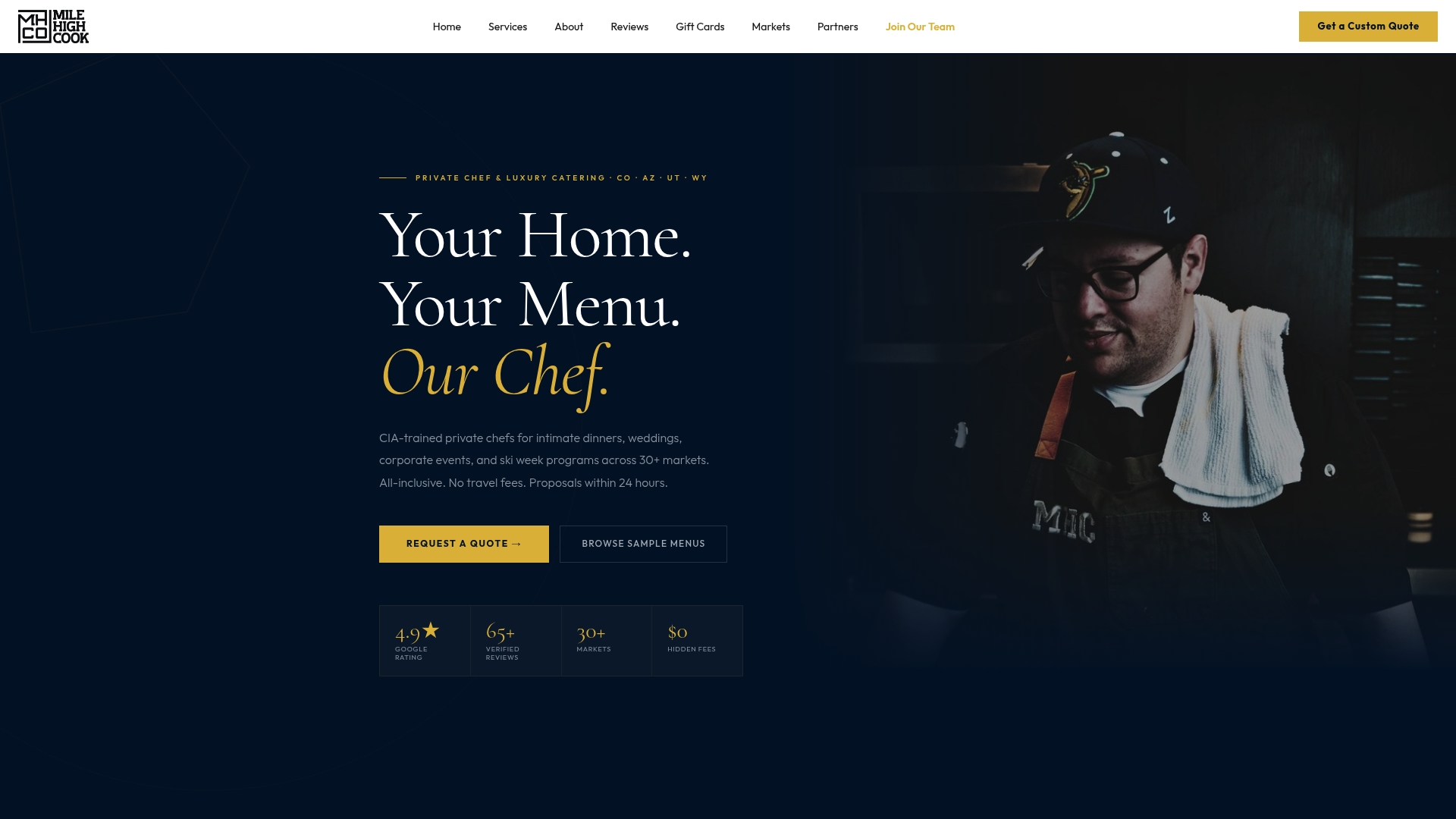
Milehighcook builds its chef roster around CIA-trained professionals and operates across more than 30 markets in Colorado, Arizona, Utah, and Wyoming, so families get the same baseline of technical training regardless of location. That consistency matters most in the exact situation this article covers: a family handing off a detailed preference profile and needing the chef to execute it correctly the first time, not the third.
The all-inclusive pricing model, groceries, chef fees, service staff, and cleanup folded into one number, removes the grocery-billing ambiguity that causes disputes when special ingredients (allergen-free flours, higher-cost proteins) enter the mix. Families see one number upfront instead of itemized surprises after the fact.
A 4.9-star average across more than 65 verified reviews reflects consistent execution across very different household briefs, not just a handful of standout dinners.
What the Research Actually Supports About Briefing a Chef
The conventional advice on this topic leans heavily on personality fit, "find a chef your family clicks with", and that's not wrong, but it's incomplete. What the evidence around hiring mismatches actually points to is process: a written scope, a paid trial, and a specific feedback rhythm do more to prevent early turnover than chemistry alone ever will.
Where most families go wrong is skipping the profile step because it feels like extra homework before the fun part starts. That's backwards. The families who spend twenty minutes writing down allergies, dislikes, and a realistic weekly schedule are the ones who stop shopping for a new chef every few months. Certifications and reviews matter, but they're a filter, not a guarantee. The brief is what actually gets used in the kitchen every single day.
If you prioritize one thing before your first consultation, make it the profile. Everything else, trial structure, feedback language, boundaries, works better once the chef isn't guessing.
Get Started With a Personal Chef Who Fits Your Family
Milehighcook removes the two biggest risks in this hiring process: chef inconsistency and hidden costs. Every chef is CIA-trained, the pricing is all-inclusive from groceries through cleanup, and the same standard holds across more than 30 markets in Colorado, Arizona, Utah, and Wyoming, so the household culinary profile you build actually gets executed the way you wrote it.
Instead of vetting chefs one by one and negotiating grocery billing separately, you submit your family's profile once and book a trial through a single provider that already screens for allergy protocols and household experience. That's the practical shortcut this entire hiring process is trying to shortcut toward anyway. If you're ready to move past planning, check availability and start your consultation or explore private dining options in Denver starting at $150 per person to see what an all-inclusive booking looks like for your household.
Sources
- Nutrition and healthy eating (Mayo Clinic)
- Snaped
- I'm a private chef. Here's how I cook for my family when I ... (Business Insider)
- How to Hire a Private Chef for UHNW Households | Talent Gurus
FAQ
How much does a personal chef charge per meal?
Per-meal or per-person pricing varies by service model, ad-hoc events typically cost more per person than a weekly retainer, and all-inclusive pricing (groceries, staff, cleanup) will run higher upfront than a bare chef fee but avoids separate grocery bills.
What are some good menu ideas for a private chef?
Component-style plates (separate protein, starch, and vegetable), batch-prepped grain bowls with swappable toppings, and seasonal produce rotations, using something like the USDA's seasonal guide, all work well for mixed family palates.
What is a personal chef called?
"Personal chef" and "private chef" are used interchangeably, though "private chef" sometimes implies a longer-term or live-in household arrangement rather than rotating clients.
How do I brief a chef on food I don't like?
List firm dislikes separately from allergies in your household culinary profile, and be specific about texture or flavor issues rather than general statements, since specifics give the chef something concrete to work around.
What should I include in a paid trial meal?
Scope the trial as one full dinner service with your actual family present, covering at least one dish that tests an allergy or strict preference, so you can observe timing, cleanup, and how the chef handles real-time feedback.