
TL;DR:
- A catering service agreement is a binding contract that outlines food, beverage, payment, and liability terms for an event. It includes details on scope of services, payment structure, guest guarantees, cancellation policies, and risk management. Properly drafting and reviewing these agreements protects both parties from disputes and unexpected costs.
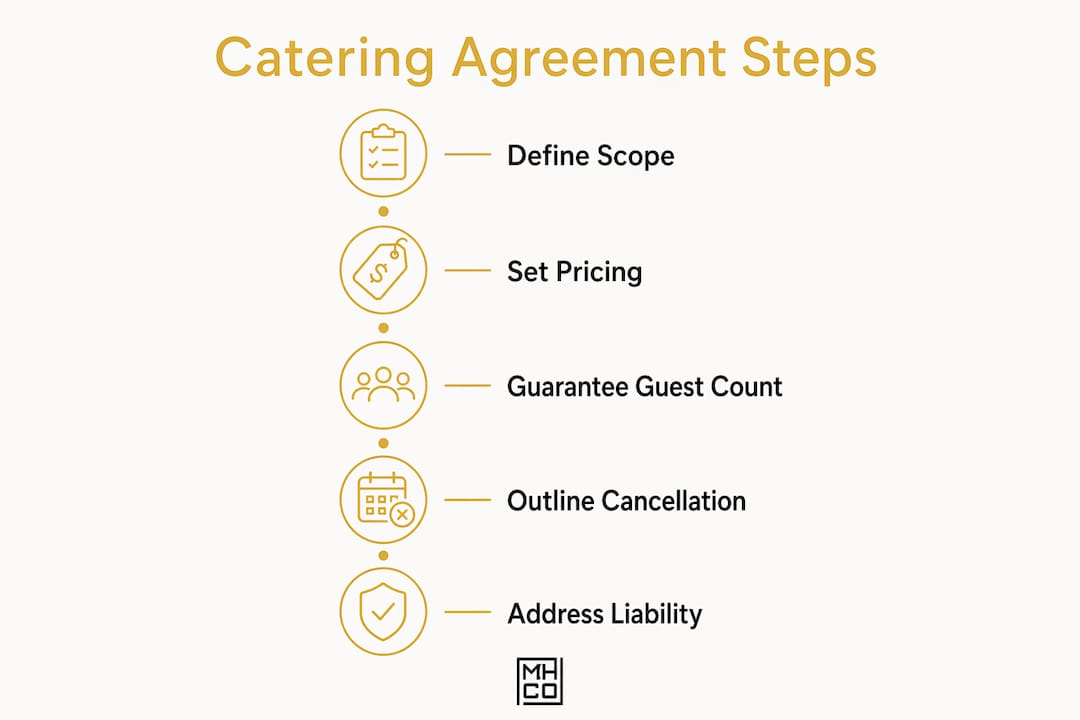
A catering service agreement is a legally binding contract between a catering provider and a client that defines every term governing food and beverage services at an event. It covers the scope of services, payment schedules, cancellation policies, and liability limits before a single dish is prepared. Without one, both parties rely on memory and good faith. That combination fails more often than people expect. A well-drafted contract secures payments, defines services, manages scope changes, and sets clear protocols for cancellations and disputes. Whether you are planning a corporate dinner or a private celebration, understanding this document protects your money and your event.
What is a catering service agreement and what does it include?
A catering service agreement is defined as a formal legal document that outlines every obligation the caterer and client accept before the event takes place. The catering agreement definition goes beyond a simple invoice. It functions as a rulebook for the entire working relationship, from the first tasting to the final cleanup.

Essential components include menu details, itemized pricing, deposits, payment deadlines, liability limits, and force majeure clauses. Each element exists to prevent a specific type of dispute. Menu details eliminate arguments about what was promised. Itemized pricing prevents billing surprises. Liability limits define who pays when something goes wrong.
Scope of services
The scope section describes exactly what the caterer will deliver. This includes the menu, the number of service staff, delivery logistics, setup responsibilities, and cleanup duties. A vague scope is the most common source of post-event conflict. If the contract says "full-service catering" without defining what that means, both parties will fill in the blanks differently.
Payment terms and pricing structure
Most catering agreements include itemized pricing details such as per-head cost, rental fees, taxes, deposits, and provisions for additional charges like overtime or late payments. Transparency in pricing prevents billing disputes after the event. A standard structure requires a deposit at signing, a second payment at a defined milestone, and a final balance due before or on the event date.
Pro Tip: Ask for a full price breakdown in writing before signing. If the contract lists only a lump sum, request an itemized schedule. Hidden fees for overtime, extra staff, or equipment rentals are common sources of post-event friction.
Guest count guarantees
Final guest count guarantees with deadlines 7–14 days before the event are standard practice. These guarantees prevent financial surprises and protect service quality. If your confirmed count is 80 guests but 100 show up, the contract should specify how the caterer handles the overage and at what cost.
How do cancellation and refund policies work in catering contracts?
Cancellation terms are the section most clients skip and most regret ignoring. Standard cancellation policies include non-refundable deposits with tiered refund percentages that decrease as the event date approaches. For example, a client may receive a 50% refund when canceling 14 days out but nothing within 7 days. This structure exists because caterers purchase ingredients and secure staffing well before the event.
The tiered approach is fair to both sides when written clearly. Here is how a typical cancellation schedule works:
- More than 30 days before the event: Full refund minus the non-refundable deposit.
- 15–30 days before the event: 50% refund of the total contract value.
- 8–14 days before the event: 25% refund of the total contract value.
- 7 days or fewer before the event: No refund. All payments are forfeited.
These numbers vary by caterer and event size. The key is that the schedule must appear in writing before you sign.
Force majeure and rescheduling
Contingency clauses like force majeure clarify whether deposits transfer to new dates or are forfeited, and whether pricing is fixed or subject to market changes. Explicit terms prevent conflict when events are postponed or disrupted by circumstances outside either party's control. A good contract defines "force majeure" specifically. Generic language like "acts of God" creates room for disagreement.
Pro Tip: Before signing, ask your caterer directly: "If I reschedule due to a weather emergency, does my deposit apply to the new date?" Get the answer in writing as an addendum. Verbal assurances carry no legal weight.
Rescheduling terms should also address pricing. If you postpone a june event to december, ingredient costs may shift. A contract that locks in pricing for rescheduled events protects you. One that allows repricing protects the caterer. Know which version you are signing.
How do catering agreements handle risk, liability, and safety?
Liability clauses define who is legally responsible when something goes wrong. Contracts protect both caterers and clients by replacing verbal agreements with defined legal documents that include liability clauses for foodborne illness and venue damage. Clear contracts reduce disputes and liability risks significantly. This is not a formality. It is the section that determines who pays a hospital bill or a venue repair invoice.
Key liability areas a strong catering contract addresses:
- Food safety and allergens: Catering contracts serve regulatory compliance by documenting health and safety obligations, including allergen disclosures and hygienic handling. Clients must provide accurate dietary information, and caterers must comply with applicable safety standards.
- Venue damage: The contract should specify who is responsible for damage to the venue caused during setup, service, or breakdown. Without this clause, both parties will point at each other.
- Insurance requirements: Most professional caterers carry general liability insurance. The contract should state the coverage amount and require the caterer to provide proof before the event.
- Client obligations: Clients carry responsibility for disclosing guest allergies and dietary restrictions. A caterer cannot protect a guest from an undisclosed allergy.
- Equipment and access: Contracts should specify responsibilities around access, equipment needs, waste disposal, and damage liability to avoid unexpected costs or disputes.
The liability section is where many clients benefit from a brief legal review. For large corporate events or weddings, spending an hour with a contract attorney is a sound investment. The cost of that review is a fraction of the cost of a single unresolved dispute.
What practical tips help clients and caterers use agreements effectively?
A catering contract is not a one-time document. Treat it as a living document with a base agreement and attached addenda for flexible updates to menus, guest counts, and logistics without full renegotiation. This structure saves time and prevents confusion when plans change, which they almost always do.
Practical habits that protect both parties:
- Set hard deadlines for confirmations. Guest counts, menu selections, and dietary disclosures should each have a specific due date written into the contract. Vague language like "reasonable notice" creates disputes.
- Use addenda for changes. When the menu shifts or the guest count grows, document the change in a signed addendum rather than a text message or email chain. An addendum becomes part of the legal record.
- Clarify access and setup windows. The contract should state when the catering team can enter the venue, how long setup takes, and when breakdown must be complete. Venue overtime fees are a common surprise for clients who did not read this section.
- Avoid verbal-only agreements. Any promise made during a tasting or site visit that does not appear in the contract does not exist legally. If a caterer agrees to add a dessert station, put it in writing before the event.
- Review communication protocols. The contract should name a primary contact on each side and define how changes are submitted and confirmed. This prevents confusion when the event coordinator and the head chef receive conflicting instructions.
For clients planning corporate event catering, these details matter even more. Corporate events often involve multiple stakeholders, shifting headcounts, and strict venue rules. A contract that accounts for all of these variables protects everyone involved.
When working with premium clients, presenting catering options clearly and tying each option to a specific contract term builds trust from the first conversation. Clients who understand what they are signing are far less likely to dispute the invoice afterward.
Key Takeaways
A catering service agreement is the single most effective tool for preventing disputes, protecting payments, and delivering a successful event for both the client and the caterer.
| Point | Details |
|---|---|
| Core definition | A catering service agreement is a legally binding contract covering scope, payment, liability, and cancellation terms. |
| Guest count deadlines | Confirm final guest counts 7–14 days before the event to avoid billing disputes and service gaps. |
| Cancellation tiers | Refund percentages decrease as the event date approaches, so read the cancellation schedule before signing. |
| Living document approach | Use addenda for menu or logistics changes instead of rewriting the full contract each time. |
| Liability clarity | Specify insurance requirements, allergen disclosures, and venue damage responsibility in writing before the event. |
Why I think most people sign catering contracts wrong
After years of working in professional catering and event planning, the pattern I see most often is this: clients read the menu section carefully and skim everything else. They negotiate the appetizers and ignore the cancellation clause. Then something changes, and they are surprised by the financial consequences.
The uncomfortable truth is that a catering contract is primarily a risk document, not a menu document. The menu is the easy part. The hard part is what happens when 20 guests cancel two days before the event, or the venue floods, or the client decides to change the protein three weeks out. Those scenarios are where the contract earns its value.
My strongest recommendation for first-time clients is to read the cancellation and liability sections out loud before signing. Reading out loud forces you to slow down and actually process the terms. For businesses planning recurring catered events, I recommend having a standard contract template reviewed by a business attorney once, then using it as your baseline for every future engagement.
Professional caterers who operate with clear catering service standards make this process easier. When the caterer's contract is well-structured from the start, clients spend less time negotiating and more time planning the event itself. That is the version of this process that actually works.
— Stephen
Milehighcook makes catering agreements straightforward
Planning a catered event should not feel like a legal exercise. Milehighcook's professional catering services come with clear, transparent agreements that spell out exactly what you are getting, what it costs, and what happens if plans change. There are no hidden fees and no vague terms.

Milehighcook operates across 30+ markets including Colorado, Arizona, Utah, and Wyoming, with CIA-trained chefs and an all-inclusive pricing model covering groceries, staffing, and cleanup. The brand holds a 4.9-star rating from over 65 verified reviews. If you want a catering experience where the contract is as polished as the food, explore Milehighcook's services and see what a well-run catering agreement looks like in practice.
FAQ
What is a catering service agreement?
A catering service agreement is a legally binding contract between a caterer and a client that defines the scope of food and beverage services, payment terms, cancellation policies, and liability responsibilities for an event.
What should a catering contract always include?
Every catering contract should include itemized pricing, a guest count guarantee deadline, cancellation and refund terms, liability and insurance clauses, and a clear description of the services provided.
How do cancellation policies work in catering agreements?
Standard cancellation policies use a tiered refund schedule where the refund percentage decreases as the event date approaches, with deposits typically non-refundable from the moment of signing.
What is a force majeure clause in a catering contract?
A force majeure clause defines what happens to deposits and pricing when an event is postponed or canceled due to circumstances outside either party's control, such as severe weather or a public health emergency.
Can a catering agreement be changed after signing?
Yes. A catering contract can be updated through signed addenda that document changes to the menu, guest count, or logistics without requiring both parties to renegotiate and re-sign the full agreement.